

Шорт-лист 2024
Shortlist of 100+ AWARDS 2024:
1.1 The best architectural solution is a residential building


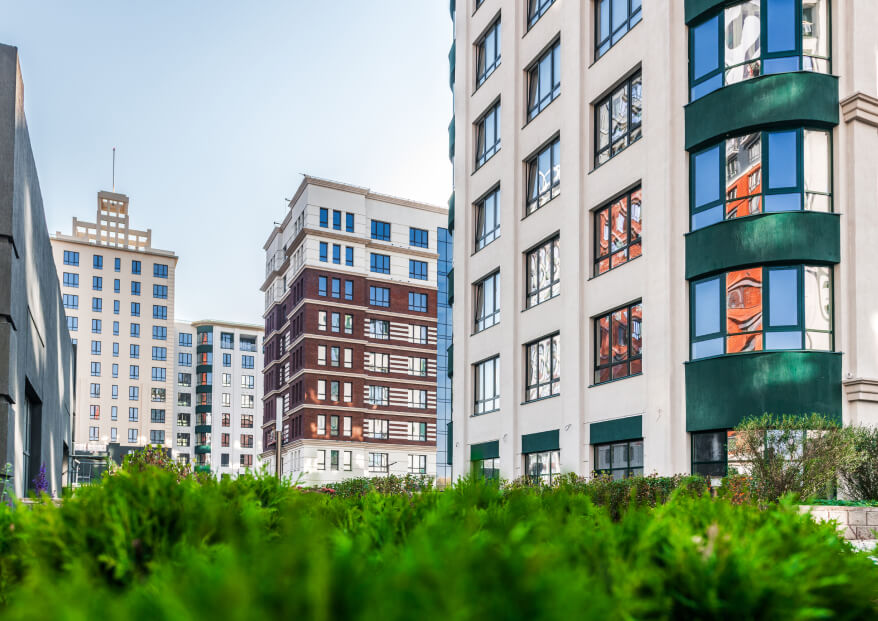
Aivazovsky City is a residential complex located in one of the most picturesque corners of Tyumen, surrounded by two lakes, Alabashevsky and Krugly. It is a unique project that combines the elegance and functionality of modern architecture.
The houses in Aivazovsky City represent the embodiment of modern architectural thought, harmoniously integrated into the urban landscape and possessing a number of unique features. The architectural design of our houses is based on the principles of modern style, taking into account all the requirements for residential complexes. The successful combination of shapes, lines and colors creates visual appeal and at the same time preserves functionality and comfort for future residents.
The main feature of Aivazovsky City is its attention to architecture. In their concept, the architects focus on the idea of creating an independent city, not only to provide the necessary infrastructure, but also to visually perceive the architecture of buildings, artificially creating the impression that the territory was built in different time periods due to the variety of volumes, shapes, materials and styles.
The difference is the basis of the concept — it follows the trend of creating a diverse environment with an imaginary history that has been popular over the past decades: houses and entire neighborhoods are now popular to build either so that the "hands" of different architects are visible, or also as if they were formed gradually.
The authors declare several "styles", starting from "classicism", in which two small 4-storey buildings are solved, both with non-residential function. Offices and a medical center are planned to be located in them, which should remind of the buildings of old Tyumen (in general, they look like a hybrid of Empire and neo-Empire). The "English style" fit next to it, definitely designed to echo the tastes of modern Tyumen customers who like to travel to London, and the "eclecticism" of the American kind, with large semicircular fluted columns. As well as Stalinist architecture, which is "loyal" to the Moscow theme, but which nevertheless received the name "totalitarian" in the list.


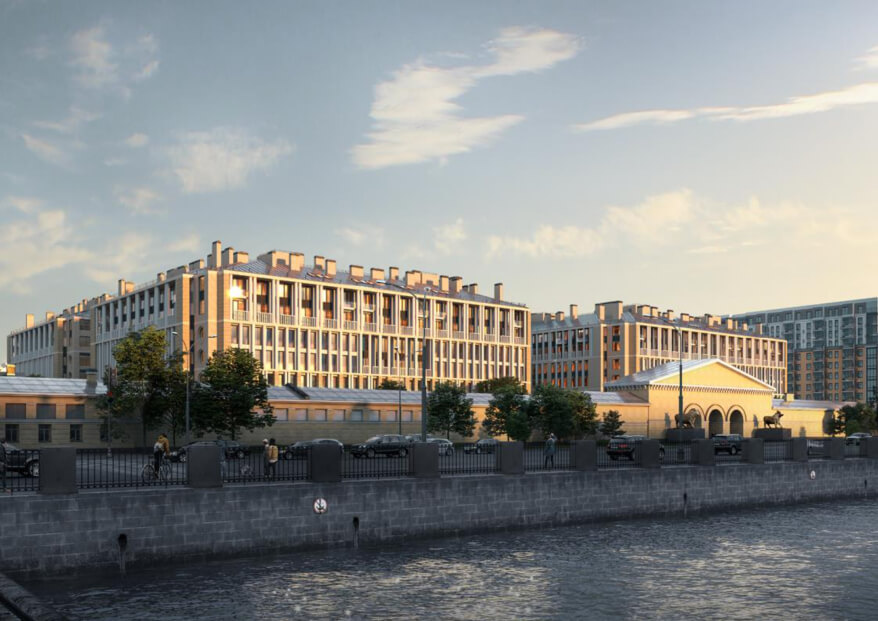
The construction of the Moskovsky 65 residential complex is one of the most interesting examples of the conversion of a former industrial area into residential and the integration of new architecture into a valuable historical fabric. The peculiarity of this project is that the site of the new construction is surrounded on three sides by the buildings of the "Cattle Yard" (1823-1826, architect I. I. Charlemagne 1st), which has the status of a cultural heritage site of federal significance. Retreating from the historical buildings to the distance set by the security zone (from 4 to 23 m), the new building nevertheless finds itself in the contour of the architectural monument, on its inner territory.
The neoclassical architect I. I. Charlemagne planned the "Cattle yard" in the image and likeness of the Roman military camp (castrum) with its crosshair of the main streets: cardo (north-south) and decumanus (west-east). The territory of the slaughterhouses was thoroughly built around the perimeter, and inside it was lined with parallel rows of spinning wheels for tethering 5,000 bulls. Between the spinning wheels, in the direction from east to west, a wide passage was left for buyers and merchants — the main planning axis of the complex. The second axis perpendicular to it ran between the northern and southern Cattle Pens.
Considering this ideal and, at the same time, extremely rational layout to be a kind of "virtual object of protection", the architects of Studio 44 decided to reproduce the orthogonal structure of the monument in the newly built residential complex. It consists of two buildings, each building is a square, open along the west-east axis. The dimensions of the building in plan are 115×65 m with an inner courtyard of 82×32 m. Two-story entrance arches connect courtyards with inner-city streets and driveways.
The architecture of the new buildings inherited the genetic code of its predecessors, both the Empire of the 1830s and the Empire of the 1930s and 50s. The facades are strictly symmetrical; the width of the windows and the intercolumnium increases from the lower floors to the upper ones. Natural stone of light tones is used in the facade cladding; the elements that sink into the interior are finished with brick — in this way, the "two-layer" facade effect, favored by Studio 44, is achieved.
The feeling of two layers (stylistic this time) is enhanced by round windows at the corners of buildings. These portholes are a kind of tribute to the constructivist architecture of the Dairy production buildings, which was built in the former "Cattle yard" in 1932-1934. designed by A.M. Sokolov, V. F. Tvelkmeyer and I. I. Fomin (in 1949-1952 it was rebuilt in the neoclassical style according to the design of V. A. Matveev).


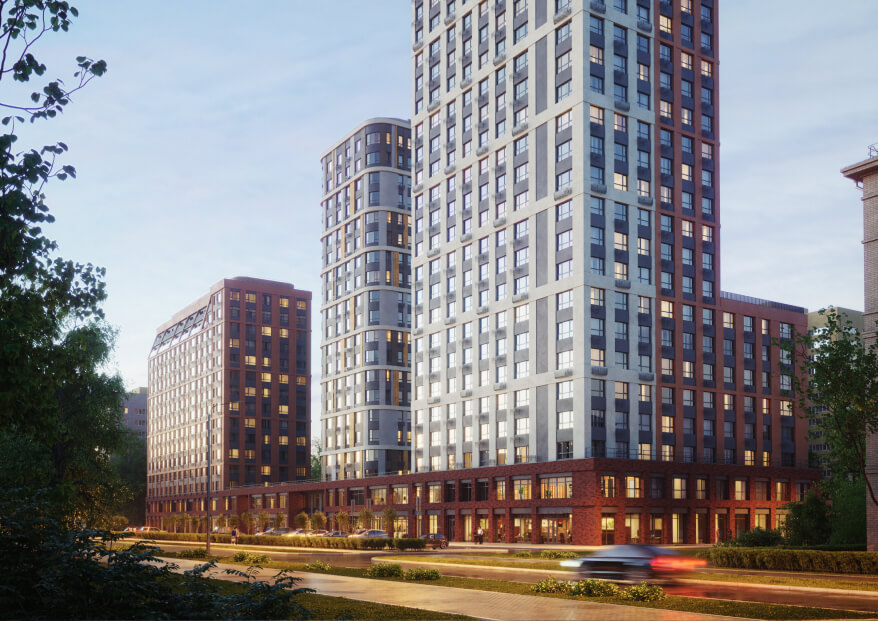
The 4YOU residential ecosystem consists of four houses of variable storeys located in the new center of Yekaterinburg — the area of the "new bus station". The first complex in Comfort-class Russia with the infrastructure of an entire city and a new generation courtyard. The combination of sophisticated architectural style, elegant surrounding landscape, private courtyard, security and modern technology creates a symphony of comfort.
The 4th section of the ecosystem is the only family—sized house in Yekaterinburg. It consists of forty 3-room apartments, with an enlarged wheelchair, a kindergarten right in the house, and a unique system of warm water floors that provide uniform radiant heat throughout the apartment, which means no drafts.
The unique architecture of the combined facade will preserve the modern appearance of the house for many years to come. The architectural solutions of the complex are the embodiment of the Canadian style, combining the lightness of modern European architecture and the technology of a region with a cold climate. The facades of the buildings are made of wet plaster combined with a ventilated facade. The gallery and courtyard facades of the complex are decorated with clinker tiles — this is an environmentally friendly and durable solution. The color scheme, saturation of the facades and details of the three-dimensional structure differ for all 4YOU buildings, which emphasizes the rhythm of the facade line and allows the complex to harmoniously fit into the existing architectural ensemble.
The interiors were built on the continuation of the 4YOU corporate identity. The color orange was chosen in the branding of the house. According to research by scientists, this is probably the only color that evokes positive emotions in most people. Large-format ceramic granite in the "terrazzo" style is used in the decoration of houses in two shades of light beige and gray. The main pattern in the decoration is the sloping lines forming the number 4, which are broadcast from the lobby to all the overlying floors.
This pattern is present in decorative elements: dividers, navigation, rustics on the panels of apartment doors.
The project is created for those who are inspired by new achievements and appreciate the high level of comfort that is evident in every detail of 4YOU.


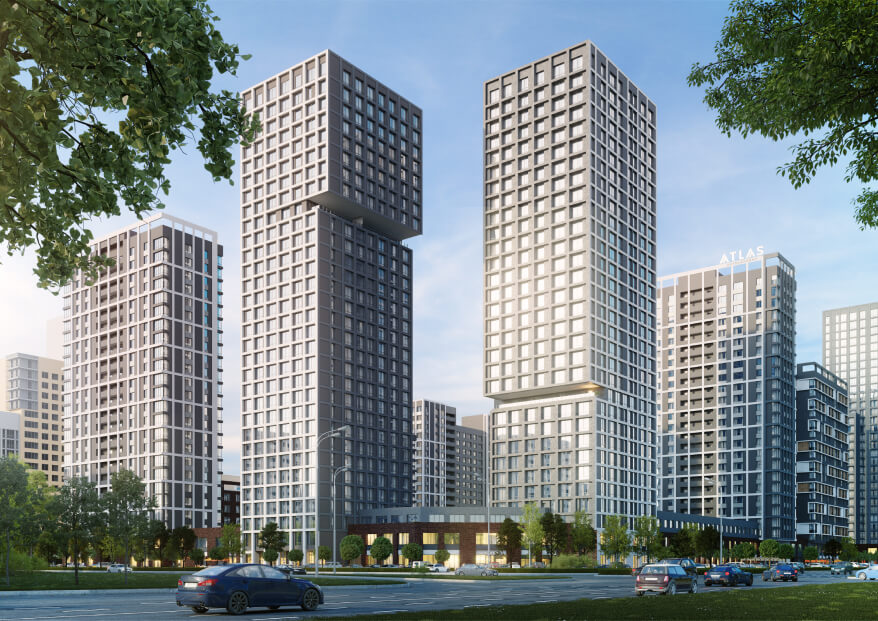
Park of Capitals Residential ecosystem: Atlas Development flagship project in the new center of Yekaterinburg
The Park of Capitals is located in the Moskovskaya — Shchors — Aivazovsky — Tsiolkovsky streets block. Two sections of the project already rise here under the names "London" and "Milan", "Hong Kong" and "Tokyo" have recently been commissioned, and two more — "Dubai" and "Barcelona" - are actively under construction. There will be ten of them in total, and they will be united by a pedestrian gallery with various establishments and a 2-hectare courtyard park with its own pond.
The complex provides for the infrastructure of the whole city, the developer is divided. For several years Atlas Development has been developing a unique housing standard, the Residential Ecosystem, in Yekaterinburg. Conceptual architecture, an all-in-one infrastructure, a space for a healthy lifestyle, courtyards for different ages, a smart home system, services for people and a high level of security are the main components of the Residential Ecosystem concept.
Each house of the Park of Capitals was named in honor of the world famous city that contributed to the development of the world. According to Atlas Development, the architectural concept involves intertwining the style of the city, after which the house is named, with functionality and comfort. There are two houses in each queue of the residential ecosystem, and on the ground floor there is a common lobby with a waiting area where you can hold a meeting or wait for a taxi. A pedestrian gallery will pass through the second floor of all the towers. It will open all the services necessary for a comfortable life: cafes, bakeries, grocery stores, pharmacies and beauty salons. Residents of the residential ecosystem do not need to go outside to have coffee with friends or take their child to a development center.
Yekaterinburg is considered the capital of constructivism, but the city has not seen new projects in this style for a long time. Realizing this, the authors maintained the architecture of the Park of Capitals project in the style of "modern constructivism" so that the residents of Yekaterinburg could rediscover it for themselves.
"If we talk about architecture, the advantage is that there were no historically significant structures here that needed to be preserved," says architect Boris Demidov about the project. — That's why we could fully show the high-rise architecture: nothing is obscured, not obscured, historical monuments are not closed. The block, despite the fact that it is located among highways, is closed and comfortable: it is fenced off from noisy roads by 2-3-storey buildings, continuous buildings. And when you're inside, you don't feel the powerful movement outside. We can give such an example: Manhattan in New York - inside a colossal development of high—rise buildings, a piece of nature is suddenly located — Central Park. The Park of Capitals is Manhattan in miniature."
Residents of the Park of Capitals will receive apartments with comfortable layouts, high ceilings and warm balconies, there are options with terraces and duplex apartments. The residential ecosystem has its own underground parking for 900 cars. You can take the elevator down from the apartment or lobby. Inside the parking lot there is an author's entrance group, which is decorated in accordance with the latest design trends. In addition, there will be lockers — special storerooms where seasonal items can be stored.
The courtyard is another feature of the residential complex. Leading European and Russian architectural bureaus participated in the creation of the space. There will be playgrounds for children and sports, running and cycling tracks, author's recreation areas and gazebos where you can read a book. A kind of dominant courtyard space will be its own pond with a width of more than 12 meters and a stream. In fact, the courtyard is a full—fledged park with an area of 2 hectares.
Special attention is paid to security in the Park of Capitals. A neural network is responsible for it in homes, which monitors alarming events. 24-hour video surveillance is monitored by the administrator and security staff. Access to the territory of the quarter can be carried out using a branded key, as well as using BLE and Face ID systems. This is not the end of smart home services in the residential ecosystem. Smart utility meters and leak monitoring sensors will be installed in each apartment by default. And it will be possible to manage the smart home system through the developer's own mobile application, Atlas.Service.


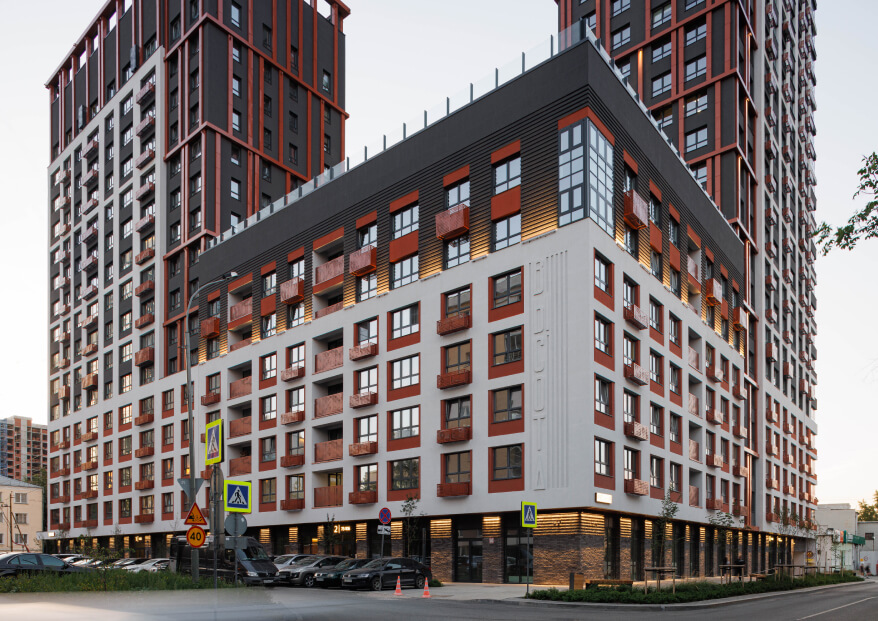
The residential complex "Height" is located in Yekaterinburg on ul. 12 Nagornaya Street. Location, historical context and conceptual solution predetermined the name and architectural image of the project. The architectural elements of the residential complex are designed to reflect the Ural identity. Therefore, in this location, it was decided to organically integrate a modern object of variable storeys into the existing building of the second half of the last century.
Due to the clear division of buildings into volumes of different scales (3 residential sections; number of floors: 16-7-31), the residential complex creates the image of a mountain range, sometimes covered with iron ores. The facades are made in a modern style, continuing the trends of new development in this area of the city. The color and architectural solutions of the facade of the "Height" are also inspired by the nature of the Urals: mountain peaks, rocks, copper. For the most part, the facades are decorated with white and gray plaster, decorative elements imitating iron ores, and metal panels "for copper".
Decorative elements, imitating a mountain slope, crown two high sections, closing with a copper "crown". The first floor is lined with dark gray artificial stone in the direct perception area, imitating the rocks of the Urals.
The structural character of the facades is emphasized not only by architectural elements, but also by the choice of materials. One of them is textured graphite plaster with horizontal rustication on the upper floors of the low—rise section. Concise and expressive.
The windows and stained glass windows in the "Height" are made of high-quality architectural glass. The increased light transmission rate attracts the warmth and comfort of natural light into the space. And the filtering properties of glass create a protective barrier against ultraviolet rays.
The roof is a semantic and visual extension of the external territory. Operational roofs are one of the key recognizable details of the Forum developer's projects. A terrace is provided on the roof of the second section for residents of the complex.: It is a comfortable space for quiet relaxation with soft areas and tables.
The high-rise dominant is noticeable from Lenin Avenue at any time of the day. At night, the eye is attracted by the spectacular lighting. The concept of architectural lighting is based on the principle of identifying the main structural and architectural features of a residential complex. The soft light sliding along the surfaces creates a feeling of coziness and comfort.
The Vysota Courtyard is a real piece of the fabulous and majestic Urals: a cozy courtyard—park is a safe, friendly place where all residents, the older and younger generations, are interested. A court and workout, playgrounds and a skate park, an event square with gazebos and benches in the form of an amphitheater, multi-level landscaping, an eco—friendly play element "Leshy" that makes the yard recognizable, a canopy in the form of a tree trunk - in short, everyone will find something of their own.
Environmental friendliness and connection with nature are emphasized by natural materials, landscaping and landscape of the territory. The motifs inspired by the Ural Mountains can be traced in the techniques of organizing geoplastics of space, which made it possible to achieve the effect of a complex hilly landscape with the help of small architectural forms and gaming equipment.
When creating the project, we tried to adhere to the idea "The product is born from the future resident, his interests, values, ideas about comfort. We create a lifestyle, we create lives for people."


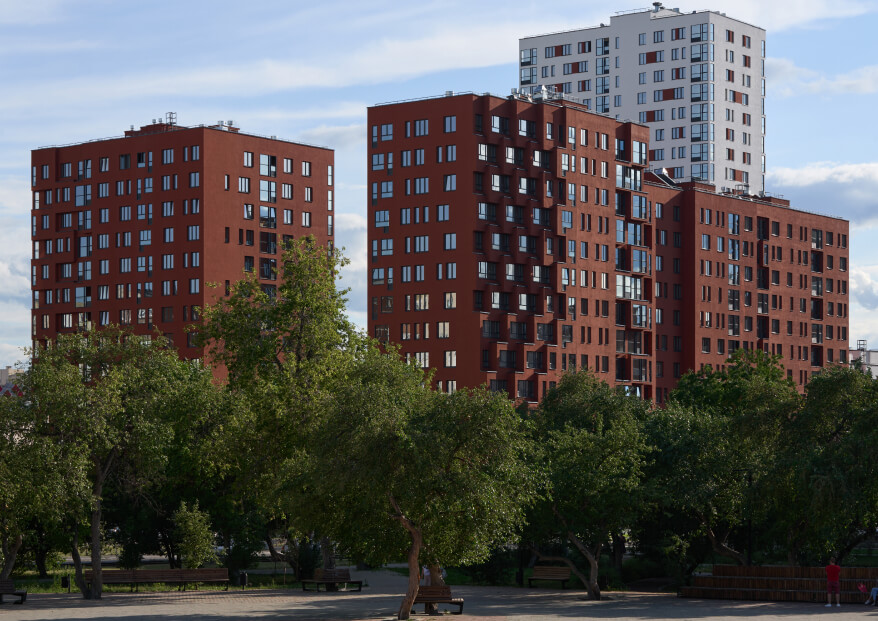
The architectural appearance of the quarter
The LevelUp residential complex consists of six sections, of which only one exceeds twenty floors in height, thanks to which the architects managed to avoid the "anthill" effect. There is no pronounced, sole dominant of the complex: each building is individual and has its own unique accents, depending on the point of view. For example, a group of sections stands out from Defense Square, united by a common terracotta color and facade rhythm. This part of the complex is in harmony with the brick building located opposite, so when moving along Tveritina Street, you get the impression of the integrity of the architectural style of the quarter. When viewed from the city center, the accent changes, and the tallest building in the complex, a twenty—four-story high-rise, becomes noticeable.
Facade solutions
The color schemes of the residential complex were dictated by the environment: terracotta and milky white contrasting to it were chosen as one of the dominant colors of the facades. The cladding materials are simple, but the reliefs are unusual: the monumental volumes of the buildings are opposed to the asymmetrical blocks, as if protruding and falling into the structure. The buildings seem to be on the verge of deconstruction or have been fixed in motion, so that the facade structure creates a kind of play of natural chiaroscuro during the daytime.
The corner terracotta building stands out with the help of multi-format, large and small duplication of facade plastics. It creates a complex but geometric rhythm and a dynamic step-like relief. Rising up, the building seems to blur, which creates the impression of solidity and at the same time lightness and mobility of the structure interacting with the airspace around it. The high-rise, in turn, is accentuated by the white finish color. The facade plastic of this building is represented by rhythmic brick-colored elements and an intermittent window meter, expressed by different depths of window openings.
Filling the yard
The courtyard of the complex is a multifunctional playground located on a stylobate. According to the designers, it should actively integrate into the lifestyle of owners and tenants. The courtyard, framed by the buildings of the residential complex on three sides, is open on the south side. It is saturated with natural and warm sunlight. The landscaping focuses on abundant landscaping: there is a green buffer on the open side of the yard, minimizing visual noise from the outside. In the center of the courtyard, there is a plaza planted with apple trees. The rest of the recreational areas: children's and sports grounds with rubber coverings, a workspace in the form of a stepped amphitheater with wi-fi and sockets, a zone of quiet relaxation and secluded walks are located around and connected by a circular promenade. All areas are separated by paths and small architectural forms: pergolas with hanging chairs, swings, hammocks.
Landscaping design
The elements of facade plastics — linearity, rectangular geometry — served as the basis for the design of interior landscaping: from the pattern of tile masonry to the compositional landscaping plan. The details of the decoration of small forms: playgrounds, sports equipment, benches, barrel grilles on the territory of the plaza, lamps are diluted with elements of larch, but kept in a common white-terracotta palette. The lighting of the courtyard's landscape composition is tiered, consisting of both main lamps and lower ones that illuminate pedestrian paths. It is consonant with multi-level landscaping, represented by trees, shrubs, and perennial flower beds combining cereal and flowering plants.
1.2 The best architectural solution is a unique non-residential building
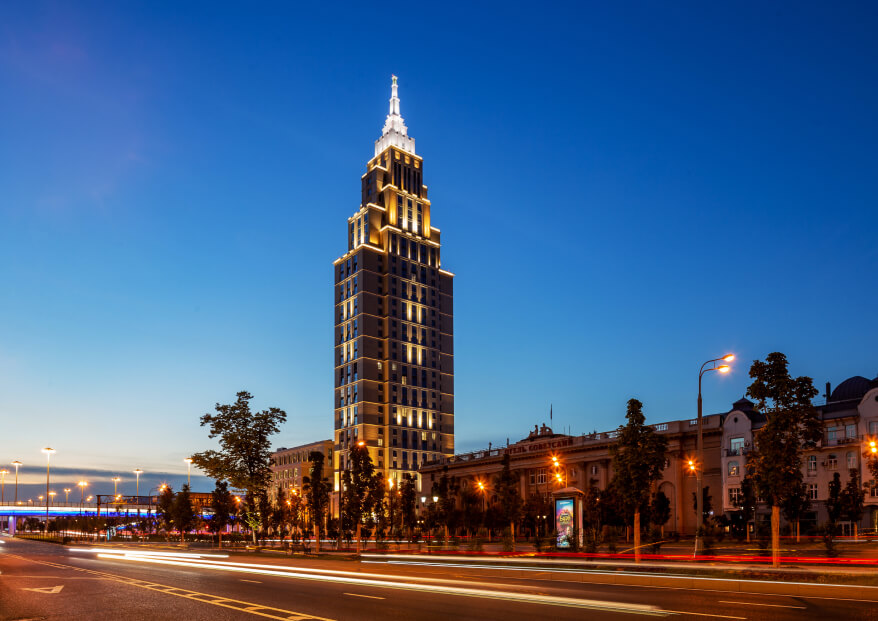
Alcon Tower is a 168—meter skyscraper located in the Begovy district of Moscow. The architecture of the building is reminiscent of the famous Stalin skyscrapers and the Empire State Building in New York. As is typical of Soviet Ardeco architecture, the project provides for the use of expensive and high-quality finishing materials. Modern use of Italian Renaissance motifs, absolute symmetry, hierarchy of buildings — all these elements are embedded in the Alcon Tower residential complex. The high-rise building is the dominant feature of the premium Begovoye district, located near the center of the capital. Thanks to the architectural lighting, Alcon Tower has forever changed the perception of the panorama of Leningradsky Prospekt.
During the implementation of the architectural lighting project, we faced an interesting task: according to the conceived concept, it was necessary to "make friends" visually and technically more than 10 types of lighting devices. The project provides for the installation of more than 700 RADUGA lamps with a power from 10 watts to 300 watts. All lighting equipment is energy-efficient, so the total power consumption of architectural lighting does not exceed 20 kW, which has a positive effect on the energy load of the city.
The facade lighting highlights the two-part structure of the complex. The lower block is illuminated by monochrome linear LUMENS and SIGNUM spotlights with the ability to control the luminous flux and adjust the color of the light fill. We have set up a smooth start of the facade lighting from the lower tier to the upper part of the high-rise building.
The most important stage in the implementation of the lighting concept was the spire. The difficulty of installing lighting equipment on a pointed structure was in height, in calculating wind loads, in developing and installing a special bracket of more than 1 meter, on which powerful APEX 200-300 W floodlights are mounted.
A special lamp with toroidal optics is installed in each window opening, which highlights the window, but does not allow light to enter the window itself and does not create discomfort for residents.
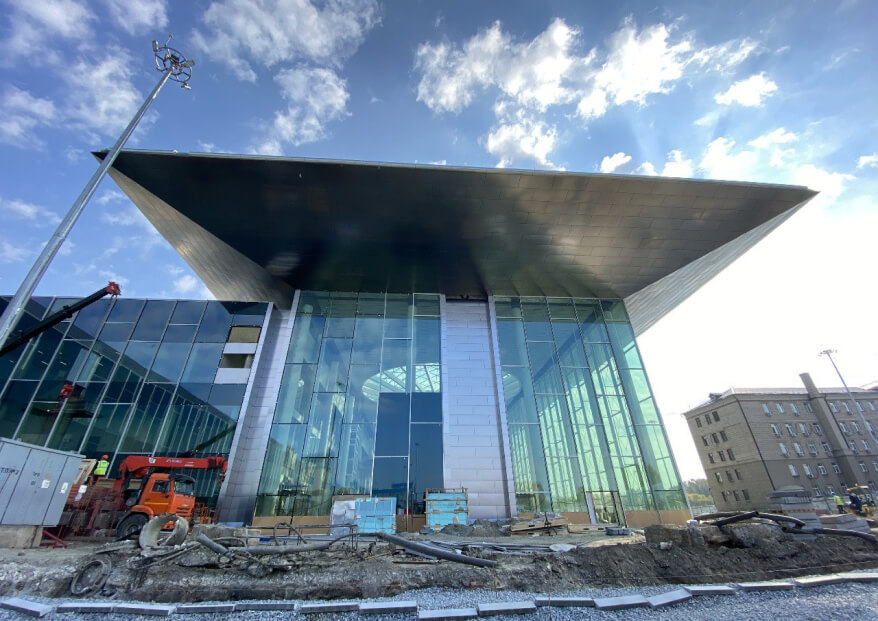
Pokryshkin Novosibirsk (Tolmachevo) International Airport is one of the most intensively developing airports of federal significance, the largest transit hub beyond the Urals on the most important routes connecting Europe and Asia. Novosibirsk Airport's geographical location allows it to serve promising cross-polar routes connecting North America and Asia. The airport is located 17 km west of the center of Novosibirsk, the administrative center of the Novosibirsk Region and the Siberian Federal District. The region where the airport is located is characterized by a high level of economic development and the maximum population density for the Asian part of Russia — about 9 million people live within 500 km from Tolmachevo airport. At the same time, the demand of Siberian residents for air transportation is growing twice as fast as the average in Russia.
Due to its advantageous location and extensive route network, Tolmachevo Airport traditionally serves a significant number of passengers not only from Novosibirsk Region, but also from nearby regions — Tomsk, Kemerovo regions, Altai Territory and the Altai Republic.
The concentration of railway, automobile and water transport routes in Novosibirsk and the expansion of trade and economic ties between the Siberian Federal District and foreign and Russian partners contribute to the development of Tolmachevo as the largest air transport hub.
The facades of the airport complex are interpreted as a single glass ribbon that "wraps" the building around the perimeter and emphasizes the higher central volume in which the main entrances and the main lobby are located. The compositional dominant of the interior of the main lobby of the airport are columns lined with stainless steel and their outlines evoke associations with aircraft turbines. The choice of glass with a low reflection effect as the main cladding material will achieve the effect of interpenetration of the street and the interior space, and thoughtful evening lighting will make the complex a noticeable landmark for both people approaching the airport and passengers arriving by plane. One of the key elements of the concept will also be the appearance on the forecourt of the art object "Meeting Point" - a meeting place for passengers and guests of Tolmachevo airport. "The main idea of the airport's architectural and planning solution is the unity of its external embodiment and internal content. Internal public spaces serve as a natural and integral continuation of the building's facade solutions, making the boundary between its exterior and interiors conditional, and thereby forming a dynamic modern image of the city's air gates."
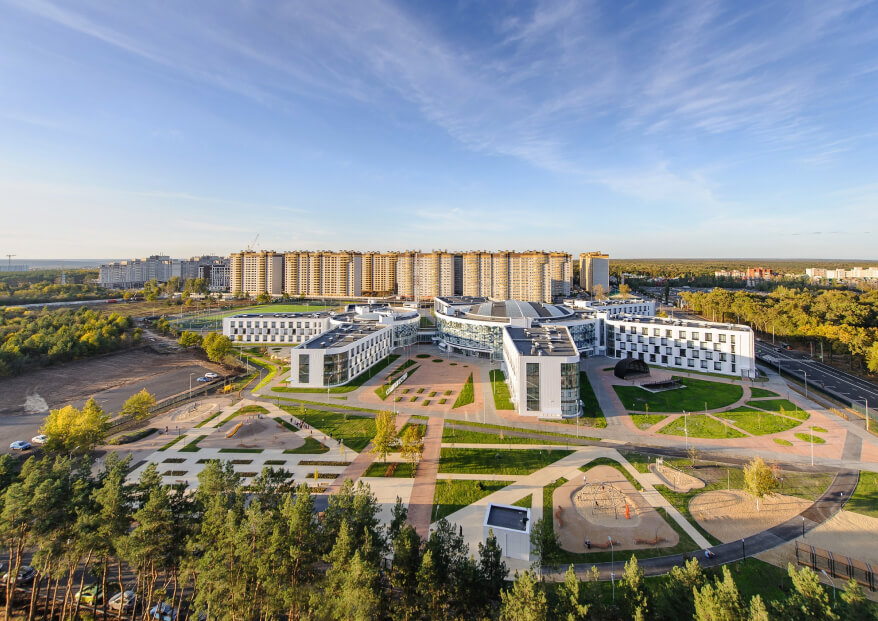
The country's largest school with 2,860 students opened in Voronezh on September 1, 2023. The construction of this unique facility made it possible to solve the shortage of places in the educational institutions of the district and relieve the burden on teachers of neighboring schools. In one shift, there is a learning process in 110 classes at once! The building's architecture is based on innovation in both education and design: the principle of a non—linear timetable and a departure from the corridor system. Zoning is provided by furniture and equipment, in compliance with fire safety requirements. The multi-level school restaurant allows you to feed almost 1000 (!) people in one break.
The space-themed school has already become an educational art object and a landmark in Voronezh. The concept is based on the Mir space station: with compartments, food halls, a space atrium, and cellular facades. In addition, the project has become international due to cooperation with a construction company from Belarus.
The non-standard capacity of the school, determined by the customer, dictated the rejection of the traditional approach to planning solutions. This school not only has no analogues in Russia, but there are also many design standards for such large facilities, so Special Technical Conditions for fire safety have been developed.
The building has two main parts: an elementary school (3 floors) with 1,040 students (40 classes); a middle and high school (4 floors) with 1,820 places (70 classes).
The Sodruzhestvo Educational Center has become an example of a new type of public space with a multi-faceted consideration of urban planning, functional, aesthetic and other factors. This is one of the rare large buildings that implements such principles of modern architecture as versatility, openness and scale of internal spaces, and simplicity of their solutions.
Innovative design and architectural solutions were used to create this facility.:
- The principle of a non-linear schedule and the departure from the corridor system. Floor planning solutions allow spaces to flow into one another. Zoning is provided by furniture and equipment, but in compliance with fire safety requirements regarding the width and length of escape routes.
- Multi-level functionality. Since almost 1,000 people had to be fed in one break at the high school, several dining halls were provided. But they were distributed not horizontally, but vertically (one above the other) — it turned out to be a multi-level school restaurant with comfortable seating for children at tables. Students can take the shortest route to the cafeteria on the floor where they finished their lessons. The food is delivered by elevator, and the food waste is removed by another elevator. At the concept stage, it was planned that children would be able to pre-order a la carte lunch through a special smartphone app. It is still under implementation.
- Transformability. The partitions separating the dining rooms from each other and neighboring rooms make it possible, if necessary, to connect the dining room to recreation, and create a new space for new tasks, for example, coworking.
The central core of the high school is a social and cultural space, designed as a 4—story atrium with large transformable recreations. An interesting solution is the placement of the students' outerwear wardrobe under the atrium stands, which made it possible to effectively use this space. It is sunk into several steps, which makes it almost invisible. And the long front line helps to avoid the pandemonium of children.
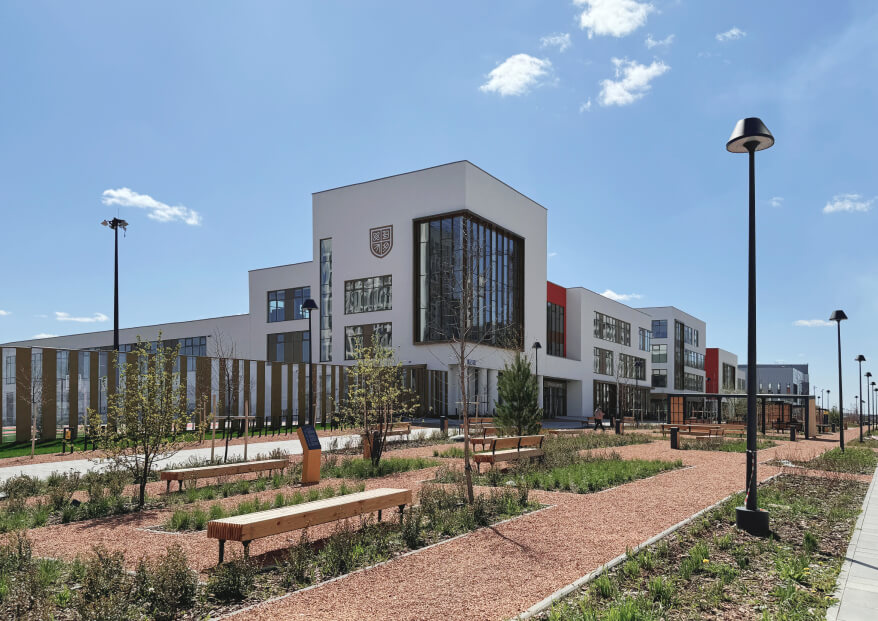
Starting in July 2019, the R1 design bureau team participated in the design of a large modern educational facility, the Gubernatorial Lyceum in the Solnechny district of Yekaterinburg.
The lyceum concept was developed by the architectural bureau @atelierpro.nl from the Netherlands. R1 were consultants and adaptors of the concept to local conditions.
In close cooperation between Dutch colleagues, R1 specialists and @forum_ekaterinburg, the functional scheme and aesthetics of the future school with a block of additional education and the Quantorium technopark were born. During the design of the school, the architects of R1.Lab worked for a month and a half in the atelier PRO office in The Hague, thanks to which we were able to interact with colleagues in person, quickly solve design issues, gained experience in cooperation with European architects, and also visited modern schools in the Netherlands.
The facility is unique for our region, as it combines the functions of a general education institution and a community center for residents of the district with a library, media space, climbing wall, gym and various clubs and lecture halls.
The Governor's Lyceum is located in the new residential area of Sunny in Yekaterinburg @sunny_district_official, one of the features of which is an integrated approach to the formation of educational and social infrastructure.
The new school is part of a cluster that, in addition to the lyceum itself, will include an innovative kindergarten and an Artistic and Aesthetic Gymnastics Center. All cluster objects are connected by a single public space — the linear park "Sunny Alleys".
Individual interiors and landscaping designs have been developed for atelier PRO Lyceum. Our team of architects, designers, general planning specialists, and engineers searched for technical solutions for the implementation of bold ideas.
The most difficult and at the same time creative task was to preserve the concept in terms of adaptation to Russian standards as part of the state examination of project documentation.
For the full implementation of the project, the essence of which is a modern educational space based on the principles of openness and accessibility, contributing to the harmonious development of the child, in the realities of existing Russian standards, Special Technical Conditions (STS) have been developed to ensure the fire safety of the facility.
The SCM business center is located in the central part of the city at the intersection of Chapaev and Dekabristov streets, near the floodplain of the Iset River, and has high transport accessibility. The facility is surrounded by established historical buildings and a well—developed business zone, as well as an iconic sports facility, the Ice Arena.
One of the difficult tasks that the designers were able to solve was the organization of a competent neighborhood of the business center with a 110 kV cable line that runs through the site along Dekabristov Street. To enable the operation and maintenance of the cable line on the 1st floor of the building, a unique superstructure was designed, which not only did not spoil the appearance of the building, but transformed into an arch opening a passage to the courtyards of the historical quarter.
Since underground parking is not possible on the site, the heated parking was moved to the second floor of the building, while due to stylistic elements, parking is almost invisible from the outside of the building. Due to the small number of floors, the building has an atmosphere of tranquility. On the ground floor there are lobbies, elevator halls and offices with customer traffic. The second floor is occupied by a parking lot. The third and fourth floors are office spaces.
Another feature of the building's layout is the presence of two separate main entrances from Chapaev and Dekabristov streets, which makes it possible to separate traffic flows.
The SCM business center faces Chapaev Street and Dekabristov Street, "embracing" the architectural monument at Chapaev, 2. The Afonin House is a stone one—story apartment building of the second half of the 19th century. The angular position of the office building, as well as the architectural monument, determined the equivalence of two street facades — the northern one facing the Decembrists and the eastern one facing Chapaev.
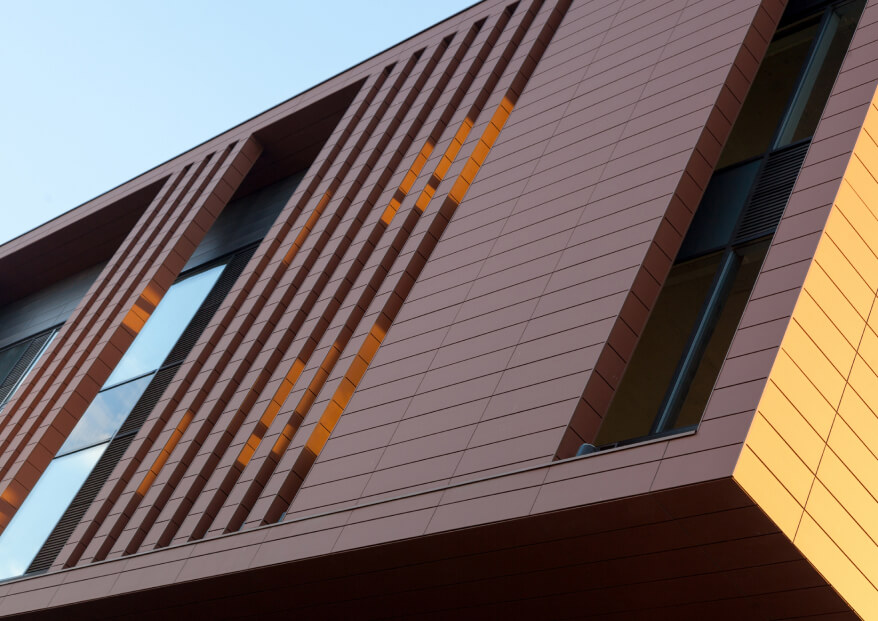
The stone residential building of merchant I. Afonin, built in the late 1870s, directly influenced the architectural concept of the building of the SCM Business Center. The symmetrical facades and deep brick color of the mansion became the inspiration for creating the look of the new office building.
The historical scale of the street was reflected in the two-story porticos, which were lifted off the ground and seemed to soar upward. And the play of light and shadow reveals the full depth of the volume. The building does not look like it has four floors: due to the vertical strings and porticoes, its scale is doubled and visually has only two floors. Therefore, all the attention of the Chapaev-Decembristov intersection is focused on historical buildings, and the new building does not completely copy the style of the quarter, but delicately gives way to history.
The architectural illumination of the Business Center is made in a restrained warm light, which unobtrusively highlights the volume of the building and forms the background for the historical building located in "its" embrace.
The main innovative component of the SCM business center is how it harmoniously fits modern design and functionality into a historical context. The three-dimensional arch in the middle of the building, the transfer of the parking lot to the second floor and its masking from the street side show the adaptation of the functionality of the SCM business center. A small number of floors, symmetrical facades, deep brick color and two-story porticos are balanced by modern materials and details such as metal cassettes, aluminum profiles, stained glass windows.
1.3 The best architectural solution is an object under construction
Novil residential complex is located 3 km from the city. Chelyabinsk on Novogradskoye highway. Building format: Medium-rise buildings with apartment buildings of 5-7 floors and accents of up to 9 floors.
Land area: 40 hectares .
Selling area of apartments: 300,000 sq.m.
Commercial area for sale: 15,000 sq.m.
Population: 10,000 people.
BACKGROUND. When working on the project from the very beginning, the task was to move away from the format of a "residential complex" and create at least a small city, with all its mandatory attributes. This is a necessary condition for a project in which there is no pedestrian connection to the existing urban development. This decision was also facilitated by a fairly large area of the site and the decision of the developer to locate a production facility on the project territory — the Molniya watch factory (which is currently located in the city center Chelyabinsk), which creates about 300 jobs.
THE MAIN IDEA. Nowadays, the term "city" is usually defined through accessibility and diversity of infrastructure. This is a necessary condition, but it is equally important that the nature of the building creates a sense of the city, looks like a city where you want to live and spend time. To do this, the project should include traditional urban spaces: streets, squares, boulevards, squares, etc. The main idea was the conscious design and integration into the development of these urban spaces, formed on the basis of the best examples of world urban planning practice throughout its history.
SOURCES OF INSPIRATION. When forming the image of a new city, we drew inspiration from the best examples of urban spaces, the places where we like to be and where we want to return.
CONNECTIONS = STREETS. The main paths from the entrances to the project to its community center are made in the form of traditional city streets, the main principle of which is a dense building front along the red lines. Streets have physical boundaries in the form of building facades for at least 70% of their length. Due to this, leaving any courtyard, residents immediately find themselves in a space that is uniquely defined by them as "urban". The second important attribute of the street is trees, which can be planted on both sides of the street.
MAIN SQUARE. The main square is the heart of the city! Unfortunately, the practice of creating spaces in modern new construction is almost lost. They are being replaced everywhere by platforms that, although they can perform their functions, are completely devoid of expressiveness. The difference between a site and an area is the presence or absence of vertical boundaries in the form of building facades. In this project, we bring back this traditional and very expressive element of the city. The main square has optimal dimensions for a project of this scale. Special attention is paid to its physical vertical boundaries. With the help of landscaping and small architectural forms, the space of the square is visually divided into parts, which, on the one hand, allows you to avoid too much open space, on the other hand, to accommodate a lot of people on it, for example, during holidays and other mass events. In the center of the square there is a "dry" fountain, the place of which is occupied by a Christmas tree in winter.
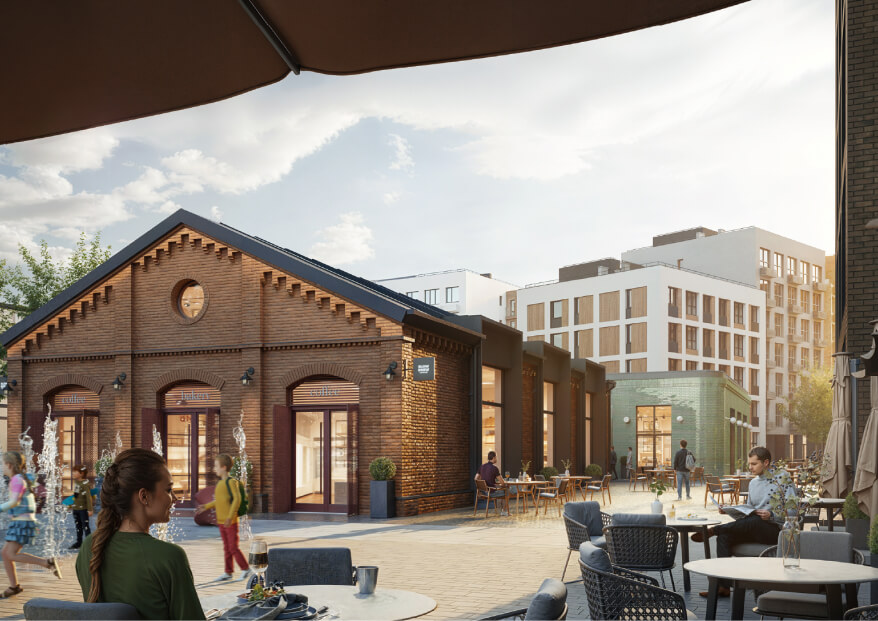
THE TOWN CENTER. The town center is located directly next to the square. It is a system of pedestrian spaces made on a very chamber scale: two streets, one 9 wide and the other 5(!) wide. meters and a mini-square measuring 8×12 meters. These spaces are formed by public buildings: a cafe, a restaurant, shops, and an apartment building with commercial premises on the ground floor (along one of the street boundaries). In fact, this is an ordinary small shopping center, corresponding to the scale of the project, but not squeezed into a standard "box", but consisting of several buildings. This approach, in addition to performing the usual functions, allows you to create very cozy and expressive urban spaces in the spirit of the old pedestrian city. Special attention is paid to the formation of spaces with complex geometries: pedestrian streets bend smoothly, right angles are minimized, architectural solutions of facades change every 6-10 meters, which adds to the feeling of the "magic of the old city" to this place.
BOULEVARD AND GREEN AREA. Further, behind the town center, there is a boulevard and a green area — a city square or a mini-park. Given that the project is surrounded on three sides by a mixed forest, there is no need to make a full-fledged park in it. The main function of greenery in the city is to bring diversity to the urban landscape. In a very small space, two traditional elements of the city have been created: a boulevard and a square.
THE MAIN PLAYGROUND. The central children's playground is located after the boulevard and the green area. Its main function is to "lure" children out of the yards. As a result, children from all over the project will gather in one place and will always be able to find "kindred spirits" or just peers for common games.
COURTYARDS. The project gives absolute priority to the creation of public urban spaces, while courtyards are given a secondary role. According to the concept, courtyards are a place for those who are under 7 and over 70 years old. The courtyard in the project is a small semi—private square, which is used only by residents of the houses forming it. This is a place for a relaxing holiday, all noisy activities are carried out beyond its limits. Landscaping of the yard is as simple as possible, but at the same time high-quality. Special attention is paid to landscaping.
Currently, the understanding of a city is based mainly around infrastructure, its development and diversity, social communities, digitalization, various systems from transport to automated delivery services, etc.
A very important point is often overlooked: when focusing on what the infrastructure (i.e., content) of a modern city should be, we often overlook the question of what the actual structure, that is, the physical structure (shape) of the city, should be.
To find the answer to this question, we looked at the problem from the point of view of an ordinary person. Where is he doing well? What places does he enjoy being in? Where is he willing to stay? When does he choose a longer path instead of taking a shortcut? Where does he prefer to walk in the evening?
As a rule, such places are located in the historical centers of cities, and these include traditional urban spaces: streets, squares (not playgrounds!), boulevards, squares. All these spaces can be completely different in their characteristics, and the key parameter of a pleasant walk is the variety of sensations.
This is exactly the principle we used in the project. Without copying specific examples, you applied the principles on which the best urban spaces are built, and incorporated into the project the main quality, in our opinion, the diversity of urban spaces. In a sense, this is programming the sensations of moving around the city: the sidewalk of a street with car traffic is replaced by a fairly spacious, but at the same time cozy main square; then the space contracts on a narrow pedestrian street, expanding again on the boulevard. After taking a few steps to the side, you can find yourself in the natural surroundings of the city square, then go back to the sidewalk of the city street or go into the real forest bordering the project.
All this turns ordinary movements around the city, whether it's going to the store or to work, into a pleasant walk full of interesting impressions and sensations. As a result, they add up to one common feeling of being in a beautiful, comfortable, modern city!
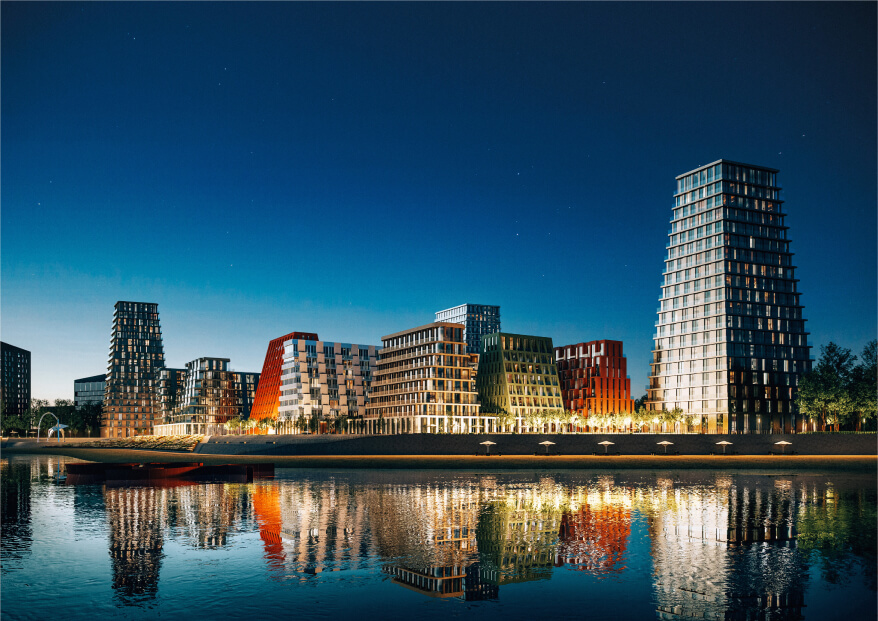
The territory in the area of the river port of Kazan before the redevelopment began was a stagnant, depressed industrial zone. In the autumn of 2022, Kazan launched an ambitious renovation project of this 287—hectare territory, the New Portovaya, which included the Yanalif residential complex.
Yanalif is an unprecedented and ambitious premium residential complex on the banks of the Volga River with an exclusive collection of landmark apartments.
The complex consists of 20 houses with variable floors, most of them 9-11 floors high, with high—rise dominants at key urban planning points. The area is 100,000 square meters, of which 20 percent — commercial and administrative areas, the rest is housing.
The bright and elegant architecture of the complex is the result of the work of the architectural bureau "Tsimaylo Lyashenko and Partners." The architects were inspired by the silhouette of the Syuyumbike tower and Tatar national patterns on embroidery of the 19th century. Minimalism and organic weaving into the fabric of Kazan architecture correspond to the canons of modern urbanism.
Advanced solutions are used in the decoration, including modular systems made of aluminum, tiles, bricks, fibreglass, glass, and natural stone.
When creating the project, three key elements were taken into account: the proximity of water and its impact on lifestyle, the national character and the beauty of the surrounding landscape. The task of the architects was to preserve the identity of the territory and turn it into a point of concentration of urban life, so that human flows flocked here.
Several pedestrian boulevards will pass through the territory of the residential complex — they will connect the existing urban development with the square in the center of the residential complex and the Volga embankment promenade. The trapezoidal shape of the residential complex allows the use of terracing, gives a complex, lively, memorable silhouette and reduces climatic stress.
Due to the variable number of floors, people get more natural lighting in the courtyards, and better view characteristics from the windows of houses on the second and third lines. At the disposal of future residents will be open-plan, high ceilings from 3.4 m and postcard views of the Volga River.
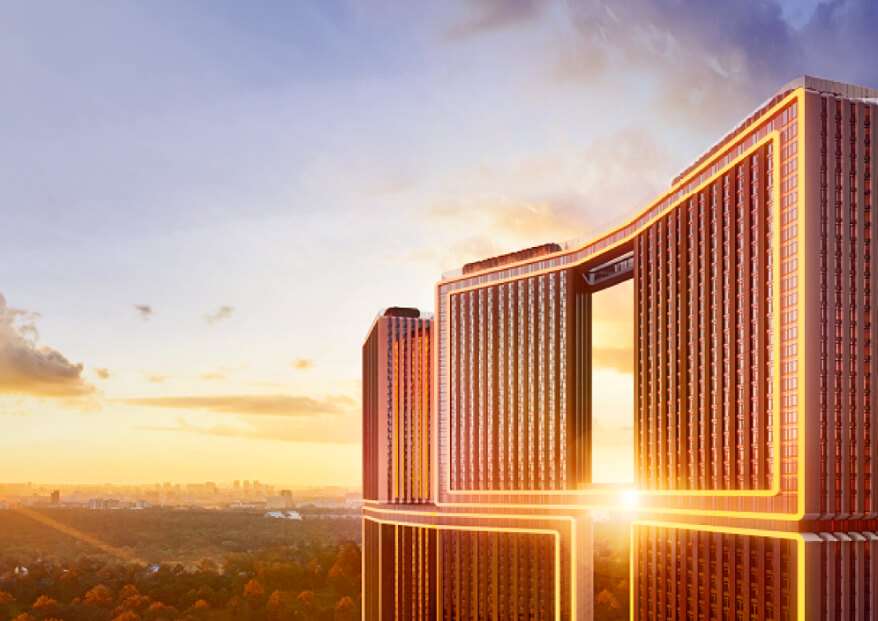
Russia's first house with sky bridges
The new quarter "Event-4" is a vertical "city of the future" with multi—level public spaces: bridges at the level of 26-28 floors and a park at a height of 172 m in the west of Moscow.
The creator of the project is the chief architect of the city project, Philip Nikandrov, the author of the Evolution tower in Moscow City and the Lakhta Center in St. Petersburg.
The "Events" style is minimalism, clean and effectively drawn lines of snow—white shells. Their interweaving creates a futuristic prototype of vertical cities of the future with skyparks and sky bridges: a large-scale and multidimensional space for living at altitude with unprecedented view characteristics. Residents will enjoy unique circular panoramas of the city: Moscow City, the Moscow State University building, Poklonnaya Gora and the surrounding parks.
The skyscrapers of the "Event" set a new lifestyle. Bridges and the park "in the sky" will become a unique place for recreation, work and sports: there will be walking and running tracks, exercise equipment, green lounge areas with mobile furniture and much more. The rooftop park and bridges will be private, and you can visit them all year round.
The state-of-the-art lobby with five-meter ceilings is designed as a multifunctional space: there is a coworking space, a lounge area, a kids' club and a game area for teenagers, digital mailboxes.
As part of the high-rise urban development complex, it is expected to be implemented:
- three residential towers (52 floors high each)
- an integrated preschool with 100 places
- built-in non-residential service functions (retail, catering, fitness, etc.) on the ground floors
- underground parking on three levels below the existing ground level.
Additional recreational spaces for the residential complex are 4 well-maintained mid-level sky bridges and a skypark on the roof of two towers connected by two bridges. In addition to a running track on the operated roof of two towers, the skypark includes landscaping in tubs, small forms, outdoor furniture and even a shallow summer pool for preschool children.
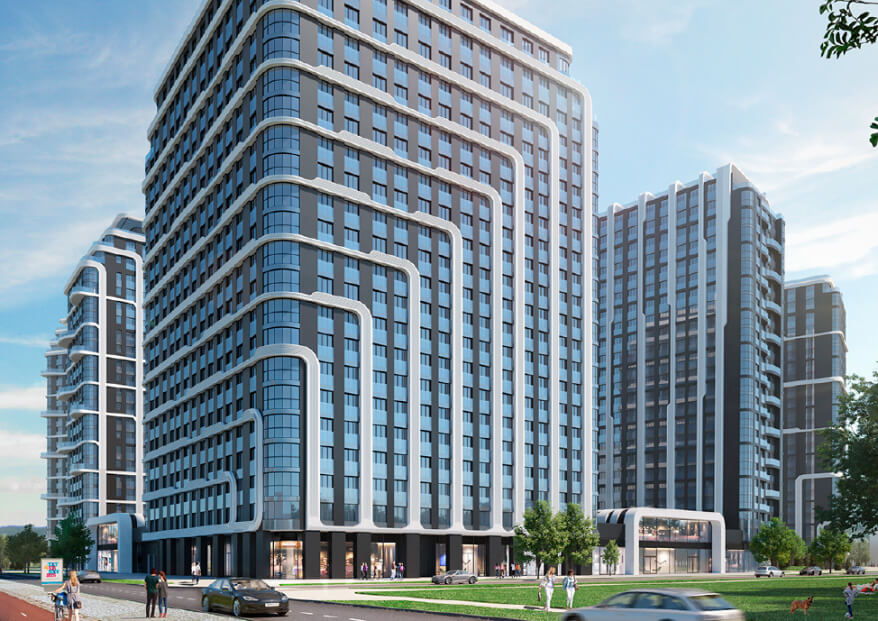
The Ostrov -2 business class quarter is located in the Khoroshevo-Mnevniki district, on the border of a forest park in the Northwestern Administrative District of Moscow. The residential complex consists of six residential buildings with a height of up to 82.50 m on the same stylobates for each group.
The composition of five meridian-type plate towers and one corner two-section tower visually fixes the intersection of streets with a bright accent and forms a single group.
This arrangement minimizes mutual shading and provides the most vivid views of the surrounding landscape, towards the Mnevnikovsky Arboretum and the floodplain of the Moskva River.
The concept
The architectural solution of the facades of the residential complex buildings is presented in a modern futuristic minimalist style with individual architectural elements.
The bionic architecture of the houses and the panoramic glazing of the facades, the futuristic elements of their decoration — all give rise to the feeling that the buildings are directed upward and, at the same time, into the future. The quarter vividly embodies the two most important ideas of the Island — environmental friendliness and innovation.
The enclosed and spacious courtyard was created as a model of the natural world, with its hills, landscaped terraces and trails, and a wide variety of trees and shrubs. There is even its own stream, which in summer gives coolness to adults and joy to children, and in winter turns into an ice rink.
Superior apartments with their own walking terraces are located on the upper floors of residential buildings.
The combination of steel, glass, aluminum and porcelain stoneware creates a fantastic space where each element looks like an art object. Soft waiting areas and private corners for socializing, rooms for strollers and washing pets' paws, elevator halls and navigation — the futuristic design here perfectly combines with comfort.
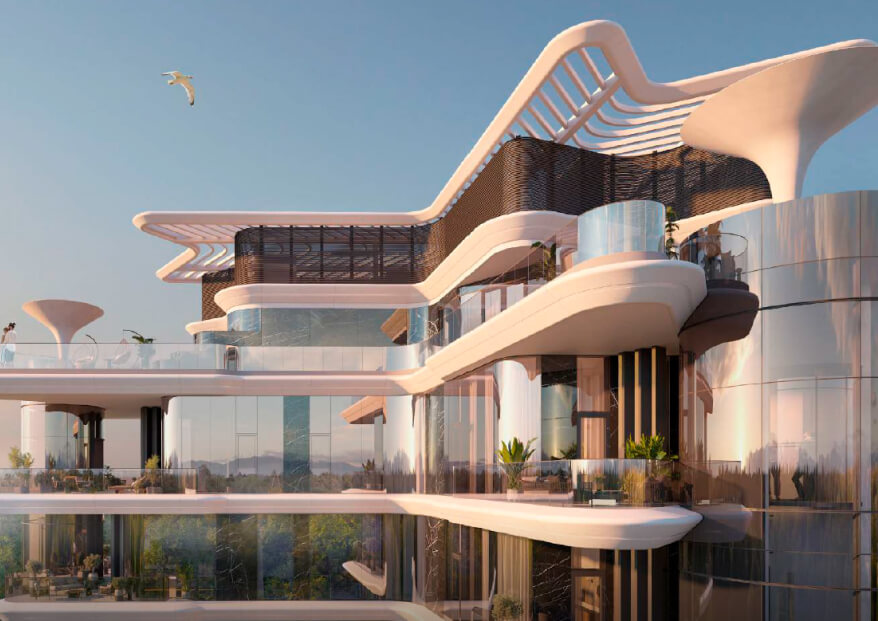
A new premium residential complex in the style of futuristic minimalism will appear in the Khoroshevo-Mnevniki district.
The style of the club housing project symbolizes the ideology of the "house of the future". The complex will be designed in a minimalist style with references to yacht architecture, which is dictated by the location of the future project — in the floodplain of the Moskva River. The facades of the hulls will resemble super yachts and ocean liners due to the snow-white finish and dark glazed glass.
The elite complex consists of two buildings with a height of up to 6-7 floors with a total area of about 12,000 m2. There are only 2-3 apartments on each floor, and each has its own private entrance from a panoramic elevator through a private terrace. Such individual access in the building required the transfer of passenger elevators from the staircase and elevator node to the facades of the building as panoramic ones. That is, in fact, it was necessary to partially "turn" the traditional scheme of a residential building inside out, while the escape staircase and the cargo-passenger elevator (for access to guests, for loading, couriers, maintenance services, etc.) remain in the traditional core of the building.
All apartments have panoramic Windows and access to a private terrace. The exploited roofs of the buildings are crowned with spectacular pergolas.
A mini-park will be built on the adjacent site, and a separate design project has been developed for the landscape. In addition to the "green" areas, it is planned to accommodate children's and sports grounds, a gym, as well as recreation areas.
2. The best engineering solution for the construction site
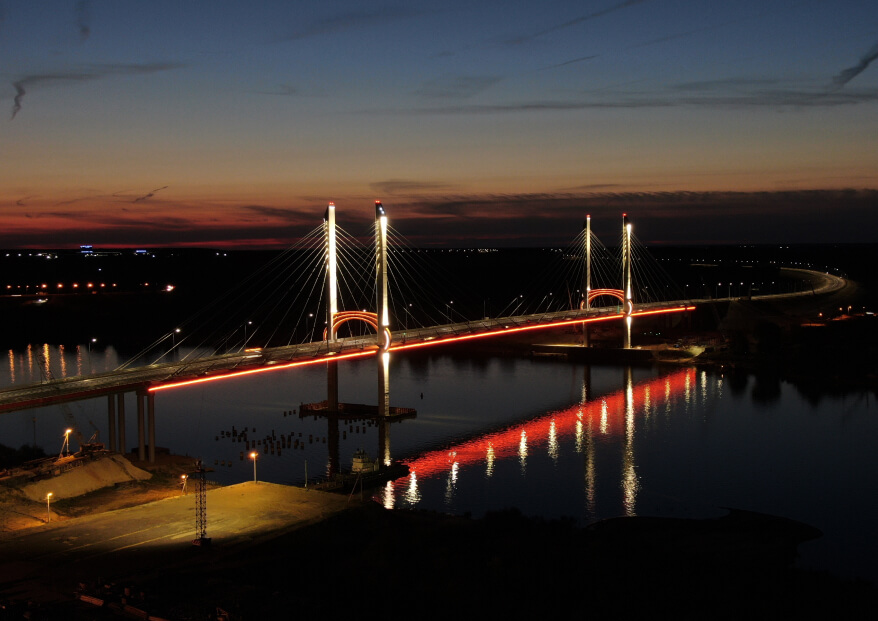
The bridge over the Oka River, the only cable—stayed bridge on the M-12 Vostok highway, was built as part of the fourth stage of highway construction and connects the Vladimir and Nizhny Novgorod regions near Murom.
The bridge over the Oka River became the first bridge with a cable-stayed system, the elements of which were developed and certified in Of Russia. During the construction of the monolithic channel support pylon, for the first time in Russian bridge construction, sliding formwork technology was used to construct cable-stayed bridge pylons. The processes of reinforcement, concreting, concrete maintenance and moving the formwork were carried out continuously: this reduced the production time from 10 to 4 months. The technical solutions adopted made it possible to reduce the material consumption of the structure compared to its analogues: the consumption of reinforced concrete is by a third.
The elements of the cable-stayed bridge crossing system have been developed and certified in Of Russia. Taking into account technologies, installation equipment and software products, the volume of import substitution amounted to 90%. During the construction process, the installation of the cable-stayed system was timed to develop new prices and enter them into federal reference books.
The materials used in the construction of the bridge crossing over the Oka River are Russian-made. 14.5% of the cost of materials are materials from local producers in the Vladimir and Nizhny Novgorod regions, including inert materials, concrete, asphalt, and precast concrete. Taking into account technologies, installation equipment and software products, the volume of import substitution amounted to 90%. Dampers, deflectors, cable anchorages, hardware and software systems, tension equipment are designed and manufactured in Of Russia.
The bridge crossing has unique spans. The bridge structure is a cable—stayed steel-reinforced concrete superstructure with two reinforced concrete pylons. Floodplain areas are designed with continuous steel-reinforced concrete superstructures. The technical solutions adopted made it possible to reduce the specific consumption of metal by a quarter compared to similar facilities, and the need for reinforced concrete by a third.
Technical characteristics of the bridge crossing:
- Length — 1377.6 m
- Riverbed — 650 m
- The layout of the spans — (75+120+254+120+74) m
- Floodplain area — 728 m
- The layout of the spans — (74+2×75+66+65)+(65+3×66+2×50) m
The bridge over the Oka River is the first Russian bridge with a cable—stayed system, the elements of which are designed and certified in Of Russia. During the construction of the monolithic channel support pylon, for the first time in Russian bridge construction, sliding formwork technology was used to construct cable-stayed bridge pylons. The processes of reinforcement, concreting, concrete maintenance and moving the formwork were carried out continuously: this reduced the production time by six months — from 10 to 4 months.
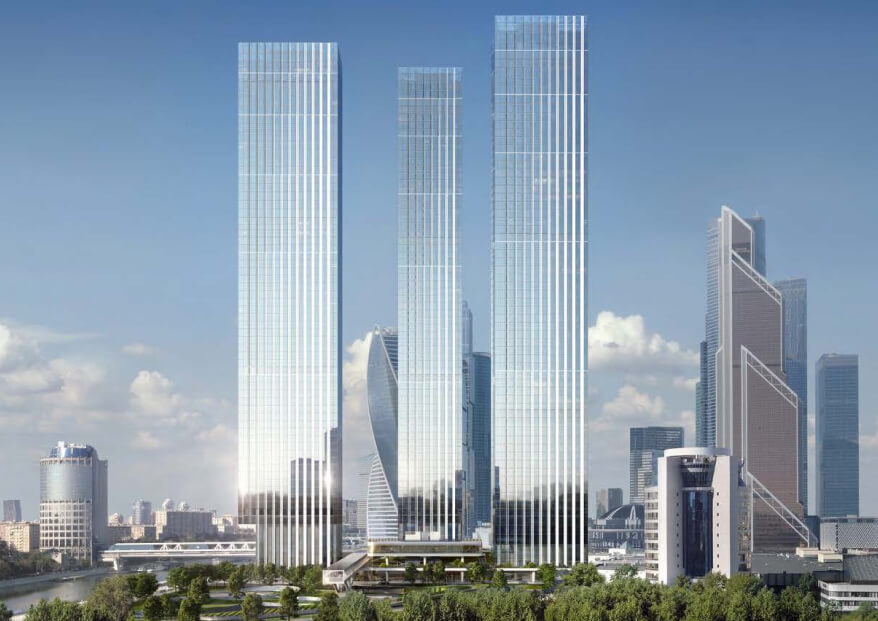
The multifunctional high-rise residential complex is an architectural composition of three towers with a height of 295 meters, united by a common two-story stylobate with a public function. The first floor of the stylobate partially belongs to the underground part. The complex also has a single five-storey underground part, in which parking, auxiliary and technical rooms are located.
The complex is provided with all engineering resources from urban heating, water supply and electricity supply networks.
To ensure year-round comfortable microclimate parameters in residential, office and commercial premises of a multifunctional high-rise residential complex, the project provides for the installation of two cooling systems in the building, providing fan coils and supply air units with cold water.
The essence of the main innovative solution is to make the maintenance of the microclimate in each apartment autonomous, with parameters satisfying each user.
For this purpose, the project provides the following:
Each apartment is equipped with an individual duct-type supply and exhaust air unit located in the sewn ceiling of the technical area of the apartments. The installations provide for air purification, heat recovery of the exhaust air, and preheating during the cold season. The supply air is distributed through four-tube convectors built into the floor. The removal of exhaust air from kitchens and bathrooms is provided in the exhaust system of the building. The exhaust duct scheme is adopted with satellites connected to a prefabricated vertical box under the ceiling of the overlying floor. For initial adjustment, the installation of throttle valves on satellites is provided. To create a vacuum in the shaft and eliminate air overflows, an exhaust fan is installed on the upper technical floor.
Thus, the convectors of the heating system assume another role — the distribution of supply air to the stained glass windows, and the indoor air is also cooled in the convector from the central cooling system of the building during the warm season.
This combination made it possible to abandon the fan coil system, allowed to keep the ceiling height in apartments at a good level and naturally go to a lower noise level from indoor convectors instead of fan coils.
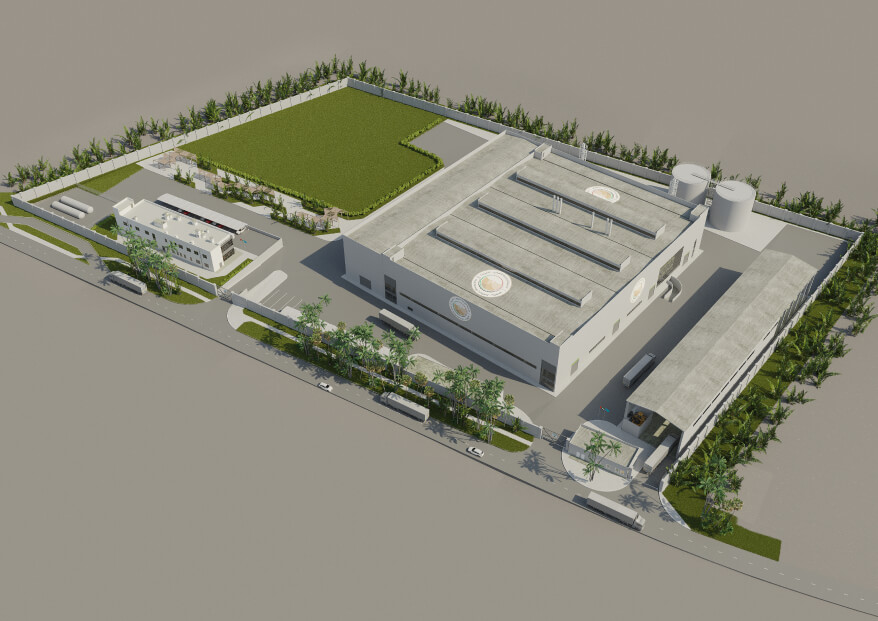
The plant for the production of basalt fiber reinforcement is designed taking into account the basic requirements of modern trends. A full production cycle ensures uninterrupted operation and minimizes possible risks. The plant's space is divided into special zones and includes: a raw materials warehouse, basalt smelting and basalt thread extraction areas, rebar weaving, cutting and storage of finished products, as well as an administrative building for senior staff. When designing the exterior of the buildings, the architectural and color stylistics of industrial buildings in the Emirate of Elfujair were taken into account. The planning of the internal space of the production and administrative premises was carried out taking into account the functional purpose of the premises, the staffing table, as well as taking into account the requirements for fire safety and ergonomics.
The total area of the buildings is 7610 m2.
The uniqueness of the engineering solution:
The project uses energy—saving technologies - an absorption bromistolithium refrigerating machine (chiller). The installation uses waste heat in the form of exhaust gases from gas piston units (GPUs), turbines (GTU), flue gases from technological processes
Due to the absorption technology, the cost of air conditioning is significantly reduced, since ABHM does not consume electricity. A single ABHM with separate generators makes it possible to utilize the heat of several engines.
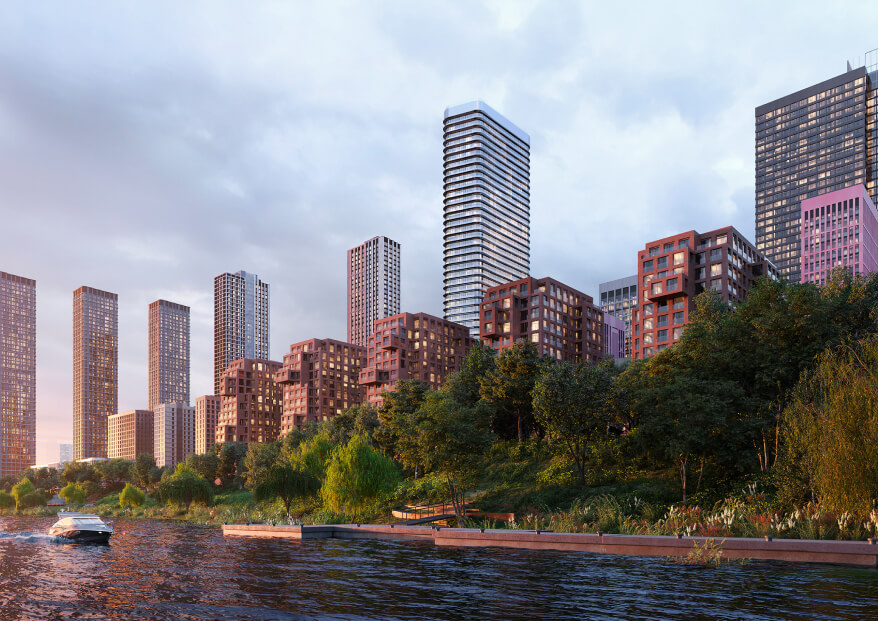
The second stage of the City Bay residential complex is a complex engineering and technical complex, which consists of three buildings of variable number of storeys (up to 54 floors), united by a stylobate part, as well as a single underground part - two underground floors.
The roof of the stylobate part, as well as the roof of the underground parking lot, is a landscaped courtyard. Entrance lobbies and rooms for various social and public purposes are located on the ground floors of the buildings. Residential apartments are located on 2-54. The height of each building is 180 meters.
The most modern engineering solutions and materials are used at this facility. For all energy-consuming systems (water supply, heat supply, electricity), an automatic energy metering system is provided with data transmission to the management company and residents. It is also planned to equip all ventilation systems with frequency controllers with the ability to control and monitor the condition from a common control room, which allows for the most efficient use of equipment, minimize energy consumption and timely maintenance of systems. When developing ventilation systems, measures to minimize the draught effect were taken into account. The facility is powered by built-in transformer substations located in an underground parking lot. The power supply is made using busbars, which indicates the reliability and high level of equipment of the facility.
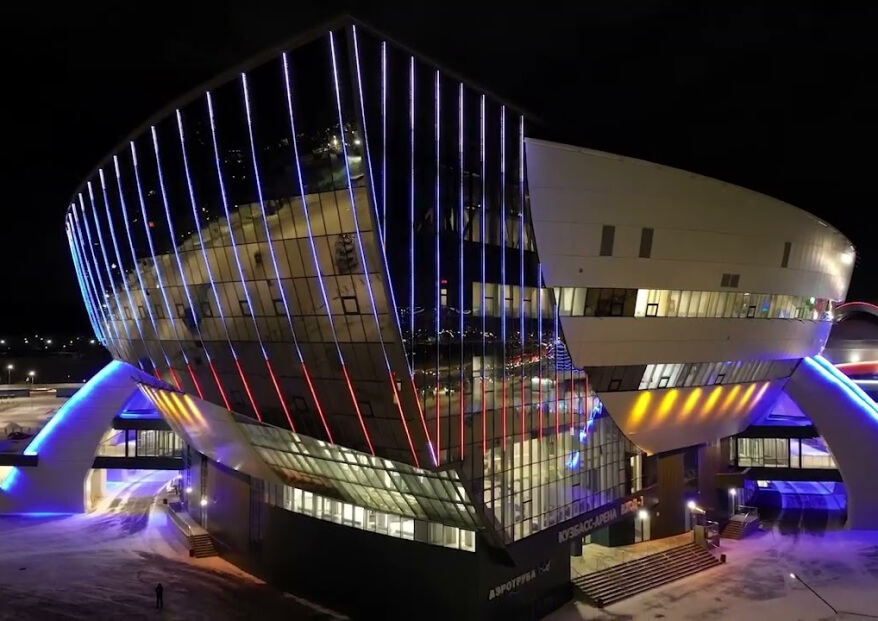
Vertical transport systems in the KuzbassArena multifunctional sports complex in Kemerovo / METEOR Lift
METEOR Lift has equipped the largest sports complex in Western Siberia, Kuzbass Arena, with modern lifting and transport equipment. Kemerovo. The company has supplied and installed six latest generation Meteor Evo elevators without a machine room using belt technology and four escalators. The lifting capacity of the elevators is 1000 kg, the capacity is 13 passengers, and the speed is 1 m/s. All elevators are manufactured at the METEOR Lift factory in St. Petersburg. Due to the lack of a machine room, it was possible to free up valuable space and place more sports facilities in the building. All elevators are equipped with a ReDrive regenerative drive, which, combined with a compact gearless winch, helps save up to 75% of energy consumption, which reduces the cost of operating the entire complex. Energy savings are also achieved thanks to LED lighting, which has a service life 10 times longer than fluorescent lamps, with an automatic shutdown mode.
The high accuracy of stopping the cabins on the floor platforms ensures unhindered use of elevators by people with limited mobility. All the equipment installed in the complex is characterized by reliability, durability, smooth running and low noise levels, ensuring comfortable and safe movement of arena visitors.
The use of the technology of flat polyurethane belts reinforced with steel ropes ensures the durability and safety of elevator equipment. These belts do not require lubrication and have a significantly longer service life (2.5 — 3 times) compared to traditional ropes. In addition, all elevators are equipped with the SmartSense system, which provides automatic monitoring of the condition and integrity of belts in round-the-clock monitoring mode. The system allows timely planning of maintenance and minimizing possible downtime of elevators.
Additional reliability is provided by the infrared protection of the doorway, blocking the operation of the elevator in case of unauthorized opening of the shaft doors, fencing the counterweight in the pit and fencing the rotating parts.
Four passenger escalators with a lifting height of 14.4 m are designed for continuous operation at maximum load levels, which makes them an ideal choice for installation in buildings with high passenger traffic. They are made of stainless steel, which makes them highly durable and resistant to corrosion. The design of the steps is characterized by the presence of a hollow axis between the chains with steps and steps attached to the axis, which ensures precise transverse entry of the steps into the comb and prevents them from falling inside in the event of a breakdown of the steps. Compact dimensions provide structural flexibility and ease of installation. The escalators have built-in LED lighting, a direction indicator and an elongated conical handrail mouth, ensuring the safety and convenience of regular use by guests of the sports complex. Thanks to the tapering deflectors, the risk of pinching is minimized. Escalators are 90% made of recyclable materials, which makes them environmentally friendly to use. The highly efficient automatic lubrication system ensures easy maintenance, low noise and vibration, longer chain life, and reduces oil consumption.
3.1 The best constructive solution is a unique non-residential building
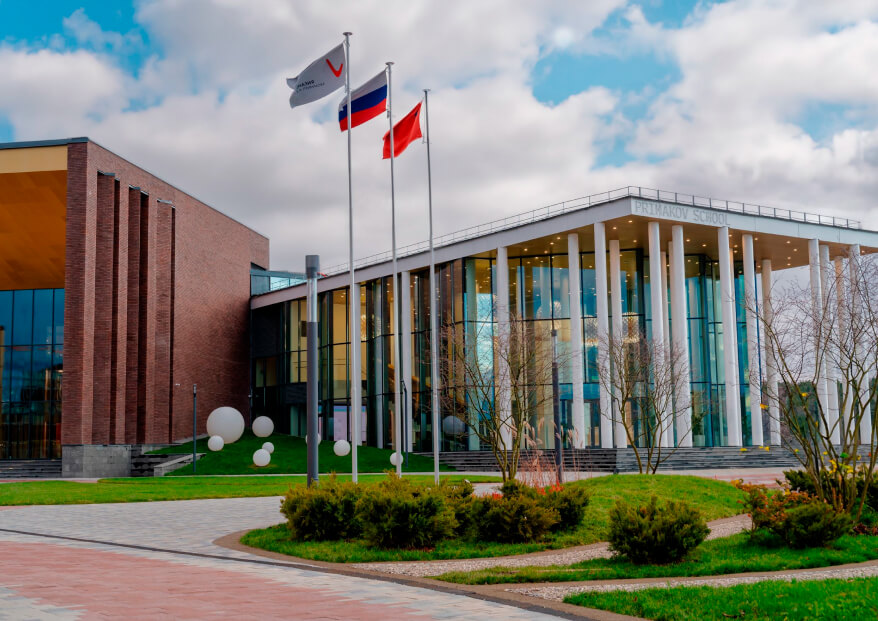
About the project
The modern educational process is aimed at multiplying communications, which stimulates co-creation and makes the process of acquiring knowledge continuous. In this new horizontal-network educational model, the recreation area, which previously played an auxiliary role, becomes of paramount importance and becomes a key, almost the main space of the educational institution.
In the project of the second stage of the Gymnasium named after E. M. Primakov's Recreation Area is the space of a covered atrium that unites separate blocks in which different disciplines are taught. Taking into account the bypass galleries, the atrium can accommodate about a thousand people at a time.
The atrium floor is treated as an artificial relief. The elements of this relief are terraced: a slope (amphitheater staircase), a hill, and a depression. There is a library on the steep hillside, its steps serve as bookshelves. You can sit down with a book on the ledges of a gentle slope, in the "hollow", and on the amphitheater stairs.
Academic Building (CC)
The projected management system of the multifunctional educational complex is designed for teaching children/teenagers from 9th to 11th grade. The educational program is designed for year-round admission of students. The projected building is designed for a one-time stay of 500 students.
The building has a complex shape in the plan, it is determined by the shape of the design area and the need to orient the classrooms to the cardinal directions. The total volume of the management system is formed by separate architectural spatial planning blocks located at angles of 45 and 90 degrees relative to each other. The total approximate dimensions of the building are 160×165m.
The basis of the architectural concept of the Management Company is the idea of separating various functional blocks and combining them around a central multifunctional atrium space. In the building The main spatial planning blocks are distinguished: "Science", "Art", "Sport", as well as the "Entrance Lobby" block, the "Stage" block and the Dining Room block.
The structure consists of crossed flat trusses of asymmetric geometry with a maximum span of 51 meters, supported by reinforced concrete facade walls of educational blocks. The stability of the structure is ensured by the complex geometric (undulating) shape and rigidity of the coupling nodes.
Project Feature
The main distinguishing feature of the Academic building is the technical solution for covering the Atrium. The atrium is covered with a steel spatial structure.
16 elements come to each intermediate node;
51 meters is the maximum span of the spatial structure.;
2.4 meters is the height of the spatial structure;
5 different temperature blocks are the basis for the construction;
534 shipping stamps.
The uniqueness of the design is ensured by the following facts:
- The low design height of the structure, for such a large span, the height of the trusses in the vertical plane is constant and clean at 2380mm, in the axes — 2060mm.
- Complex surface curvature. Changing from convex to concave and back again
- The lower surface of the structure completely repeats the upper one
- All belt junctions are rigid. This decision is uncharacteristic for spatial structures and was made for reasons of the low overall height of the structure and the specifics of the architectural solution.
- Hinged support on monolithic walls
- Alternating efforts. The usual spatial design does not involve changing the force signs in the span and on the support. In our case, this is not the case. Due to the complex shape in the plan, the different directions of the main farms and the height differences, the signs change - in the center according to the classical scheme (the upper belts of the main and secondary farms are compressed, and the lower ones are stretched) and vice versa at the edges.
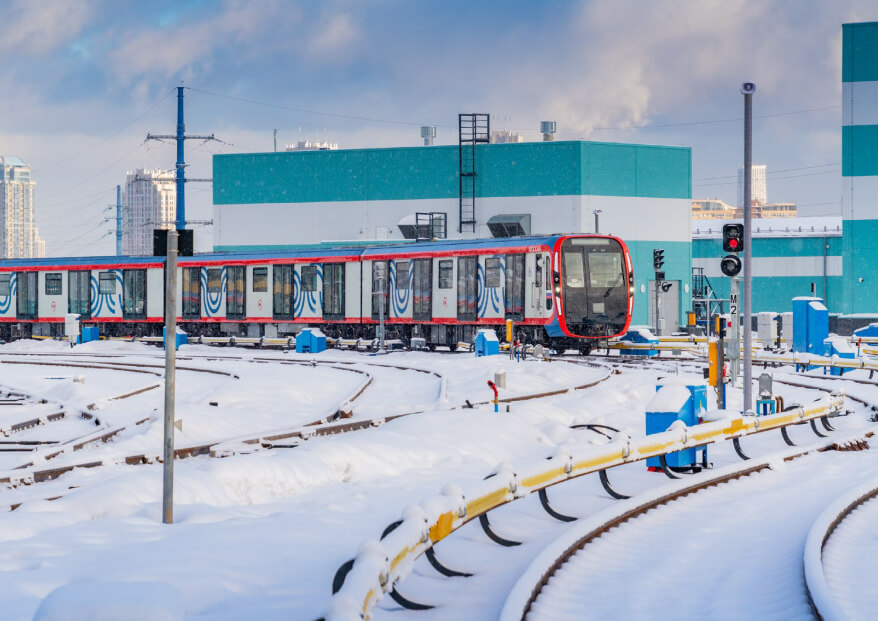
One of the largest and most modern in Moscow is Aminyevskoye. It will provide an increase in the number of trains by almost 20-25%. This is a comfort for passengers, for drivers, and for those who service trains every day.
Thanks to the expansion of the infrastructure, specialists will get additional time for high-quality carriage maintenance. For the first time, new technical solutions have been applied to the repair, washing and operation of trains at the depot. In particular, five stationary overhead (suspended) platforms have been set up to service the air conditioning systems of the wagons.
Also, for the first time, the metro depot was equipped with equipment for automatic disinfection of train interiors, which make it possible to destroy germs and odors in a short time, including in hard-to-reach places. The procedure is environmentally friendly — the hydrogen peroxide used breaks down into oxygen and water. The new devices are completely domestic developments.
The Aminyevskoye electric depot has 65 buildings and structures with a total area of more than 110 thousand m2, located on an area of 15.7 hectares. The main buildings and structures are: a sump and repair building, a track fan, an administrative building, a complex for washing and dry cleaning special clothes, a semi-detached garage building for Moscow Metro services, a sedimentation section for intra-department transport from a repair and construction site, a protective structure Civil defense and emergency situations, a switch post with a park area, a traction and lowering substation, a compressor station, treatment facilities for industrial and rainwater runoff, a laboratory testing complex. In addition to the railway tracks, the movement of vehicles to all facilities is organized.
The results of the commissioning of the facility:
- Improving the quality and reducing the maintenance and repair time of electric rolling stock on the Bolshaya Koltsevaya Line of the Moscow Metro;
- Provision of night sediment for 22 trains;
- Implementation of scheduled night maintenance, technical inspection and operational repairs of the metro rolling stock;
- The use of modern equipment and technologies for the rapid delivery of qualitatively repaired trains to the line;
- Maintenance — 30 trains per day;
- Creation of 1,350 jobs;
- Reducing traffic intervals on the Bolshaya Koltsevaya line of the Moscow Metro.
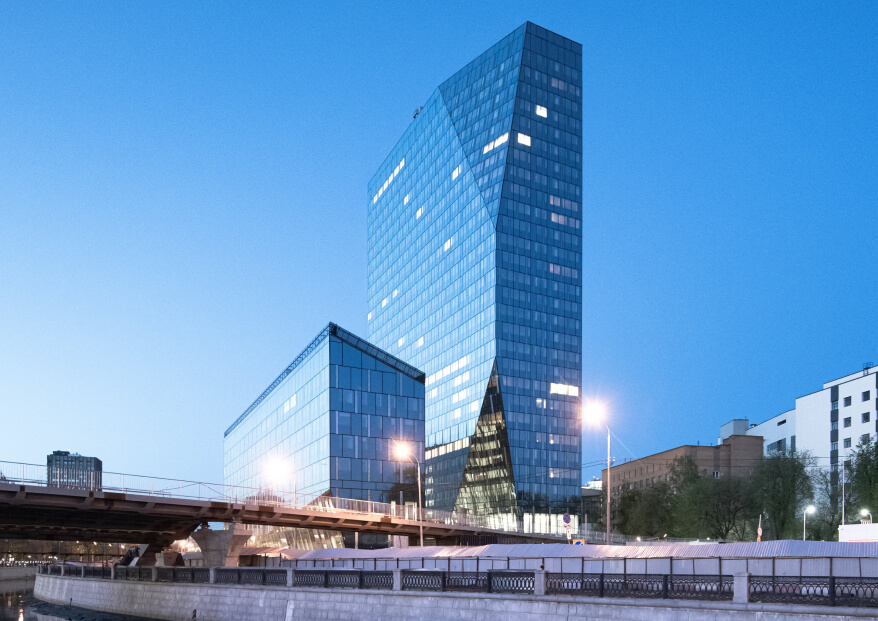
The facility is located on the territory of the Basmanny district of the Central Administrative District of Moscow.
The territory considered by the project is bordered by: — from the north — the intersection of Hospital Embankment and St. A new road; — from the south — the territory of the hospital named after ak. N.N.Burdenko; — from the east — Novaya Doroga St.; — from the west — Hospital Embankment.
There are buildings and structures on the territory that are partially subject to demolition, and the relocation of engineering networks is envisaged. There is existing woody and shrubby vegetation on the territory, which is partially subject to deforestation. The terrain of the site is calm, the elevation difference on the site ranges from 0.1 to 1.5 meters. The maximum elevation of the existing terrain is 128.38, the minimum is 126.91. The vertical layout of the territory is made with the alignment of the existing markers of the adjacent territories. The drainage of rain and meltwater is provided into the projected storm sewer network using drainage channels and intake grids, with subsequent connection to the urban network. A passage is provided around the projected buildings to ensure the movement of fire and specialized equipment. The roadway is paved with asphalt concrete and tiles, and the sidewalks are paved with tiles. Driveway coverings are provided with the possibility of passage of fire and specialized equipment. A sidewalk is arranged around the perimeter of the building, combined with a blind area, with a tiled coating. Unhindered movement of low-mobility groups of the population is organized throughout the territory.
In order to temporarily accommodate students, postgraduates, course students and other categories studying at the Bauman Moscow State Technical University, it was planned to build a new complex of dormitories (academic buildings and administrative buildings). The complex provides accommodation for living rooms with bathrooms, administrative, storage and auxiliary rooms, as well as social facilities: kitchens, laundries, a copy center, a bike stand, a health center, a coworking space, and an informal social area. On the first and second floors there are lobbies, administrative, business and social premises. The upper floors are residential. The building houses residential blocks, each consisting of two living rooms for 2 people each. Each unit has a toilet, bath-shower-washbasin, vestibule-hallway. The overall composition of the building consists of two separate dormitory buildings with built-in public facilities.
Building 1 has an elongated shape along the Hospital Embankment, dictated by the position of the red lines and existing buildings. The facades are maximally glazed and have beveled planes in both the lower and upper parts of the building.
The shape of the projected building is an elongated composite of complex shape, consisting of two rectangular volumes with sloping facades intersecting at an obtuse angle. The maximum height of the building is 32.0 m (+159,300), taking into account the technical structures on the roof of 34.10 m (+161,400). The height of the fire-technical building (from the surface of the passage for fire trucks to the lower boundary of the opening opening in the outer wall) is variable, with a maximum of 26.6 m. The conditional "zero mark" of 0.000 in the building is the mark of the "clean" floor of the 1st floor, corresponding to the absolute mark of 127.30 m according to the scheme of the planning organization of the land plot (ROM). The overall dimensions of the building are 184.0 m x 29.5m.
Building 2 has a vertical shape. The facades are maximally glazed and have beveled planes in both the lower and upper parts of the building. The case faces the north side with a pointed cantilever volume.
The maximum height of the building is 99.29 m (+226.740), taking into account the technical structures on the roof 101.95 (+229.400). The height of the fire-technical building (from the surface of the passage for fire trucks to the lower boundary of the opening opening in the outer wall) is variable, with a maximum of 95.88 m. The conditional "zero mark" of 0.000 in the building is the mark of the "clean" floor of the 1st floor, corresponding to the absolute mark of 127.45 m according to the scheme of the planning organization of the land plot (ROM). The overall dimensions of the building are 86.5 m x 28.35m.
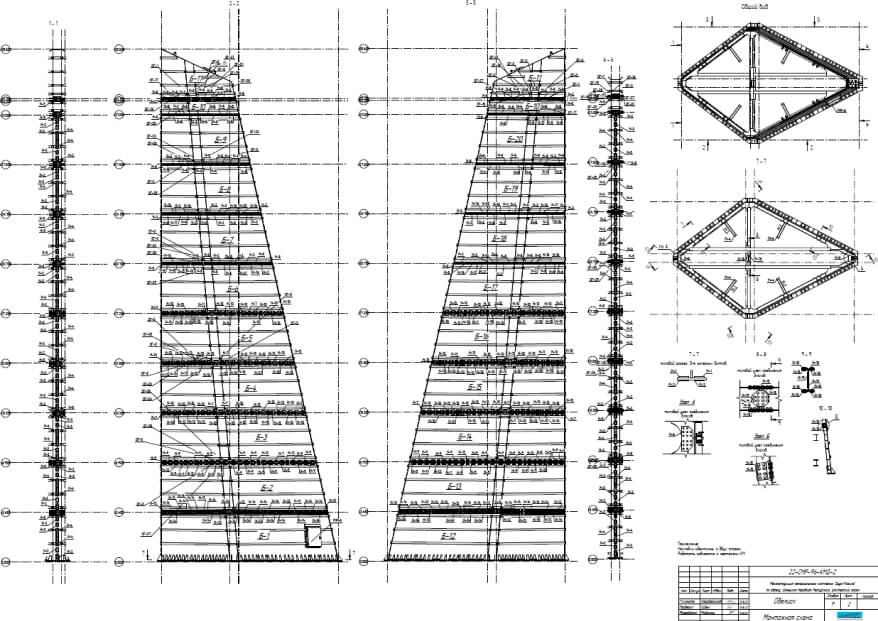
The 36-meter-high stele of the Saur-Grave memorial complex, erected as part of the restoration of the memorial, has a non-trivial design scheme that is quite rare.
Saur-Grave is a high hill dominating the Donetsk steppe, and a kind of cornerstone of Donbass. In 1943, the Red Army fought the fiercest battles with the German Fascist invaders in this place.
In 1960, the Donetsk organization of the Union of Architects of the USSR announced an open competition for the best design of a new monument on Saur-Grave. In total, 37 creative organizations from the Ukrainian SSR and the RSFSR took part in the competition. As a result, the winner was the Kiev team of sculptors and architects consisting of Florian Kotsyubinsky, Ivan Gorovoy and Xanthius Kuznetsov.
In the summer of 2014, during the month for Fierce battles were fought between the armed forces of the self-proclaimed DPR and Grave Ukraine. The height was finally occupied by Donetsk militia in late August 2014. As a result of the shelling by the Ukrainian security forces, the memorial was severely damaged. The obelisk and the soldier's figure were destroyed, and the pylons and bas-reliefs were significantly damaged.
On July 1, 2022, the Ministry of Defense of the Russian Federation announced the reconstruction of the memorial.
Due to the complete destruction of the memorial, the new Stele was redesigned by the specialists of STALPROEKT LLC, while the design of the Stele was left the same. The design of the Stele is a load-bearing shell with a loosening inner frame, this solution made it possible to optimize the weight, which as a result amounted to 150 tons, while the shell serves as a reliable base for facing structures. The installation scheme provided for the breakdown of the structure into enlarged mounting blocks, which were attached to each other on high-strength bolts, which made it possible to install in a short time while minimizing labor costs at the construction site.
3.2 The best design solution is an object under construction
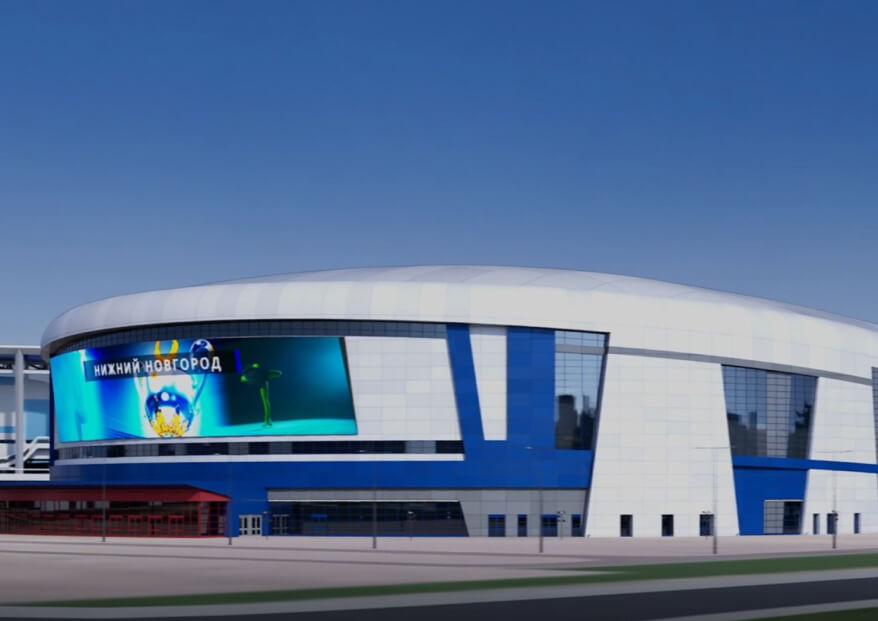
The author's team of structural solutions for steel structures: Vedyakov I.I., Konin D.V., Artamonov V.A., Egorova A.A., Krylov A.S., Olurombi A.R., Nakhvalnov P.V., Malkin A.V., Rtishcheva I.V., Konina S.M., Rozhkova L.S., Pushilin A.N., Tuvaev N.A.., Makarova A.K., Tomaily I.I., Ogarev D.D., Gavrilov D.N., Zhdanova A.A., Voropaeva M.I., Morozova D.V., Morozova K.V., Goralnik V.R., Nikiforov S.M.
The place of construction is Nizhny Novgorod, Kanavinsky district, in the block of ul. Betancourt, the river embankment. Volga, Samarqandskaya St., Sovnarkomovskaya St..
The facility is intended to be a sports facility with bleachers for visitors in enclosed spaces with year-round operation.
The sports complex includes: a 60x30m (60x28m) main ice arena for competitions, with a capacity of 12,000 seats; a 60x30m (60x28m) training ice arena for the training process, with a grandstand for 250 seats; a curling hall measuring 54x34m on 4 tracks with a grandstand for 250 seats; a 36×18m universal sports hall; an acrobatics hall measuring 36×18 m.
The maximum height of the structure to the top of the roof is 38m, the minimum height is 13.2m. The coating has the shape of a toroid. The stability of the arches is ensured by the operation of a system of horizontal connections along the upper and lower belts of the farms. The support nodes of the columns are rigid, the joints of the beams in the plane of the frames are rigid, from the plane they are hinged
The structural system of the building consists of foundations, vertical supporting elements (columns) resting on them, main and secondary floor beams, floor slabs acting as horizontal stiffness discs, stairway and elevator nodes, trusses and covering runs, and a system of horizontal and vertical connections.
The foundation of the ice arena is piled. The piles for the main arena are driven with a cross section of 400×400 mm and a length of 10.5 m. The piles are made of concrete of class B30W8F100. The project provides for a pile grillage (slab) made of concrete B35 with a thickness of 800 and 1200 mm, laid on a concrete preparation with a thickness of 120 mm.
Columns are metal welded composite cross—section, C355. Floor beams are wide—band I-beams of welded and rolled cross-section, C355.
The supporting structure covering a large part of the ice arena is a system of arches 3 m high (along the axes of the belts) with spans from 68 m to 99 m, arranged in 4.4 m increments. The arch belts are made of welded I-beams, C355.
At the design stage, several variants of steel arches with different coating weights, cross-sections of structural elements and the configuration of the arch geometry were considered. When choosing the most optimal coating option for the Ice Arena, factors such as the weight of the coating, cost, appearance and load requirements for the arch were taken into account.
As a result, the optimal option was chosen, which does not violate the architectural and structural solutions of the Ice Arena coating, having a total weight of 3274 tons and the weight of one arch - 99 tons. According to technical and economic indicators, this solution has high efficiency and reliability in operation.
A system of arches with a height of 3 m with belts of welded I-beams, C355, has been implemented. The braces of the arches are made of steel bent closed profiles of square cross section according to GOST 329311-2015, C355. Horizontal and vertical connections of arches are made of square pipes made of steel bent closed profiles of square cross section according to GOST 329311-2015.
Thus, with optimal coating design, 1,186 tons of metal were saved compared to the previous project.
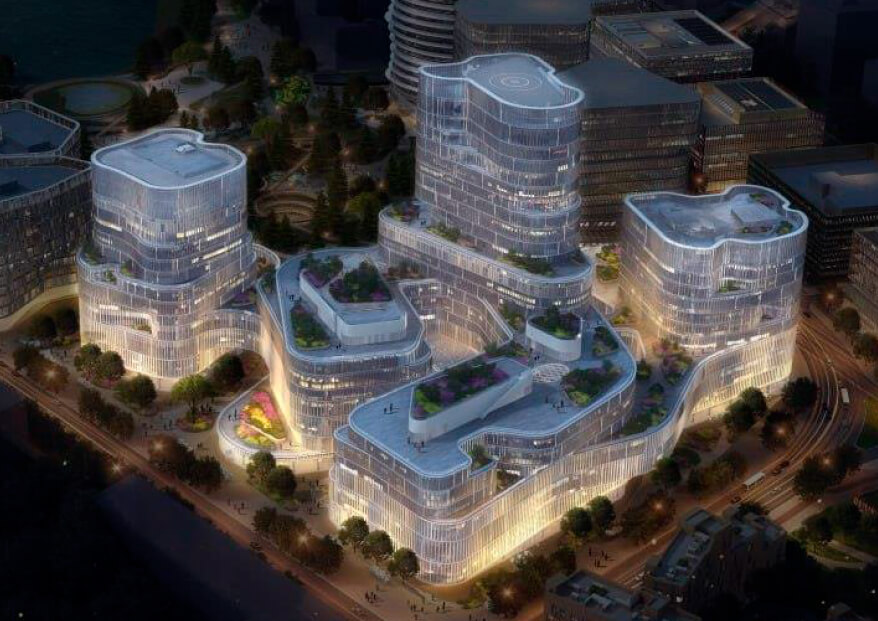
"Integration of steel into the reinforced concrete frame of a building using the example of Office Block A27 of Sberbank
Sberbank City is a new multifunctional residential and business district in Moscow. Moscow. Modern business buildings are located in the central part of the district, united by a green square, a single underground space and underground pedestrian crossings with the planned Rublevo-Arkhangelskoye metro station.
The Kvartal A27 building— the headquarters of the Sber ecosystem, is the semantic and architectural dominant of the entire Sberbank.
The office and business building has a total area of 290,000 sq.m. m: there are 21 above-ground and 4 underground floors. The projected building consists of several buildings of different heights with a congress center, offices, retail and fitness areas, located on a common underground stylobate part.
The building is unique in terms of its height — more than 100m and the depth of the underground part - more than 15m. The height of the tallest building is 113m, the depth of the underground part is up to 18.5m.
All buildings of the complex are connected by passages, forming a complex and dynamic volume with exquisite architecture. The floor levels have different geometries in the plan, creating protruding and overhanging volumes above the walking areas or forming internal terraces that are used for landscaping.
For the possibility of implementing unique architectural solutions, steel structures are partially used in areas that cannot be built in reinforced concrete. Thus, a steel frame was introduced into the reinforced concrete frame of the building where it is necessary to create the required shape and keep the interior space as open and adaptable as possible for various functions.
There are many sites in the complex that are solved with the introduction of a steel frame. These include walkways, large consoles, inclined columns, steel-concrete floors, internal walkways, and distribution beams.
The use of steel frames in reinforced concrete buildings expands the space for the architect's creativity, allows him to realize the author's wildest ideas, create forms of buildings that go beyond the usual boundaries, while forming a unique urban atmosphere and meeting the customer's requirements without significant damage to the cost of construction.
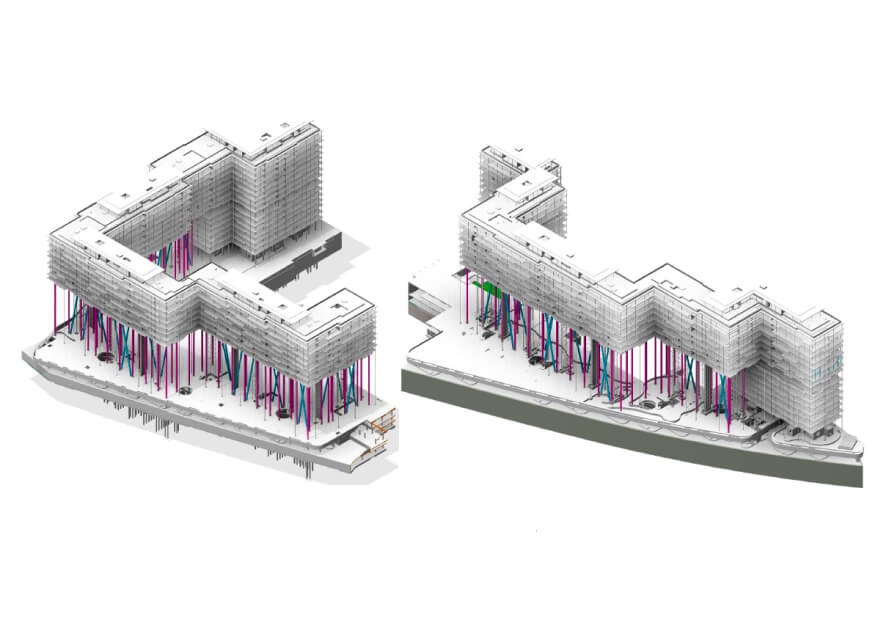
STRUCTURAL SOLUTIONS OF THE BUILDING FRAME
The structural system of the building is frame-wall and communication. The frame is formed by a system of vertical elements — columns, walls and cores of rigidity, which act as staircases and elevator shafts, vertical connections and horizontal disks — floor slabs. Vertical connections are inclined columns with a cross-section, like vertical columns.
Spatial rigidity in the area of the nine-storey part is ensured by the joint work of load-bearing structures of floors, reinforced concrete columns and pylons, vertical cores of rigidity (bearing reinforced concrete walls of stairwells and elevator shafts) and a system of vertical connections located below the level of the tenth floor.
Spatial rigidity in the area of the eighteen-storey building is ensured by the joint work of load-bearing structures of floors, reinforced concrete columns and pylons, vertical cores of rigidity (bearing reinforced concrete walls of stairwells and elevator shafts).
The structures of the complex are designed:
- Reinforced concrete section.
- Steel-reinforced concrete section.
- Steel section.
Since the construction of the complex is carried out in four stages, the docking of each subsequent to the previous one is carried out by cantilevered abutment, or by leaning on short consoles of monolithic reinforced concrete slabs coming out of the walls, or slabs of adjacent construction stages.
MATERIALS OF THE MAIN SUPPORTING ELEMENTS OF THE BUILDING
The material of all reinforced concrete structures is concrete B40, B60, B80.
Metal structures are designed from steel C345, C355 according to GOST 27772-88. The reinforcement of the elements of the supporting structures is accepted as class A500C and A240 according to GOST 34028- 2016.
The connection of the reinforcing rods is "overlapping". When connecting large-diameter rods of vertical reinforcement of columns and pylons, it is possible to use crimping or threaded couplings.
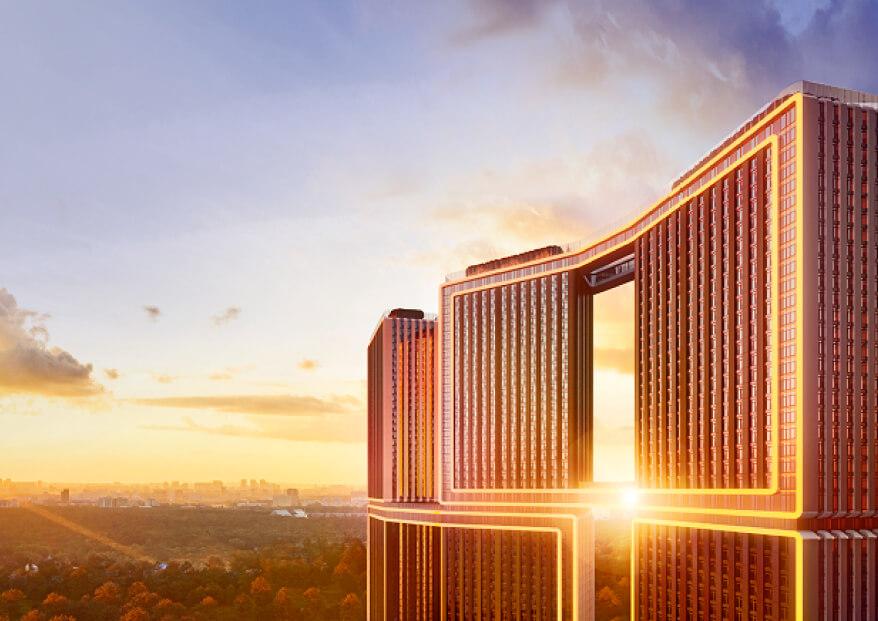
RUSSIA'S FIRST HOUSE WITH SKY BRIDGES
The new quarter "Event-4" is a vertical "city of the future" with multi—level public spaces: bridges at the level of 26-28 floors and a park at a height of 172 m in the west of Moscow.
The creator of the project is the chief architect of the city project, Philip Nikandrov, co—author of the Evolution tower in Moscow City and the Lakhta Center in St. Petersburg.
The building complex consists of high-rise buildings up to 179.8 m high, set at an angle to each other, connected by pedestrian crosswalks on two levels, and a retail building of 2 floors with a single underground stylobate of variable depth.:
- 2 underground floors in the technical area of the subway;
- 4 underground floors in the stylobate part of the complex;
- 5 underground floors in the high-rise parts of the complex.
The proposed concept suggests the idea of creating a "Vertical City" from a cluster of towers compositionally intertwined with pedestrian skywalks on several levels. Visually, the three towers are divided in the middle part into approximately equal—height halves, which in adjacent towers are paired together by two large "frames" on two levels - from below and from above.
The foundation of the high—rise buildings is a monolithic reinforced concrete box. The foundation of the stylobate part is a slab. The frame of the building is made of monolithic reinforced concrete. The stability and spatial rigidity of the building is ensured by the joint work of monolithic reinforced concrete cores of rigidity, walls, columns, pylons with monolithic disks of floors and coatings.
Aboveground passages made of steel structures with an operational roof are provided between the high-rise buildings for walking along the upper belt and supported by reinforced outriggers in the area of the interstory floors. The pedestrian crossing structures are provided from two diagonal steel trusses connected by means of connections into a spatial structure.
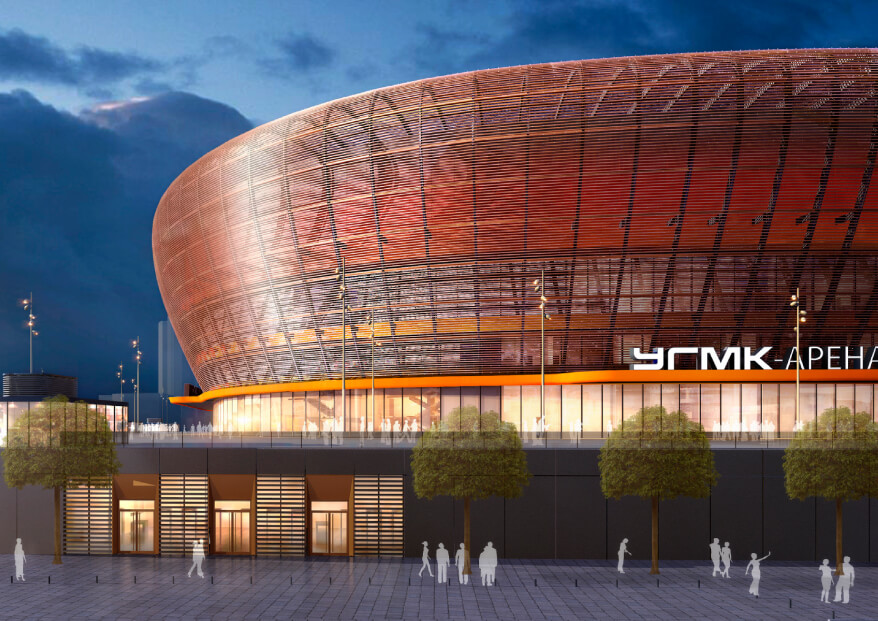
The multifunctional ice arena in Yekaterinburg will become the home for the Avtomobilist hockey club, and will also be used as a concert venue with unique acoustics.
The capacity of the arena is 12,000 spectators in the sports event mode and 15,000 spectators in the concert mode. The arena has a complex internal organization and will be able to host sports competitions, including European and World championships in at least 11 sports, as well as congress events and concerts.
The arena will accommodate two full—size venues, one where you can hold a concert and the other where you can train. The transformation of the arena from one sport to another or the arrangement of a concert venue will take from 6 to 18 hours.
The arena has 6 floors, including one underground floor. The maximum height is 42.75 m.
The sports complex will be surrounded by a stylobate, a stepped base that allows the audience to get inside. A basement is being built inside this building. There will be a small (training) ice arena, numerous technical rooms, as well as parking for fans' cars and buses that will take players.
CONSTRUCTIVE SOLUTIONS
The multifunctional ice arena includes two interconnected volumes: the main building of the Arena and the stylobate part.
The main building of the ice arena includes the stands, the main field, and the podium facilities. The stylobate part houses a parking lot, a training field, a cooling center, auxiliary facilities, etc.
The foundations of the reinforced concrete structures of the structure are designed in piles in the form of separate grillages under the columns, ribbon grillages under the walls and a slab ring grillage around the perimeter of the Arena, absorbing forces from the main loaded columns, walls of stairwells and elevator shafts.
The supporting frame of the Arena is formed by transverse reinforced concrete frames in a monolithic design (the frames are oriented along the radial axes of the building), combined from the plane by monolithic reinforced concrete beams, walls of stairwells, elevator shafts and stiffening diaphragms. Vertical loads are perceived by a system of columns and walls of rigidity. The spatial operation of the frame, the perception of horizontal, including wind impacts, is ensured by the joint operation of the ceiling discs and walls of rigidity.
The frame of the Arena is divided into 4 temperature blocks by expansion joints. Vertical load-bearing structures in the zone of temperature joints are solved by paired columns.
The structural scheme of the stylobate part is a framed monolithic reinforced concrete spatial frame of variable storeys (1-2 floors) with regular column spacing along tangential axes, with the exception of the section with the training rink. The frame is formed by columns in combination with diaphragms and a girderless ceiling with capitals at the locations of vertical elements.
The reinforced concrete structures of the stylobate coating are separated from the Arena structures by a temperature seam.
The metal structures of the dome-shaped covering of the Ice Arena consist of 12 trusses, 10 of which will be equipped with an intermediate temporary support. The span of the trusses is variable up to 99.8 m, the height is variable — from 5 meters in the support part to 11 meters in the ridge, and the weight is 194 tons.
The roof area of the Ice Arena will be about 11,500 square meters. The lifting of this large-scale system was carried out using a crawler crane.
GEOLOGICAL CONDITIONS
The area where the arena is located is very complex from a lithological point of view. Stratification of different soils with differences up to 80 degrees requires the organization of a large number of piles. A set of geotechnical studies was performed in order to determine the value of the resistivity of bored piles along the side surface of the pile. The complex of geotechnical studies allowed optimizing pile foundations.
MONITORING OF STRUCTURES
Strong reinforced concrete and steel structures will be equipped with sensors, data from which will be transmitted to the control room. Thus, specialists will be able to constantly monitor the condition of all bearing elements of the building.
4. The best green building facility
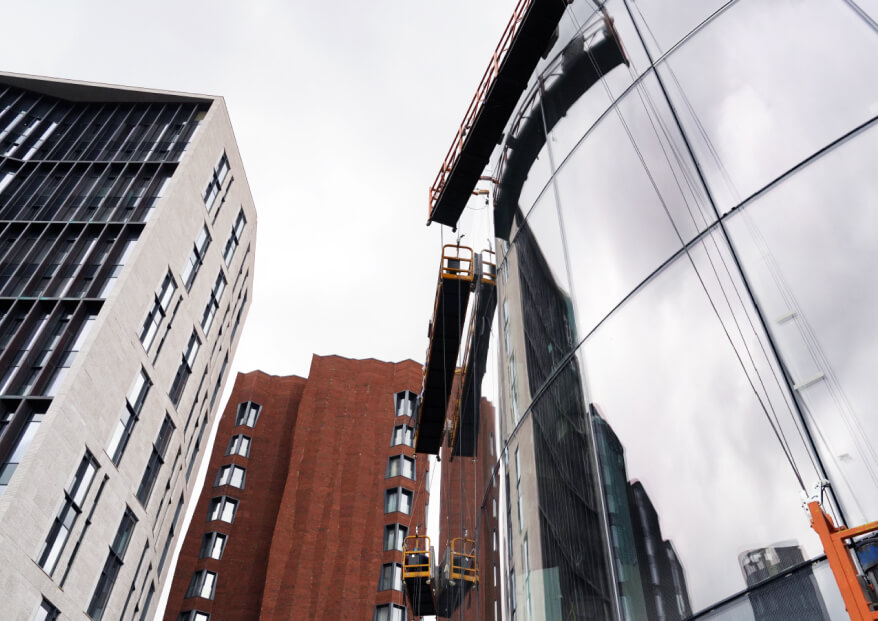
Project Description
Novy Vzglyad Laboratory School The campus of the new private school Novy Vzglyad is being built in the elite Sadovye Kvartal complex - it will become the main architectural accent and the center of attraction of the entire project in the center of Moscow. The elegant architecture of the school follows the unified design code of the Garden Quarters. The facades of the building are distinguished by floor—to-ceiling glazed windows, a cantilevered projection, and the use of natural and modern materials such as illuminated glass, ceramics, and stainless steel.
The school is designed for 540 students in grades 1-11. The architectural, planning and design solution of the school is closely related to its educational concept. The New View will focus on developing universal entrepreneurial competencies in children, gaining deep academic knowledge and ensuring the practice of their application in projects for the real modern world and its sustainable development. The modern and comfortable building with an area of 18,000 square meters includes everything necessary for the comprehensive and full-fledged development of students. The building will feature 44 classrooms and 10 spaces for individual work, including a culinary workshop, a VR laboratory, a Fablab and a video lab, sound and video recording studios, and high-tech natural science laboratories. The planning structure is based on the best international practices and design principles. The layouts reflect the requirements for technological efficiency, transparency, versatility, transformability and environmental friendliness of spaces, and create a comfortable, safe and creative environment for children to learn and implement their projects.
The five-storey campus consists of primary and primary school blocks. They are connected by a transparent volume, which will house public spaces, an atrium hall, and a library. At the entrance to the campus, a guest area with meeting rooms and a cafe will be created for meetings of parents and teachers.
The school has designed unique solutions for existing roofs. The roofs of the third and fifth floors, which cover an area of more than 6,000 square meters, are a full-fledged space for recreation and study.
One of the advantages of the Novy Vzglyad Laboratory School is the multi—level organization of the landscaping of the facility, where a landscaped hill with an amphitheater rises from the level of the adjacent territory to the level of the exploited roof of the third floor, the exploited roofs are landscaped, the creation of a "winter garden" is provided in the atrium and recreation areas, most of the rooms overlook the city pond, and the panoramic facade glazing blurs the boundaries, "letting" nature into the building.
Another distinctive feature of the facility is the general organization of landscaping. The concept of landscaping offers the creation of a spatial puzzle that combines various elements.:
1 layer — strong knowledge. This layer is responsible for structural academic education, for working within certain rules. In space, this layer is revealed by regular geometric shapes that assemble into islands. The clarity of forms, the formation of certain rules, and predictability are important here.
Layer 2 — soft skills. This is an important spatial layer based on interaction, learning through play, and movement as an important factor in brain development. This layer marks all sports and gaming areas, sets the dynamics of movement. In space, the layer is expressed by smooth flowing lines, open spaces, and geoplastics.
Layer 3 is tangram. The constructor layer, the experiment layer. Tangram zones are characterized by maximum freedom of creativity and self-expression, and there is an opportunity to form your own rules and scenarios within a given framework. Spatially, tangram zones are multifunctional objects and a constructor with a wide variety of functions and their combinations.
The 4th layer is nature. Creating a positive, comfortable environment where there is a place for everyone. This layer speaks about natural needs, about nature and about dialogue with it. In space, this is the maximum possible landscaping of the territory, the creation of educational spaces that tell about dialogue with nature, as well as cozy places to relax in landscaping.
The motto of the creators of the project is: "A new look is a school that you want to return to." Lots of light, diverse spaces and scenarios for work. It's really a new way of looking at school— in every sense of the word.
The design and construction of the building was carried out taking into account modern principles of sustainable development and the requirements of the Building Assessment and Certification Methodology for new construction projects "Clover". Thanks to the special solutions introduced into the project and responsible construction, the Novy Vzglyad School Laboratory building claims to receive the "Gold" level according to the "Clover" standard. At the moment, the verification process of the "Project" stage is underway.
Key solutions for green construction
Energy consumption. The constructed energy model of the Novy Vzglyad Laboratory School showed an efficiency of 22.36% relative to the base building due to the selection of highly efficient engineering equipment, installation of LED lighting and enclosing structures with low thermal conductivity. An advanced ASCUE system is provided.
Efficient water consumption. The water consumption in the building was reduced by 33.47% from the base level due to the selection of water-saving plumbing fixtures: aerators for faucets with a water flow rate of 1.9-5.7 liters/min, shower cans with a flow rate of 2.5-7.5 liters/min and installations with a flow rate of 4.5/3 liters per flush. Metering devices for functional areas and a leak protection system, including hidden ones, are installed. Outdoor water consumption has been reduced by planting drought-resistant plants and installing an irrigation system with rain and soil moisture sensors.
Materials and resources. For the construction, local materials produced within 1000 km from the location of the facility were mainly used. Their mass was 86.45% of the total mass. When choosing building materials, preference was given to those materials that contain recycled materials and effective eco-labels of types I and III.
Wastes. The project has an infrastructure for separate waste collection (6 fractions). To ensure separate waste collection, color-coded containers are provided. Containers for separate waste collection are located on each floor, roof and on the adjacent territory. Construction waste is sorted and recycled. The planned percentage of the transfer of construction waste for recycling is 30% of the total mass.
The quality of the internal environment. It is possible to control the operation of the ventilation system and various scenarios for managing thermal comfort due to individual thermostats. Visual comfort is provided by high-quality views from windows equipped with glare protection devices and control of indoor lighting using the DALI protocol. The building provides measures for safe movement and accessibility for all categories of the population, as well as navigation. Biophilic design is provided and many rooms overlook the adjacent pond. Filters of class F7 are installed on the supply ventilation systems, which ensures a high degree of air purification from pollutants. The main entrances to the buildings are equipped with dirt-proof grilles with a length of at least 3 m.
Environment. The project provides for the development of biodiversity through the planting of various types of flowering vegetation, the installation of birdhouses to attract fauna. Landscaping and landscaping of the school's operational roofs, which are a full-fledged space for learning and recreation, is provided.
Transport. An infrastructure for cyclists or electric scooters has been designed on the territory of the enclosed courtyard — 46 bike parks, changing rooms, showers, repair tools and protective equipment against precipitation have been provided.
Management. The general contractor ensures a high level of work culture. An expanded program for the commissioning of engineering systems and a thermal circuit is envisaged. In-depth analysis is provided at the design stage (energy modeling of the facility is carried out). At the operational stage, it is planned to comply with the requirements of the green standard for operated buildings.
Informing. The certification process provides for the inclusion of the wishes and requirements of building users in the project; user surveys are conducted, and guidelines for the use of engineering equipment are being developed.
Additional information. The amount of traditional resources per person (639 users per maximum shift — 528 students and 111 administrative and technical staff): Electricity — 2 834 201,42/639 = 4,435.4 kWh/year per person
Heat — 2 461 775,41/639 = 3,852.5 kWh/year per person
Water — 2 6348,71/639 = 41.2 liters/day per person (excluding watering costs)
The amount of traditional resources per 1 sq. m. of the facility area:
Electric power — 2 834 201,42/18 460,8 = 153.5 kWh/year
Heat — 2 461 775,41/18 460,8 = 133.4 kWh/year
Water — 26 348,71/18460,8 = 1.4 liters/day (excluding irrigation costs) or 373.8 liters/year Materials — 36 906,2/18 460,8 = 2 tons
Construction waste — 561/18 460.8 = 0.03 t
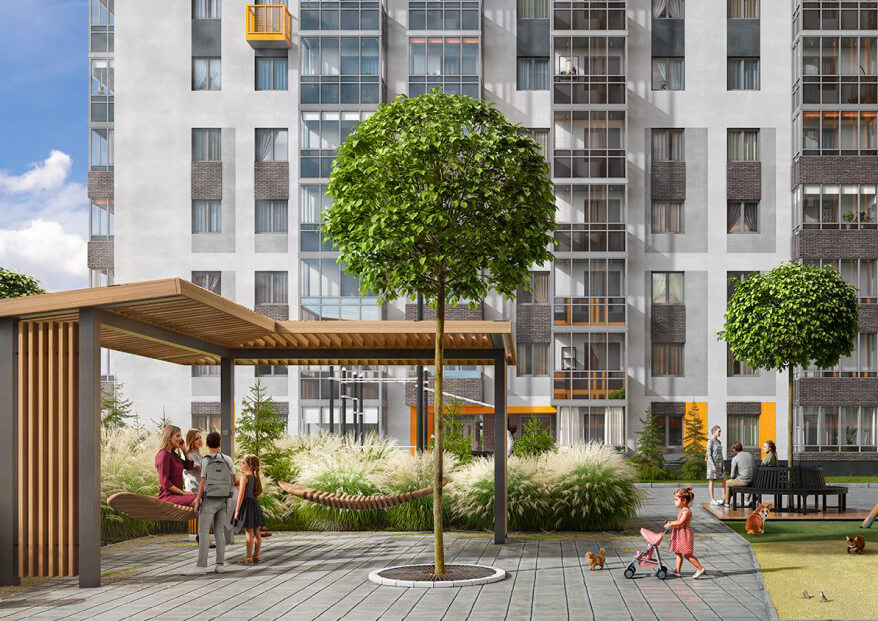
Green residential complex in Yekaterinburg
The first building of the project has passed a pilot assessment for compliance with the criteria of the national "green" standard GOST-R 70346-2022 for MCD:
- high energy efficiency class (A),
- pre-finishing, § systems for saving water and energy resources,
- a comfortable thermal regime is observed,
- affordable, barrier-free environment in the residential complex,
- eco-friendly covering of paths and playgrounds is provided,
- landscaping and landscaping using low-allergenic plants is provided.,
- The requirements for responsible construction have been met.
The project is included in the database of "green" residential buildings of the Unified Housing Information System (UISWS).
The general principles and approaches in design and construction are regulated by the unified ESG Policy of the Etalon Group, which defines the areas of activity in the field of sustainable development, including issues of social and environmental responsibility and improving the quality of management.
Design:
- Harmonious architectural appearance: the formation of an architectural appearance taking into account the environment, the architecture of the area, the functional purpose of the residential building, sustainable development goals (incl. contrast, originality and uniqueness)
- Minimization of environmental impact: design based on the results of instrumental analysis of soil pollution, air basin, water sources, according to SP 47.13330
- Infrastructure accessibility: transport, medical, educational and commercial infrastructure, sports and playgrounds within walking distance from the residential complex
Construction:
- Environmental management and responsible construction — A person responsible for monitoring energy, water consumption and waste generation has been appointed for the construction period - Measures to reduce pollution during work — Waste management plan, minimization and separate waste collection — Independent acceptance of engineering systems
- Protection of biodiversity — A "defender of biodiversity" has been appointed for the construction period to monitor environmental requirements and measures, monitor and evaluate the effectiveness of measures to preserve biodiversity — Training employees on environmental protection issues during construction
Resource efficiency (Class A energy efficiency):
Materials:
- Timber from certified wood
- The use of secondary raw materials
- Use of local building materials: up to 40% of the total mass of all materials used
- Permeable paving: at least 30% of the paths around the building and parking lots
- Safe thermal insulation and paint materials
Engineering equipment:
- Energy efficient elevators
- Water-saving fittings to reduce water consumption (by more than 20%)
- Water pressure monitoring and regulation systems in the building, taking into account SP 30.13330
- Water flow metering systems in each apartment, taking into account SP 30.13330
Thermal energy:
- Control of heat energy consumption by regulating the heat supply according to demand with preset control modes, according to SP 60.13330 and SP 124.13330
- Automated installation of weather control of coolant parameters at the entrance to the building, preventing over-heating and under-heating of the building
- Automatic balancing valves in specific areas of heating systems to maintain the hydraulic stability of the system in dynamic mode
- Automatic temperature controllers (thermostatic valves) on each heating device in the apartment
- Household heat metering devices in the building and individual heat metering devices in the apartment
Electric power:
- The project does not use mercury-containing lighting lamps.
- LED lighting is also provided.
- Software timers with an automated control system in the outdoor lighting system, incl. architectural lighting
Management company:
- Completed training in building maintenance and engineering equipment
- Coordinates the collection and control of data on energy and water consumption
- Transmits information to the developer for consumption analysis and adjustment of engineering systems, if necessary.
- She developed a User's Guide: a description of the characteristics of the building and ways to save resources, the possibility of transferring partitions inside apartments, the location of electrical wiring, plumbing and sewerage.
Landscaping
- Trees and deciduous shrubs on the territory of recreation areas, elements of the stalls, decorative compositions at the entrances
- Selected native plants that do not cause allergies (according to the recommendations of an ecologist and in accordance with GOST R 59370)
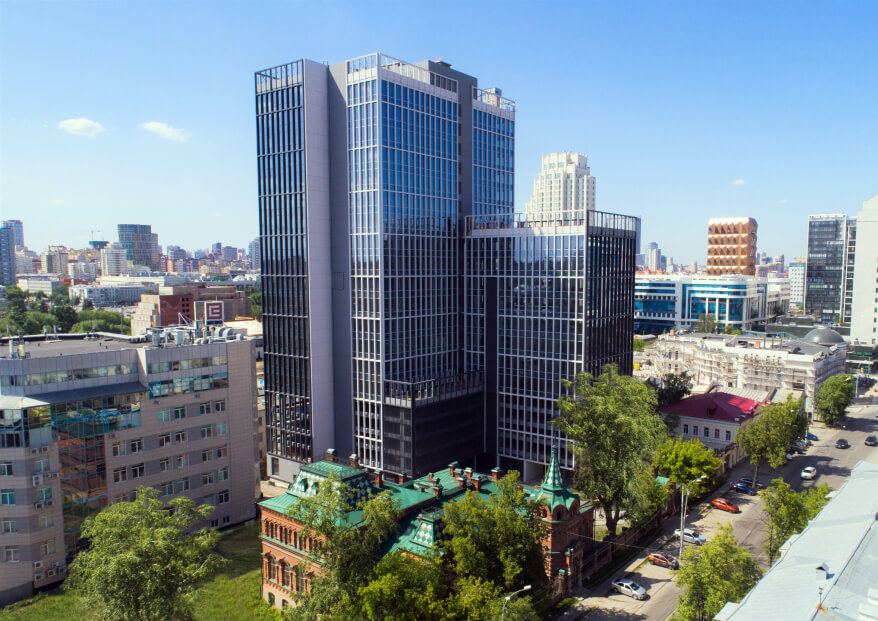
NEBOPLAZA is a new-generation Class A business center in the center of Yekaterinburg. The building was built according to international standards using the principles of "green building", is equipped with intelligent life support systems and has a well-thought-out infrastructure. The concept is based on comfort and safety through environmental friendliness, technology and a competent management approach.
On an area of 30,000 square meters, everything is provided: from climate control and flexible planning solutions to recreational areas, public spaces and panoramotherapy. The business center has 20 floors (floors 2-5 — Parking for 220 m/places, floors 6-20 — offices).
In December 2022, Beber opened Russia's first technohub at the site of the NEBOPLAZA Business Center. Digital products are being created here for the whole country. The building has already been dubbed an "Office paradise for IT specialists."
The NEBOPLAZA Business Center has been evaluated twice by the GREEN ZOOM national system of sustainable development in construction and received a gold certificate for the "Project" and "Implementation" stages. A dynamic energy model of the building was built for evaluation. Experts estimated the energy efficiency of the building at 46.87%, water efficiency at 54%, and reduction of greenhouse emissions at 812 tons per year.
Energy efficiency
- The energy center, located on the top floor, ensures the autonomy of the building's heat and cold supply. Absorption refrigerating machines were installed to minimize peak electrical load and reduce air conditioning costs.
- The athermal glass of the SCHÜCO facade system does not allow infrared radiation to enter the room, which saves on cold supply during hot periods of time, and protects against noise.
- The SWEGON GOLD climate system reduces the consumption of energy and material resources by up to 35%.
- Thermoregulators are installed for heating devices, allowing employees to adjust and maintain the temperature in the rooms according to individual preferences. In this regard, the overspending of thermal energy for heating is excluded.
- During the off-season, when the load on the refrigeration units is low, a fracking system is used instead of the main source of cold, thereby reducing the energy consumption of the building.
- The high level of natural illumination of NEBOPLAZA allows you to turn on artificial light sources less often. At the same time, energy-saving technologies are used for artificial lighting.
Engineering
- The high quality of the indoor air is ensured by equipping the supply and exhaust air units with F7 class filters, as well as supplying fresh air to offices using presence sensors (WISE OCS) and air pollution sensors (WISE SMA) for CO2 monitoring. You can control the air parameters zonally using the app on your smartphone.
- A drinking water supply system can also be identified among interesting innovative solutions. On each floor, drinking mineral water of the right temperature runs from the tap, and there is also an option for pouring carbonated water.
- Safety
- The reliable safety of the facility and its residents is ensured by the ESMI fire safety system from Schneider Electric, an intelligent access control system, automatic smoke extraction and lightning protection.
- Access to the building is possible from a mobile device, using a QR code or using a separate magnetic key.
- A barrier-free environment, separate parking spaces and restrooms are provided for low-mobility groups of the population.
Offices for life
All conditions have been created in NEBOPLAZA for the most productive and comfortable activities of residents:
- There are relaxation areas on each floor, including massage capsules. As well as coffee points, vending machines.
- The building has 5 cafes and restaurants, a fitness center for residents, a medical office, and 2 outdoor green terraces equipped with modern MAFS.
- Biodegradable containers for sorting household waste are a mandatory attribute in the offices of the building.
- There are 35 to 70 pieces of green plants on each floor. Additional plantings have been planted on the territory of the business center. In addition to aesthetics, green plants filter the air from harmful substances and allergens, and also contribute to the psychological well-being of employees.
- The parking lot has separate spaces for eco-friendly modes of transport, as well as charging stations for electric scooters.
5. The best BIM building model
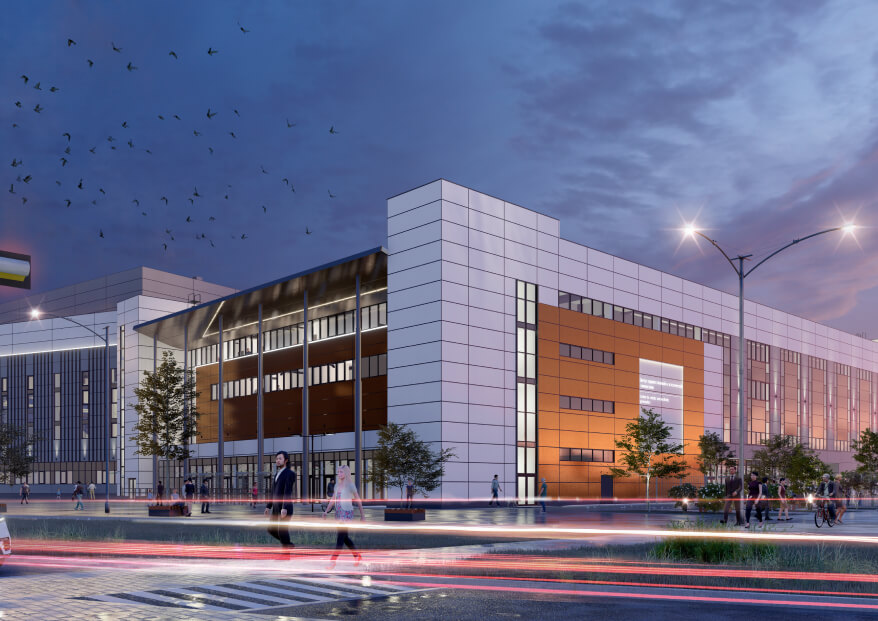
General characteristics of the object
The Center of Art and Aesthetic Gymnastics (hereinafter referred to as TSKIEG) is located in the city of Yekaterinburg, in the Chkalovsky district, within the boundaries of the streets: Neskuchnaya — Radiant, in the promising residential area of Solnechny. The facility is part of an educational cluster being formed in the district. The surrounding buildings of the gymnastics center will include educational and educational facilities: a choreographic college, a Governor's Lyceum (completed), a swimming pool and a kindergarten.
The CKiEG is designed for conducting training sessions and competitions, including international ones. According to the current regulations, the facility, intended for holding competitions at the national and international levels, belongs to category "A" according to the classification of sports facilities.
The calculated indicators are:
- One-time throughput in competition mode (ENP) — 240 people
- The number of spectator seats in the stands is 2,000, including:
- temporary stands — 500 seats
- seats for athletes — 100 seats
- VIP seats - 40 seats
- places for MGN (cat M4) — 15 seats
- The number of judges and organizers is 36 people.
- The number of media representatives is 20 people.
- Number of staff — 73 people
- Coaching staff — 24 people
Spatial planning solution
The building is divided into two functional blocks: the first is a block of spectator rooms with a hall for holding competitions of various ranks, the second is a block of rooms for conducting the training process in artistic and aesthetic gymnastics. The vertical volume of the CCiEG is divided into 4 levels: level 1 — entrance areas and a competition arena, level 2 — a training hall, level 3 — media boxes, and level 4 — VIP areas. There is a basement floor under part of the building: it includes a buffet area, wardrobes, utility rooms and engineering rooms.
Scenarios for using the model
The creation of an information model of this facility was dictated by the internal standards of Stroytekproekt (EIR), which made it possible to automate the construction processes.
The BIM department, together with the customer's requirements for the timing of implementation, has defined a BIM project implementation plan for each section (BEP).
A library of families and plug-ins have been developed for correct and automated operation in the model. The library elements are arranged into libraries according to the design stage (EP, P, R). The elaboration of the families also correlates with the requests for documentation at each design stage. Identical families from concept stage to stage Taxiways are being replaced with more detailed ones. The work with a large corporate library of families is provided by the "STP" plugin (Stroytekproekt).
The family libraries and elements are created according to the standards laid down in the LOD requirements. The level of elaboration of both the general BIM model and all families was determined by the design stage. For the convenience of communication with the customer and contractors, ODS (Pilot-ICE) was used.
Developed sections
AR: spatial planning and facade solutions
KR: KJ, KM
TH: sports facilities, vertical transport, waste disposal, MGN
S: ventilation, air conditioning and heating systems
VK: water supply and sanitation systems, arrangement of plumbing fixtures and equipment, drainage, stormwater drainage
TC: heating networks
EO: power supply networks, electrical equipment, lightning protection and grounding, electric lighting, outdoor lighting and architectural lighting
SS: cable-carrying structures (inlets, trays, etc.)
Drawings and specifications
Drawings, statements, specifications and volumes of finishing materials are obtained from the model. The design was carried out using plug-ins of our own design. Each file of the developed sections has passed collision control.
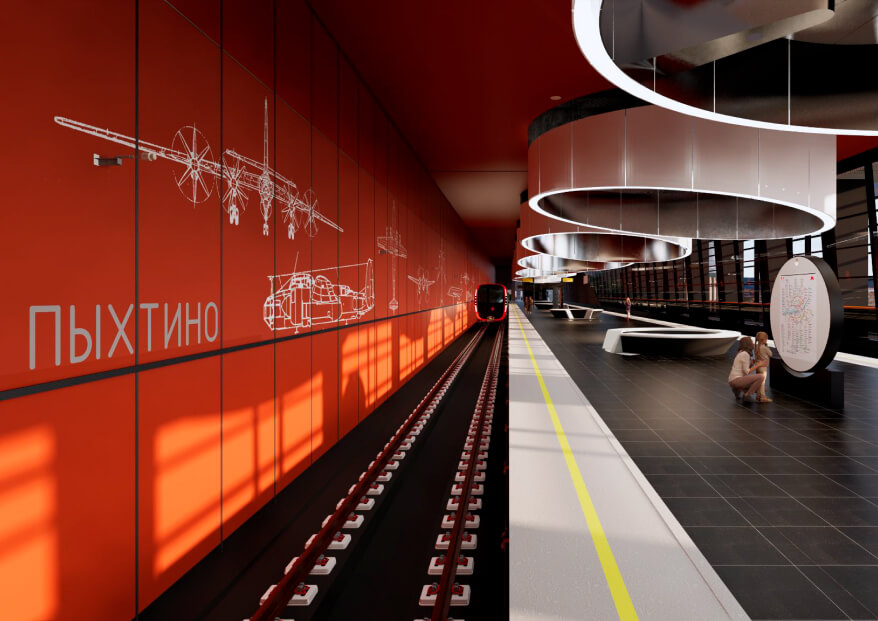
The section of the Solntsevskaya metro line was extended from Rasskazovka station by Pykhtino and Vnukovo stations to the airport of the same name.
Pykhtino station is located on a difficult terrain: the platform is simultaneously embedded in the slope of the Borovsky Highway embankment from different sides, and passes into the metro bridge across the Likova River, and has panoramic glazing overlooking the shore. Above the platform itself, there is a square with a spectacular curved lobby and a model of the Tu-144 supersonic airliner above the escalator area.
Vnukovo station is completely underground. It is connected by a passage to the airport building and exits to Aeroexpress trains. This is the first in There is a metro station in Russia as part of an existing airport, from which you can get to Moscow from an airplane without going outside.
The construction of the site was completed in an extremely short time. To prevent errors on the construction site, it was decided to implement station models and link design solutions in BIM.
Due to the tight deadlines and the construction that has already begun, 3D coordination was chosen as the main application scenario for CIM.
Special attention was paid to:
- Checking the attributes that identify belonging to the system and the room
- The position of the final equipment and finishing of the station complexes
- Communication tracing tolerances (margins, bending radii, slopes)
- Intersection of service and access areas with structures and communications
- Modeling of large-section cable products to check their quantity and perform penetrations
The collision matrix
3D coordination was performed by regularly performing 252 collision checks, of which:
- On collision: 231
- For duplication: 21
The inspections were grouped by discipline and further divided according to the functional characteristics of construction and engineering systems. The inspection tolerances ranged from 1 to 20mm. All detected collisions were analyzed by the developers of the documentation.
In accordance with the selected scenario, the Customer developed the requirements for the information model (ITM), which included:
- Collision matrix with tolerances
- LOD and LOI detail matrices
- CIM transmission formats and deadlines
The project also used laser scanning to track deviations from the design to obtain an executive CIM.
Based on the information requirements of the Customer, an Information Modeling Plan (IMP) was developed.
A special feature of the metro facilities is the large length of cables (about 800 km at each station), many of which have a large cross—section. In order to accurately calculate the expensive large-section cable, the task was set to simulate them. The high degree of detail of the model made it possible to work out particularly complex nodes of low and medium voltage cable passages. Our own automation tools were used to model cable products.
The elimination of collisions during the installation of engineering systems of metro facilities is achieved by detailed study of routes and their fasteners, as well as modeling of service areas.
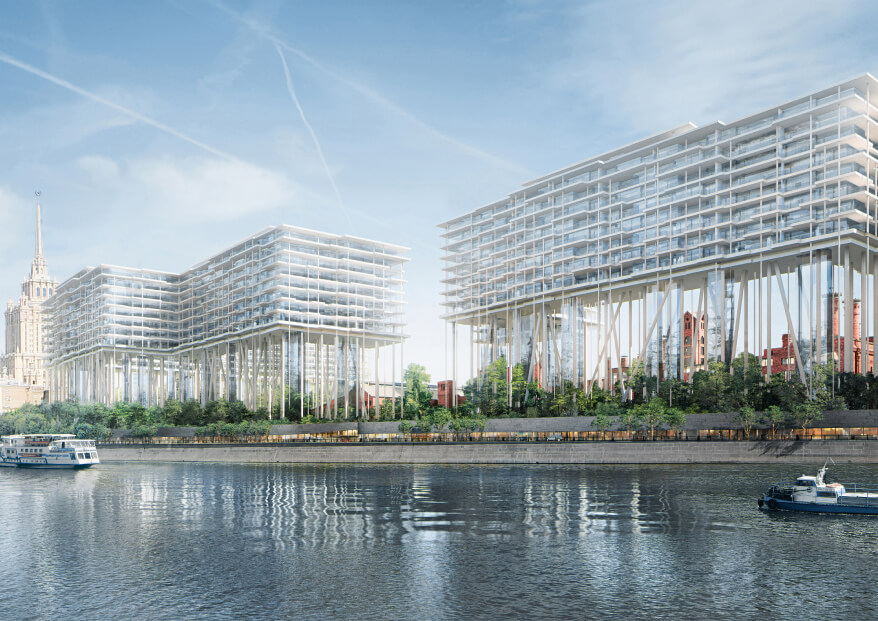
The project is a multifunctional residential complex consisting of 2 residential buildings with built-in public facilities; with retail and catering facilities oriented to the embankment; with underground parking; as well as with fragmentary restoration and adaptation of historical buildings 1 and 3 (cultural heritage sites) on the territory of the Badaevsky Brewery.
APPLICATION OF INFORMATION MODELING TECHNOLOGY
Information modeling technology (BIM) was used in the development of documentation for the Working Documentation stage.
- AR,AI,KR,VIS — Autodesk Revit; Rhino+Grasshopper
- KM — Tekla
- GP,HC — Autodesk Civil 3d;
- Verification and coordination of models — Autodesk Navisworks, BIMCollab Zoom.
- Virtual Reality — Unreal Engine
- Laser scanning — Autodesk Recap
The modeling and coordination process was conducted according to the Customer's Information Requirements (EIR). A project implementation plan (BEP) was formed and agreed with the Customer to coordinate the technology for modeling unique elements and recording deviations from requirements.
The work on the project was carried out using a single information environment. The project files were hosted on a separate Revit Server and linked together by links. This allowed all project participants to see only up-to-date information about the work of other project teams. The models were checked on a weekly basis in two stages: automatic and manual.
The project had several tasks, the solution of which was carried out using mathematical modeling.
During the design, proprietary developments were implemented, such as: Synchro 4D Pro, Unreal Engine, Model Exporter, Hole Manager, Trim Construction, Rhino + Grasshopper, Revit + Dynamo. All this made it possible to reduce the number of routine repetitive operations and save time for designers.
LEVELS OF DETAIL OF BIM MODELS
Laser scanning and models of cultural heritage sites.
To more accurately reproduce the appearance of cultural heritage sites, this project used the construction of models based on laser scanning of existing buildings. Point clouds of window models were used as a reference substrate for recreating walls, ceilings, openings, and facade elements. The laser scanning results were prepared, processed, and cleaned using the Autodesk Recap program. The exact positioning of the existing buildings of the windows on the site was carried out according to the results of the geodetic survey.
Information models of the complex. The architectural models of the complex were executed in high detail and had the detailed information necessary to create high-quality documentation.
Interior models of public spaces contained highly detailed geometries of decorative elements, end devices, design tiles, doors, and navigation elements.
The features of the development of Constructive Solutions include the use of the Tekla Structure software package for the design of metal structures. The models from Tekla were uploaded to the IFC format. Spatial coordination of IFC files was carried out, which were used as links in the development of models of other sections.
During the development of Engineering Networks, starting from the Design Documentation stage, all networks were separated to minimize spatial collisions. To test the solutions for wiring utility networks in the parking lot, special families of parking spaces with service areas were used, and boundary conditions zones were separately modeled, in the dimensions of which network engineers should conduct their communications.
Based on the results of the installation of networks and equipment on the construction site, the developer provided an executive model. In the models of engineering networks, the project coordinators created verification views that allow them to track the differences between the design and execution models, and promptly make changes to the design model to best match the built facility.
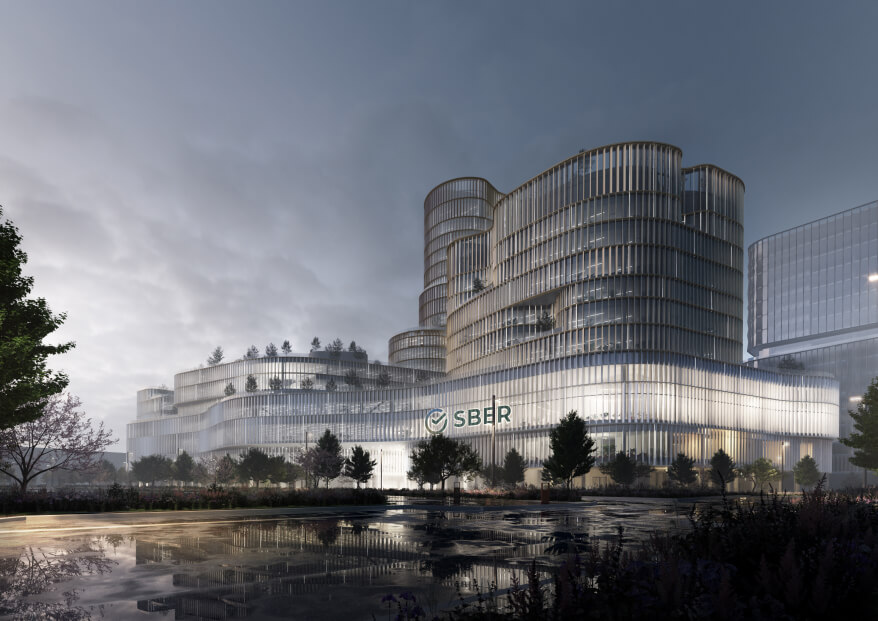
The office and business building is a multi-storey (21 floors in the highest part) facility, which includes: an office building, a fitness center, a congress center, retail premises, restaurants and catering establishments, a built-in underground parking at 1400 m/ m, a helipad. Architectural solutions for the exterior of the building were made taking into account its visual perception in the context of the general concept of building blocks as a whole.
APPLICATION OF INFORMATION MODELING TECHNOLOGY
Information modeling technology (BIM) was used in the development of documentation at all stages of design.
- AR, AI, KR, KM, VIS — Autodesk Revit, Rhino+Grasshopper • GP, HC — Autodesk Civil 3d;
- PIC — Synchro 4D Pro;
- Verification and coordination of models — Autodesk Navisworks, BIMCollab Zoom.
The modeling and coordination process was conducted according to the Customer's Information Requirements (EIR). A project implementation plan (BEP) was formed and agreed with the Customer to coordinate the technology for modeling unique elements and recording deviations from requirements.
The documentation for the sections was produced from information models. A classifier of building elements was used to automatically extract the work volume list from information models. Each element of the model has been assigned a code corresponding to the job.
The project was developed jointly with foreign architects, so it was important to build a collaborative process so that all project participants had access to information models. All project participants have always seen only up-to-date information through the use of a shared data environment (SOD). With the help of BIM360, the following processes took place: the transfer of models from the contractor, the approval of models by the customer, as well as the exchange of information and comments between all project participants.
To assess the dynamics of building an information model and to transfer it to the customer, a consolidated Navisworks model of the entire complex was prepared on a regular basis. The models were checked on a weekly basis in two stages: automatic and manual.
During the design, our own developments were implemented, such as: Synchro 4D Pro, Model Exporter, Hole Manager, Trim Construction, Rhino + Grasshopper, Revit + Dynamo. All this made it possible to reduce the number of routine repetitive operations and save time for designers.
LEVELS OF DETAIL OF BIM MODELS
The architectural models of the complex were executed in high detail and had the detailed information necessary to create high-quality documentation. The features of the structural models include detailed elaboration of steel structures to support the facade, as well as modeling of large-span trusses in the hall area. The models of engineering networks were modeled taking into account the terminal devices. All the networks were separated and had no spatial collisions. The landscaping of the territory was modeled within the framework of the GP model.
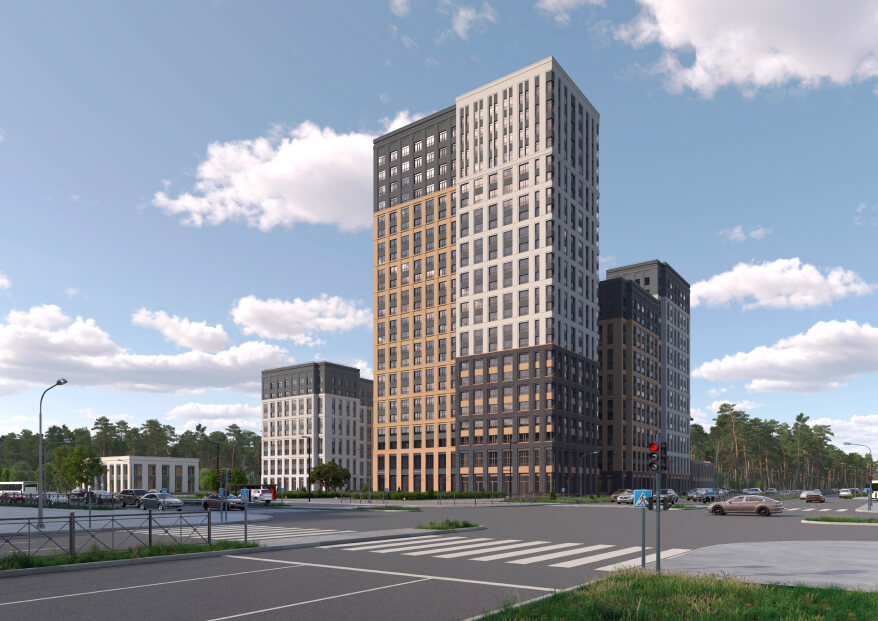
The project provides for eight apartment buildings with built-in non-residential premises. The construction is divided into three stages:
- two-section apartment building (sections 7 and 8) with built-in non-residential premises and an attached underground parking;
- five-section apartment building (1...5 sections) with built-in non-residential premises and an attached underground parking. There is an attached office space between sections 3 and 4;
- a single-section apartment building (section 6) with built-in non-residential premises and an attached underground parking lot.
In block 4.5, the courtyard will be made in eco-style: recreation areas, playgrounds and sports grounds will be organized here. The developer also planned the construction of a kindergarten and a school. An underground parking lot is provided for car owners, which can be reached by elevator. Storerooms will be located nearby.
The consolidated information model of block 4.5 includes sections AR, QL, OV, VK, EOM, APT. The main advantages and scenarios of using BIM for an object:
- The block 4.5 model served as the basis for the automated formation of a set of working documentation, including plans, sections, facades, nodes and details. This significantly reduced the time required to develop and release documentation, as well as minimize the risk of errors.;
- Also, using the BIM model, the process of creating realistic three-dimensional visualizations of the object was simplified, which made it possible to visually present the project for the start of sales on the website of the developer JSC Specialized Developer RSG-Akademicheskoe;
- The information contained in the model has significantly reduced the time required to generate a statement of the amount of work and materials needed for the subsequent cost assessment of the construction of block 4.5;
- The BIM model was used to perform an automated collision check according to the collision matrix described in the EIR. Identification and elimination of collisions at the early stages of design allowed to avoid expensive alterations at the construction stage.
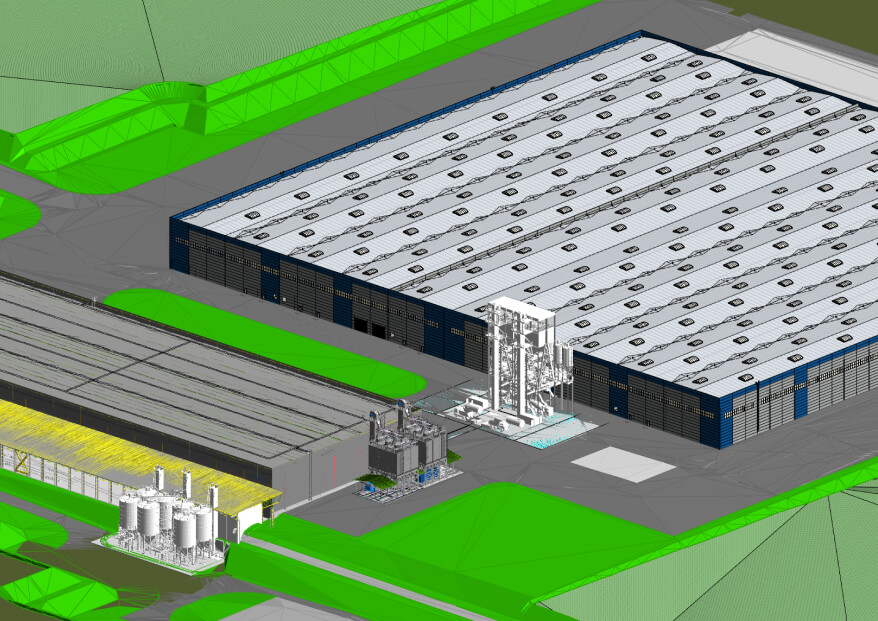
Industrial and Technological Park "Synergy". Building No. 27 Ilyushin is a factory for the production of house kits with finishing. It includes a warehouse for inert materials, a railway line for the transportation of goods, a room for the production of concrete, reinforcement and molding shops, as well as an area for interior decoration.
Alabuga Development was engaged in the development of design solutions and made improvements to the existing BIM model. The company has developed sections of power supply and electric lighting of the warehouse of inert materials, outdoor lighting, outdoor water supply and sanitation networks. The tracing of gas supply, heating and ventilation is shown. Technological buildings, actual foundations, and the architecture of an inert materials warehouse were added to the BIM model.
Alabuga Development specialists linked the completed design solutions and began developing specials. parts of the project, which include fire safety, environmental protection, etc. Railway tracks and a gantry crane were added, as well as design documentation, engineering networks and architecture were updated.
The production and warehouse building is a single-storey metal-frame rectangular building, divided into 2 modules: 21.2 thousand square meters and 33.2 thousand square meters. The height of the building's production facilities to the bottom of the supporting structures of the trusses is 14.5 m.
The warehouse of inert materials with an elevated path consists of three containers for storing sand and crushed stone. The height of the building to the bottom of the supporting structures of the trusses is 22 m.
6. The best solution for creating a comfortable urban environment
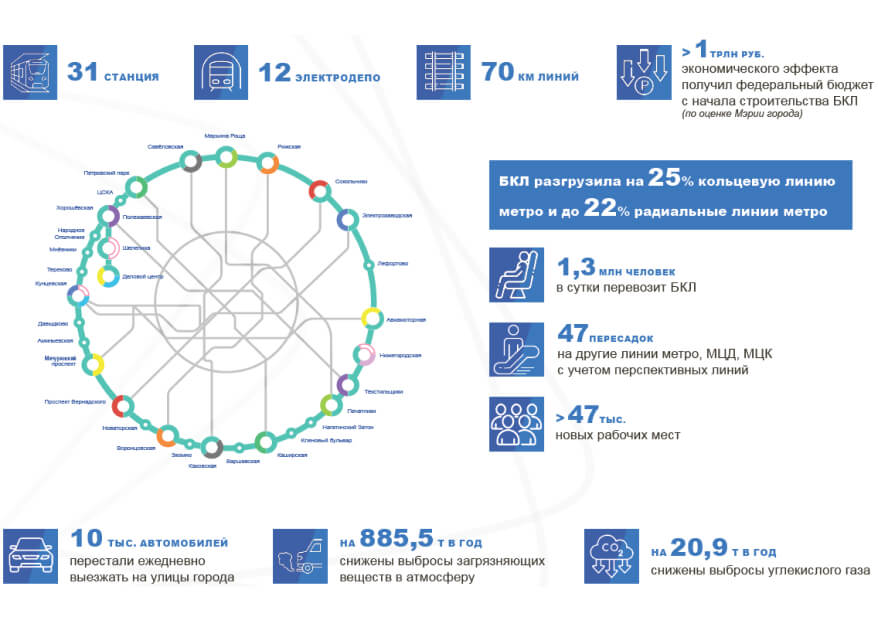
The Bolshaya Koltsevaya Line is the largest project of the domestic and global metro construction. The length of the line is 70 km with 31 stations and 3 electric depots. The metro is one of the most environmentally friendly modes of transport. With BKL, travel savings are up to 45 minutes, which is a significant advantage over a personal car. One of the prerequisites for the launch of BKL was the task of increasing connectivity in Moscow's districts and eliminating the need to travel through the city center. The construction of the BCL began in 2011. A tunnel tunnel management center was created specifically for the construction. Several sections of tunnels have been built under major metropolitan reservoirs.
All the territories adjacent to the BCL stations have been landscaped, and residents have received comfortable public spaces.
Object input results:
- Provision of 23 new transfers to other metro lines (taking into account prospective ones), 3 to the MCC, 21 to the MCC and railway stations;
- Unloading of all radial subway lines;
- Improving the level of transport services for 3.3 million people from 34 districts of the city;
- Improving the environmental situation in the districts by reducing the number of ground vehicles.
During the construction of a number of stations, elements of information modeling technologies were used for the first time.
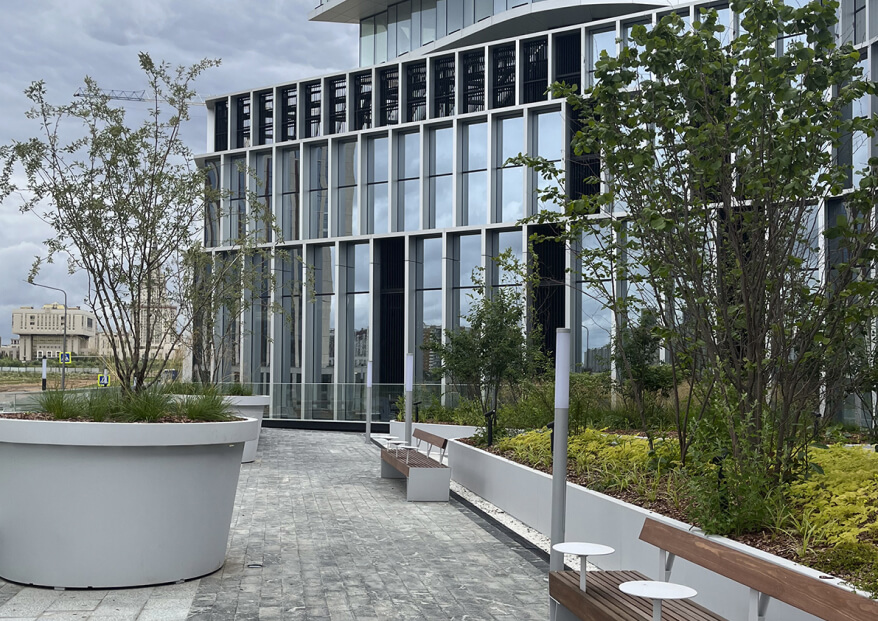
Conceptual solution The Lomonosov Educational cluster is located in Moscow. It is located in the Ramenka district of Moscow and is part of the new Innovative Scientific and Technological Center (INTC). Moscow State University "Vorobyovy Gory". The Lomonosov Cluster is a 10—storey building with an area of 65,000 square meters, with offices of high-tech companies, laboratories, certification and testing centers, digital additive technologies, and research and development centers for scientific technology and innovation activities. Conference halls and exhibition spaces will also be created in the cluster.
The main task of landscape design in this project is to create a comfortable space for visitors to the cluster, in conjunction with the office technology purpose of the building, as well as the maximum possible landscaping of the territory. The cluster space should allow users to switch from complex scientific tasks and relax surrounded by greenery. It is at such moments that new, creative ideas arise.
The concept implies the rational use of resources and respect for ecology and landscape, the harmonious coexistence of modern technologies and nature, the creation of comfortable conditions without harm to the environment.
Main functional areas of the site:
- Entrance area
- Green Square
- Operational roof of 2 floors
- The inner courtyard
- VIP entrance
- Operational roof of the 5th floor
The square is located at the foot of the main staircase, connecting the entrance area and the lower—level green square and is a ceremonial, public place with a sculpture group in the center and benches with large-sized flowerpots.
A green square with an abundance of greenery and arrays of large-sized trees will set off the strict geometry of facades and squares and create a comfortable microclimate that will allow visitors and office workers to relax on the territory of the cluster.
The project includes landscaping of the roofs (2nd and 5th floor), which helps in solving the problem of landscaping a small area. Additional landscaping on the roof is a new space within walking distance for building users, improving the environmental situation. Also, a green roof helps to reduce ambient noise and create a more pleasant environment outside the office. The roof space is an open terrace with outdoor furniture, surrounded by greenery, concentrated in the upper left corner. The transition from the paving of the terrace to the greenery is filled with gravel, this area can be used as an additional space for mass events and seating for restaurant guests.
An inner courtyard is organized at the ground floor level — a chamber space with individual MAFS for organizing events, lectures, masterclasses, and outdoor dining. The interior space is framed by tiered landscaping. It consists of shrubs of different heights and perennial plants. Landscaping will make the interior space diverse and interesting not only when you are in the courtyard, but also watching it from the building.
Landscaping. Trees, shrubs and perennial grasses that are stable and undemanding in urban conditions have been selected for planting on the territory. The selection and placement of plants were carried out taking into account seasonal changes. The palette includes coniferous plants, deciduous plants blooming in different periods of the year from spring to autumn, and brightly colored cultivars in autumn. The lower tier of vegetation will be formed by various types of cover: arrays of shrubs of various heights, flower beds of various types, cultivated meadows of perennial and annual flowers and grasses, lawns.
Small architectural forms. This section is represented by individual and factory-made elements that meet common conceptual solutions. The individual design includes: — a wooden amphitheater in the park — benches-flowerpots on the entrance square — stairs disappearing into greenery — raised flower beds on the roofs — outdoor tables with built—in planters in the courtyard - sculptural bollards.
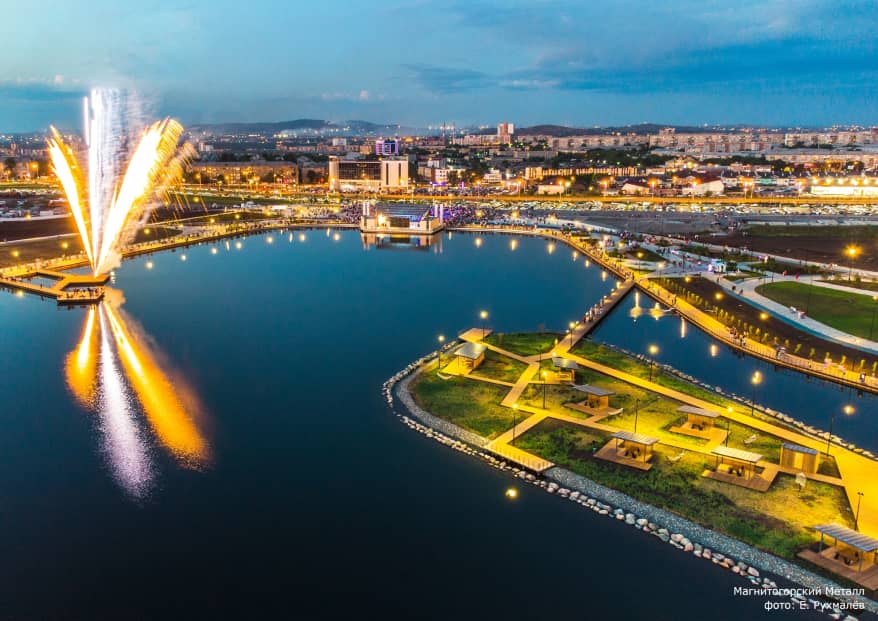
The Attraction Park is a real gem of the Chelyabinsk region, which attracts not only locals, but also tourists from all over the country. Located in a picturesque area, the park is a unique combination of nature, architecture and art. Thanks to its creation and development, the territory of Magnitogorsk has become more attractive and comfortable to live in.
Attraction is one of the largest urban development projects in modern Russia. It is a year—round multifunctional park space with a complex of buildings with a total area of about 100 thousand square meters. The total area of the project area is 400 hectares.
The main buildings are grouped along the "boulevard axis", parallel to the main entrance street of Sovetskaya. Various functional areas are associated with these central elements. Short driving routes and easy orientation in the park and on the boulevard are the key points of the project. The boulevard is raised several meters above street level to increase its visibility towards the city, as well as provide a panoramic view.
The main connecting element of the entire park is the "activity rings". They form a link between the park and the boulevard and various areas inside it: a central children's playground, a children's playground near the view hill, an aquatic children's playground, a recreation area, a roller skating rink and an ice rink, a mini golf course, a maze garden, a theme garden, recreation areas with shade canopies, gazebos, a picnic area, a rope park, a land art ring, a ring of experience, a path of human feelings, a ring of adventures.
Accessibility and attractiveness for all groups of the population is due to the multitude of locations and a huge number of functions, which, in turn, makes the Attraction Park unique not only for Magnitogorsk and The Urals, but also for the whole country.
In 2022, the facilities of the first stage of the Attraction were opened — the central entrance group with a boulevard, an information center, a food mall, a playground and a roller park.
As part of the opening of the second stage in July 2023, the park's territory has increased by more than 100 hectares, with rich thematic locations and venues. A panoramic hill with a height of 40 m has appeared here. This is a unique engineering structure, as it is poured from slag, a by-product of metal production. As part of the design, strength tests of the slag were performed, on the basis of which hill stability calculations were performed. On the hill there are: a ski lift, an all-season ski run and tubing slopes, an observation deck, a zip line, and a mountain bike trail.
In the eastern part of the park there are flower terraces, grids and rows of trees and large lawns. In the western part there are natural wild woodlands, as well as numerous lawns, a flower meadow, a garden of fruit trees, a birch grove, and an alley of willow trees.
Various pavilions are located throughout the territory: food court kiosks, indoor recreation pavilions, toilet modules, rental points and many small architectural forms.
The main objects of the Attraction Park's event and composition center are centered around a large artificial lake. It consists of two reservoirs — the upper and the lower, and a multi-level cascade is formed between them. The total area of the lake is 15 hectares, with adjacent embankments, the maximum depth is about 6 meters. It is a natural body of water that creates an ecosystem and is used for various activities throughout the seasons.
One of the points of attraction on the reservoir is a large 400—meter-long view bridge. In the dark, the lighting and construction of the bridge creates the effect of a ribbon hovering over the water surface, and during the day it serves as a viewing platform from which the locations of the territory are visible in the palm of your hand. The urban resort features a boat station and a beach, a picnic island, an ecological trail, and a floating stage with an open—air amphitheater.
Another element of the second stage of the Attraction is a sports complex, which will include mini—football fields, volleyball and basketball courts, tennis courts, a minigolf field and a special sports and training area for dogs.
The network of bicycle and pedestrian paths in the park has increased by 40 kilometers. To the existing playgrounds, unique to Magnitogorsk, an aquatic playground has been added, which is equipped with water supply equipment, and a large playground "Adventure Park".
It is also planned to open a zipline (or trolls) — a metal cable with a length of 440 meters, along which it will be possible to make a high-speed descent.
Thanks to the Attraction Park, the Chelyabinsk region has found a new space for self-development and recreation. It has become a place where everyone can find something to their liking and enjoy the beauty of nature surrounding us. It is not surprising that the park has become a real symbol of the city and a place where you want to return again and again.
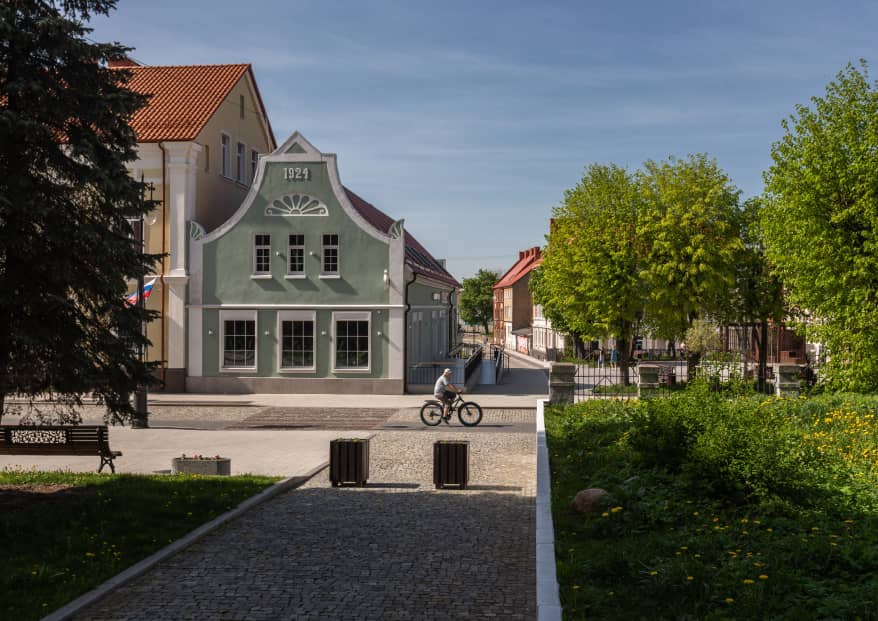
The creation of a single continuous walking cycling and hiking route within the territory under consideration has become a connecting element of two large green areas: Victory Park and the coastal area of the city lakes. A closed network has been created inside the quarter, all existing and newly created public spaces are connected. Moreover, all the existing residential courtyards in the block are interconnected. At the same time, several main dominants of the quarter and well-maintained, interconnected spaces of residential courtyards were created.
Careful work with the historical heritage has been carried out in balance with the creation of relevant zones.
The paving of the streets and central squares of the city, on many streets, has been almost completely preserved. In addition to its historical and aesthetic value, multi-lane paving has real practical value. Strips of varying types of pavement cover guarantee a variety and high pedestrian comfort in different weather conditions. The historical paving stones have been preserved. The bike paths were made of smooth large-format tiles. A special feature is the navigation built into the bike path surface. Storm sewers have been installed along roads and sidewalks, and new hatches with the city's coat of arms have been installed. Stupopanduses have been installed on the relief areas, and standard road signs along the driveways have been replaced with reduced ones.
Historical elements were taken into account when choosing coloristic solutions: brick facades, clinker roofs, natural stone sidewalks and cast-iron lanterns. The project also took into account the climatic features of the territory, which is characterized by prolonged rainy weather, in connection with which suitable types of coverings were selected, a large number of shelters and canopies were arranged.
Thanks to the project, several new recreation areas have been created in the center of Chernyakhovsk, each of which is neatly integrated into the urban context. A park has been landscaped on Kalinin Street, where a memorial stone is located in honor of Peter the Great's visit. Benches and new lighting were installed around it, and a map of the historic city center appeared in the center of the square. Canopies appeared in the area of the city court building: city exhibitions are held there. Nearby there are wooden cube gazebos with information about Immanuel Kant. All commercial sites and parking areas are evenly distributed within the block. Zones of residential courtyards are separately allocated.
Comprehensive work synchronized with other urban development processes
Thanks to the implementation of comprehensive landscaping of the Kalinin quarter in Chernyakhovsk, such processes as gasification of residential buildings, major repairs of houses, and landscaping of adjacent territories of the quarter under the FCGS program were synchronized. The adjacent territories were repaired, trees and shrubs were planted, communications were updated, and residential buildings in the block were gasified. In addition, this project has transformed the appearance of the historic quarter, which motivated the owners of many houses along the reconstructed streets to overhaul the facades and bring the signage on the facades to a uniform style.
Currently, the historic quarter is a popular vacation destination for residents and visitors of the city. Landscaping frames a unique low-rise building, immersing those walking through it in the atmosphere of the old city. An integrated approach to the development of territories has allowed not only to solve infrastructural problems, but also to form a number of new investment sites that will effectively affect the development and preservation of the structure of the historical center of Chernyakhovsk — Kalinin quarter.
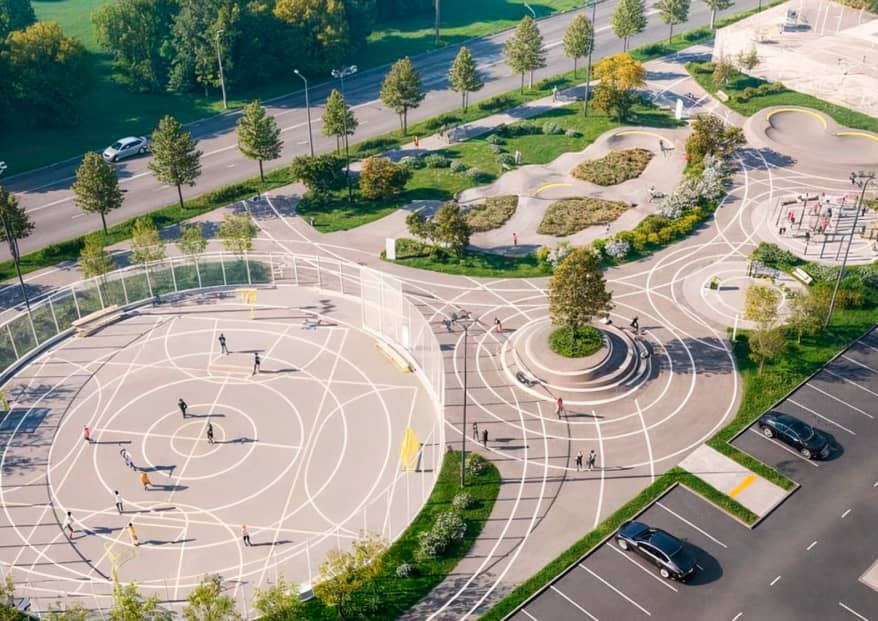
The project, developed by Legato Construction in collaboration with the PIK Group of companies, is the first SportHub in New Moscow.
The SportHub in Salarievo Park is not just a sports ground, it is a multifunctional space that combines various sports and public areas. The basic concept of the project is based on the idea of gravity. We wanted to create a space that would inspire people to move, be active, and explore. Gravity, as the main force that we all struggle against in sports, has become a symbol of our SportHub.
The territory is located four kilometers from the Moscow Ring Road along the Kiev highway, which makes it accessible to residents of the city. The proximity to two metro stations, Salarievo and Filatov Luga, provides convenient access for everyone.
It is important to note that the PIK Group of companies has made a significant contribution to the implementation of this project. Thanks to their support and innovative approach, we were able to create a space that meets modern environmental and accessibility requirements.
SportHub includes several key areas:
- Universal sports ground — designed for football, basketball and streetball games. The playground is equipped with a HARD surface and special fencing, which makes it safe and convenient for users of all ages. In winter, this playground turns into an ice rink for mass skating and hockey, which allows it to be operated all year round.
- The pump track is a unique element of yard solutions, which is a specially designed track for cycling, scooters and roller skates. Pump tracks are not only interesting for children as an alternative to new play spaces, but also serve as a door to the world of big-time sports. The UCI competitions are comparable in importance to the Olympic Games.
- The amphitheater is an ideal place to relax and watch the skaters.
- Training areas — include workout areas and fitness equipment that allow you to do both strength and cardio workouts.
- The asphalt children's bowl is a small skating bowl designed for children and novice riders, which makes our SportHub accessible to the youngest visitors.
- The volleyball court is a great place for outdoor activities with family and friends.
We paid special attention to the environmental friendliness and durability of our solutions. All the furniture in our SportHub is made of recycled plastic, which was produced using plastic bottles and lids. This approach in the construction and production of IAF allows us to preserve the environment and implement sustainable practices in our projects.
7.1 The best innovative development is materials
The expanded clay block consists of expanded clay gravel, lime and quartz sand. It is used for the construction of walls of any residential and public buildings.
It has unique medicinal properties due to its composition.
- Expanded clay is a light filler obtained by firing therapeutic blue clay. It does not burn, does not emit harmful substances, and is vapor permeable.
- Lime has a high alkalinity, kills fungi, microbes and mold.
Advantages of expanded clay gravel:
- easy
- does not rot
- keeps you warm
- insects and rodents do not eat
- It does not emit harmful substances
- vapor permeable
- not lit
Comparisons with similar materials.
Fire safety. In case of fire, various dangerous processes can occur with materials.:
- They can burn well and thus contribute to the rapid spread of flames (for example, wood and insulation materials).
- They may not burn, but melt, while releasing harmful toxic substances (for example, polymer insulation materials, plastic).
- They can deform, and dangerous stresses can occur in them, leading to their destruction (for example, heavy concrete).
To prevent these dangerous processes, it is necessary to use mineral materials that have been fired. Not only do such materials not burn or melt, no gases are released from them when exposed to high temperatures. They are homogeneous in composition and structure, which means that heterogeneous deformations are excluded. Such a material is expanded clay gravel.
Concrete structures combine concrete and steel reinforcement. Steel expands greatly when heated, while its adhesion to concrete is disrupted, stresses arise in the concrete, leading to its destruction.
In heavy concrete, granite rubble serves as a filler. Granite consists of three main minerals — quartz, feldspar and mica. All these three minerals have different coefficients of temperature linear expansion. That is, when heated, they expand in different ways, so the bonds between them are broken, which leads to the destruction of the crushed stone itself and a violation of the structure of concrete.
When building a house from materials produced by the Vinzilinsky expanded clay gravel factory, only the roof and furniture will burn in case of fire. The box will stay at home and can move on after the renovation.
The expanded clay block has a lower thermal conductivity than heavy concrete, so the temperature spreads deeper into the structure more slowly and the reinforcement remains protected from fire for a longer time. That is, the expanded clay block protects not only from cold, but also from heat in case of fire.
Lime is a binder produced by calcining limestone. Lime is an antiseptic that has been used since ancient times for plaster, for masonry mortar, for whitewashing walls, ceilings, furnaces, etc. and for disinfection of cellars, cesspools, etc. Whitewash and plaster based on lime have been preserved to this day on many architectural monuments.
Employees of the Vienna Medical University, the Austrian Institute of Building Biology and Ecology (IBO), as well as experts from The University of Applied Sciences FH Burgenland conducted a scientific experiment and proved that lime-based coatings are the most effective for maintaining a balanced indoor climate.
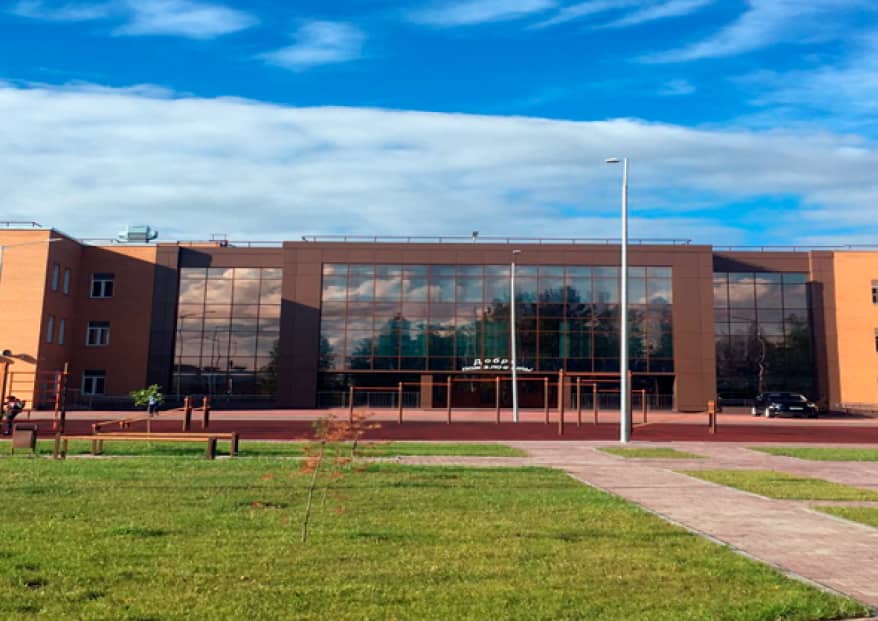
The fire resistance of metal structures without fire protection is quite low: metals are structurally quite sensitive to high temperatures and fire. From Soviet times to the present, the following fire protection methods have been used to increase the fire resistance limits of steel structures to standardized values:
- concreting;
- fire-resistant cladding (brick, plasterboard);
- flame-retardant coatings (plasters, phosphate coating);
- bulging flame retardant coatings.
Each method has its advantages and disadvantages, when choosing fire protection, many factors must be taken into account: the time of application (construction or reconstruction of a building), operating conditions, surface preparation features, application complexity, weight of fire protection, control of the required layer thickness, coating service life, the need for reapplication after 3-5 years (in the case of fire-resistant coatings) to increase their stability and efficiency, environmental properties of materials, aesthetic appearance of the finished structure, etc.
The territory of the Novosibirsk Region is part of the Altai-Sayan seismic zone. Novosibirsk region is located in the zone of possible shaking with an intensity from 5 to 8 points. In 2023, 5 seismic events with a magnitude from 3.1 to 4.6 occurred in the Novosibirsk region. Earthquake damage and the number of human casualties can be reduced by creating maps of seismic zoning and earthquake-resistant construction.
The integrated structural fire protection system for metal structures "OBM-met" used in the fire protection project of school No. 2 meets the requirements for construction in seismic areas and is certified for earthquake resistance up to 9 points on the MSK-64 scale.
Proposal: The innovative idea of the project is to use an earthquake—resistant structural fire protection system for metal structures "OBM-Met", consisting of a basalt rolled OBM material (possible lining options: without lining, lined with aluminum foil, glass, basalt and silica fabric, metal mesh, glass mesh) and an Expert Standard flame retardant coating.
Technical characteristics of the OBM-met system
- Flame retardant efficiency, min: 60-150
- Earthquake resistance performance up to 9 points on the MSK-64 scale
- Non-flammable material. No binder is used in the production of MBM material, only basalt fibers. Therefore, the operating temperature of the basalt material is up to 1100 ° C when used as fire protection.
- The density of the rolled basalt material, which is included in the OBM-Met system, is not less than 70 kg/m3. This ensures the required fire resistance limit with minimal load on the supporting structures.
Environmental safety. The MBM material is made from superfine basalt fiber without the use of a binder, which makes it environmentally friendly to use. The fire-resistant coating by Expert Standard is environmentally, fire- and explosion-proof. It also does not contain substances that emit toxic gases when heated. Fire-resistant basalt material OBM meets sanitary, epidemiological and hygienic requirements, and is also certified according to environmental requirements.
The benefits of this innovation
- Ensuring a high fire resistance limit with minimal load on the supporting structures
- The possibility of using the material in the most earthquake-prone regions of the Russian Federation (Kamchatka Territory, Republic of Buryatia, Irkutsk Region, Republic of Tyva, Trans-Baikal Territory, Amur Region, Khabarovsk Territory, Sakhalin Region, Primorsky Territory, Chukotka Autonomous District, Republic of Khakassia, many republics of the North Caucasus and the south of the Crimean Peninsula, the north-western part of the Republic of Yakutia, Magadan Region).
- Increased vibration resistance, additional sound insulation.
- The simplicity and ease of application (Using an Expert Standard flame retardant coating makes installation of the system quick and convenient. When using the Expert Standard winter Frost series coating as an adhesive, installation is possible at temperatures up to -15 °C)
- Durability and maintainability (the service life of the OBM-Met system is 25 years)
- High quality of products and works, thanks to a certified quality management system and a full production cycle from design to installation.
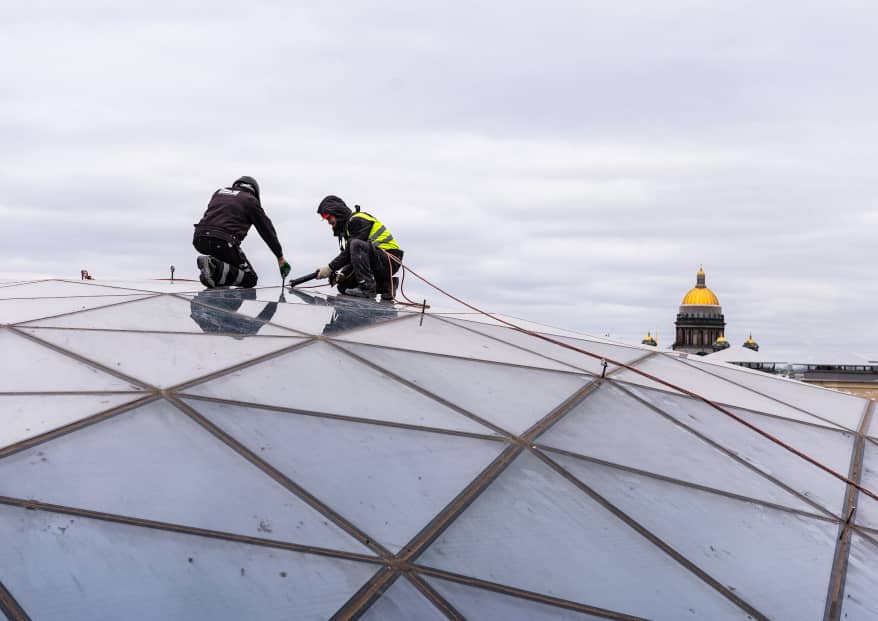
In 2024, above the courtyards of the Rimsky-Korsakov Conservatory in The construction of two glass and metal domes has been completed in St. Petersburg, and the equipment of public spaces and cafes inside the former courtyard wells is being completed in late spring.
The builders and designers have solved one of the key tasks of the reconstruction — the usable area of the historic building of the first music university of Russia has been increased by 700 square meters. m, up to 31,864 sq. m. square meters.
For the first time in In Russia, during the reconstruction of a cultural heritage site of federal significance of the 19th century, structures made of self-supporting, high-strength aluminum, rather than traditional steel, were used to erect domes.
The roof structures are made of aluminum alloy AD35T1, this alloy is comparable in strength to steel, but three times lighter. The net weight of the aluminum frame was only 15 kg/sq.m of the dome surface area.
The use of aluminum lightened the load of the translucent structure on the foundation and walls of the first music university in Russia. (The Conservatory building opposite the Mariinsky Theatre was built in 1896 using fragments of the foundation and walls of a Stone Theater built by Antonio Rinaldi in 1786). Previously, alloy AD35T1 proved itself in the aircraft industry, and its use in construction is just beginning.
Another high-strength aluminum alloy, D16T, is used in the nodal elements (asterisks) of the roof.
The special feature of the project is the high precision of the parts and the reduction of construction tolerances. The spaces between the metal and the double-glazed unit are reduced to 0.2-0.3 mm. This ensures that there are no leaks even in extreme weather conditions. When using welded steel structures, the tolerances are usually significantly higher.
The increased accuracy of the connections and the design in 3D drawings made it possible in advance, without waiting for the completion of the construction of the metal frame, to produce 400 triangular double-glazed windows, many of which have unique dimensions, to speed up the installation time of the domes by using only bolted connections and no welding, to increase the insulation density and minimize the risks associated with the human factor at all stages of the device domes. Both domes were assembled in three weeks.
The structure is designed for use for fifty years or longer, aluminum is less susceptible to corrosion than steel and other metals. Our country has one of the largest numbers of cultural heritage monuments of federal and regional importance in Europe, at the end of 2023 their number exceeded 150,000, more than 20,000 monuments are awaiting the start of reconstruction in the next 10 to 15 years. The use of lightweight aluminum structures will speed up the restoration time, reduce the load on historical walls and foundations, and promote the spread of paperless design technologies. The environmental aspect is important — a significant part of aluminum is produced after recycling.
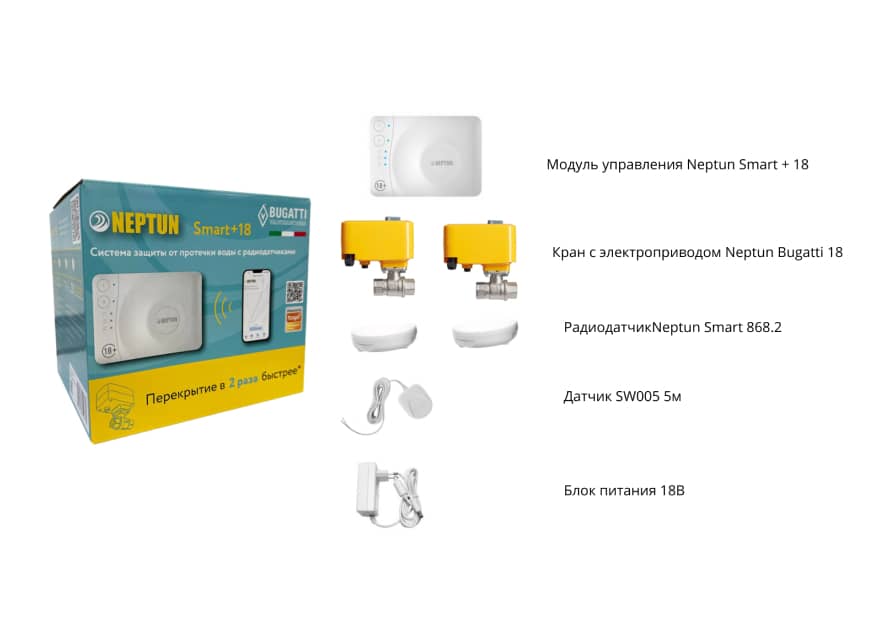
New water leak protection system with updated sensor
System composition:
- Neptun Smart + 18 Control Module
- Neptun Bugatti 18 Electric Crane
- Neptun Smart Radio Sensor 868.2
- SW005 5m sensor
- 18V power supply unit
Water leakage protection system with a new sensor. The sensor is designed using the most advanced components and technologies.
The LoRa chip (installed in the sensor) is powered by spectrum expansion technology, which allows data to be transmitted over long distances with low power consumption. In addition, its own broadband data transmission algorithm is used, which significantly increases the connection range to the control module — up to 3 km in the line of sight. This is especially important for monitoring and control systems, where it is necessary to ensure stable and reliable communication over long distances.
Neptun Smart +18 is a unique product on the market that has no analogues in terms of accuracy and possible remote operation.
The Solus thermostat, developed in collaboration between Teplolyux and NotAnotherOne, is an innovative device for controlling electric underfloor heating. Solus stands out among its analogues due to its minimalistic design, ease of use and high performance characteristics.
- Minimalistic design: The device is designed taking into account modern trends in interior design, which are dominated by minimalism and stealth. Solus is distinguished by its thin and flat profile, which creates the effect of "floating" above the wall surface and enhances its visual appeal. The front panel is made in the form of a ring with a protruding flag for temperature control, which makes the device intuitive and convenient to operate.
- Ergonomics and tactile response: Special attention was paid to tactile sensations when interacting with the device. The temperature control is accompanied by pleasant clicks, creating an emotional response from the user. The development process used mechanisms and controls inspired by household appliances and the automotive industry, which ensured the high quality and reliability of the device.
- Easy installation and operation: Solus is designed so that its installation is as simple and convenient as possible. The components of the device are placed on two boards, which made it possible to maintain compactness and minimal protrusion from the wall. The screw terminals have been replaced with self-locking ones, which makes it easier to connect the wires. Reusable latches allow you to install the front part without using special tools.
- Innovative design solutions: An important feature is the presence of a central on/off button that saves the current temperature settings, eliminating the need for constant regulation. The soft glow of the LEDs ensures that the device is visible in the dark without an annoying effect, which also reduces its cost and makes it affordable for mass production.
- Adapting to consumer preferences: The Solus thermostat has undergone numerous studies and tests among the target audience, the results of which showed a high appreciation for the design and functionality of the device. The majority of respondents noted its attractive appearance, good shape and modern design. Solus is not only functional, but also harmoniously fits into the interior of modern apartments, which makes it an excellent choice for consumers who value quality, reliability and style. This thermostat represents a significant step forward in the heating system industry, offering unique solutions for managing comfort in the home.
7.2 The best innovative development: technology
PSO-Project has been a Skolkovo resident research and production company since 2016. The products are underfloor heating, ceiling heating and industrial heating. The technology and production lines are Russian, developed and produced by the PSO team. The raw materials are Russian, localization is 100%.
Aluminum composite ceiling heating from PSO under the ZEBRA EVO-300 brand is a new type of energy—efficient and environmentally friendly equipment for a concealed installation with a huge uptime. The cost-effectiveness of the ZEBRA heating system is commensurate with gas heating, taking into account low capital costs, low electricity consumption and a long service life without repairs and maintenance.
Zebra EVO-300 is used for heating the ceiling and underfloor heating. Unlike the well—known cable and film heating systems, a new type has been created - aluminum-composite ultrathin heating elements.
Innovative solutions
PSO technologies are based on 30 patents.
Unlike competitive solutions, PSO products have a unique set of consumer properties and qualities based on 5 key technologies:
- directional heat flow (DHF-Tech);
- built-in protection against local overheating (LOP-Tech);
- built-in fuse box for protection under emergency operating conditions (LP-Tech);
- fire safety G1, B1, RP1 (FP-Tech);
- protection against moisture penetration IPX7 and IPX8 (MI-Tech);
The ZEBRA EVO-300 PRO ceiling solution, installed on a rough ceiling and covered with stretch or suspended plywood or other sheet material, makes heating invisible, while the consumer receives the highest level of comfort, provides a different temperature in each individual room with an accuracy of one degree.
The ZEBRA EVO-300 WF laminate or quartz vinyl castle floor has a high resistance to local overheating due to the aluminum housing, and is a reliable and proven solution.
Underfloor heating for tiles or granite on a ready—made screed is ZEBRA EVO-300 PGK (flat heating cable). A wide (23mm) and thin (0.5mm) heating tape is 300 times more efficient at transferring heat to the floor surface than a traditional circular cable.
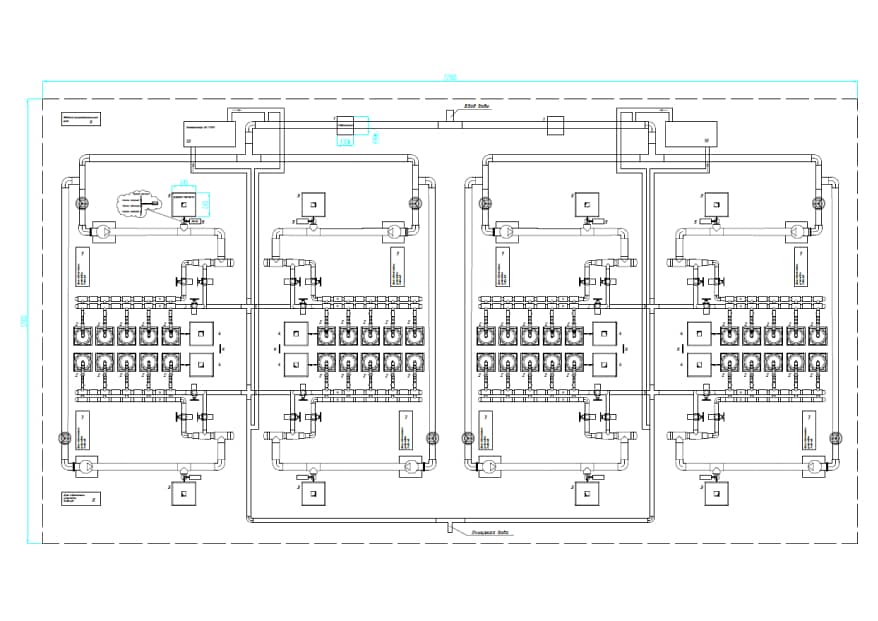
The installation is based on the principle of alluvial filtration, but the filter element for alluvial a layer of powdered sorbent on it is made of a spring-loaded wire mesh with a variable mesh size, which makes it possible to automate the process of alluvial and filter layer replacement, and therefore fully automate the operation of installations with a dispatching system.
In residential complexes and low-rise buildings under construction, the problem of providing clean drinking water is solved cheaply and efficiently, while maintaining engineering equipment, communications and increasing the competitiveness and attractiveness of facilities under construction.
The developed technology is relevant, as there is no effective working domestic technology in this area. The technology has a patent for an invention in the Russian Federation, worldwide recognition under the PCT system, and patents in Eurasia and India.
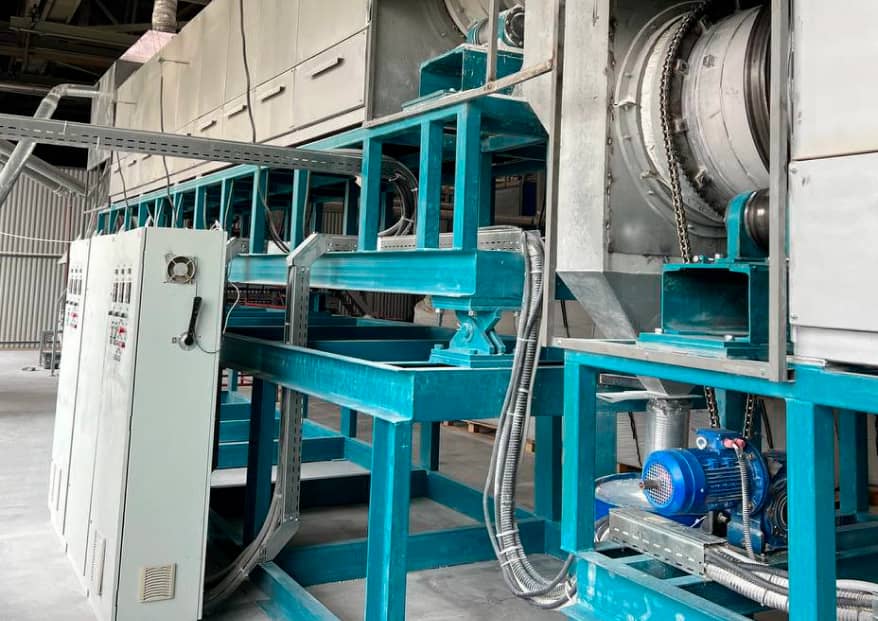
In the project of LLC "Dom 3.0" has developed a two-stage technology for the production of energy-efficient lightweight concretes and products based on foam glass granulate (PSG) in single-layer enclosing structures of buildings (without the use of insulation).
The production process of foam glass granulate (PSG) includes:
- Production of highly dispersed mineral powder (extraction of mineral raw materials, primary crushing, drying, fine grinding)
- Mass preparation. Unlike traditional technologies for producing calcined aggregates for concrete, PSG technology is based on a powder method of mass preparation, in which wetting mineral powder with a strictly dosed chemically active solution is combined with the formation of granules of a given size, followed by thermochemical treatment of granules.
- Firing (metered feed of raw granules into the furnace, metered feed of coal, heating, isothermal exposure of the material at the firing temperature (800-900 ° C), sieving).
The density of such light concretes varies from 400 to 1200 kg / cubic meter (which is from 2 to 4 times lighter than heavy concrete), while the strength ranges from 2.5 to 15 MPa. In a complex with a low coefficient of thermal conductivity (from 0.1 to 0.17), it becomes possible to use this type of concrete for the production of energy-efficient single-layer enclosing structures (without the use of insulation) — panels, modular facades, blocks, ready-made modular house kits. The completed structures meet all the requirements of the regulatory and technical documentation in the field of construction, including the requirements for the heat shield of the building (for all climatic zones of the Russian Federation). The use of this technology makes it possible to abandon multilayer structures by replacing them with single-layer ones (without the use of insulation), reduce the cost of enclosing structures (up to 20%) due to factory readiness of elements and modules, reduce construction time (up to 50%), reduce the cost of materials and work, and reduce the complexity of work in the manufacture of elements. made of lightweight concrete (due to the reduction and simplification of the technological stages of work, the ability to manufacture products in vertical cassettes). In addition, by lightening the structures, the transport load on roads and installation loads are reduced, and the percentage of reinforcement of load-bearing structures is reduced (as a result, the cost of reinforcement work is reduced).
In addition to the above advantages, it is also worth noting that lightweight PSG concrete and structures based on it are non—flammable, environmentally friendly (due to the use of mineral raw materials), and have increased sound insulation characteristics. Ready-made standard and individual solutions for construction projects allow them to be implemented in housing construction, commercial real estate, social infrastructure, temporary structures, as well as in the integrated development of territories.
Foam glass concrete will also increase the duration of the inter-repair period and increase the reliability of structures in operation due to a significantly higher durability of the structural system (abandoning ventilated facade systems and short-lived insulation materials) and, thereby, provide standard comfortable conditions in places of work and residence.
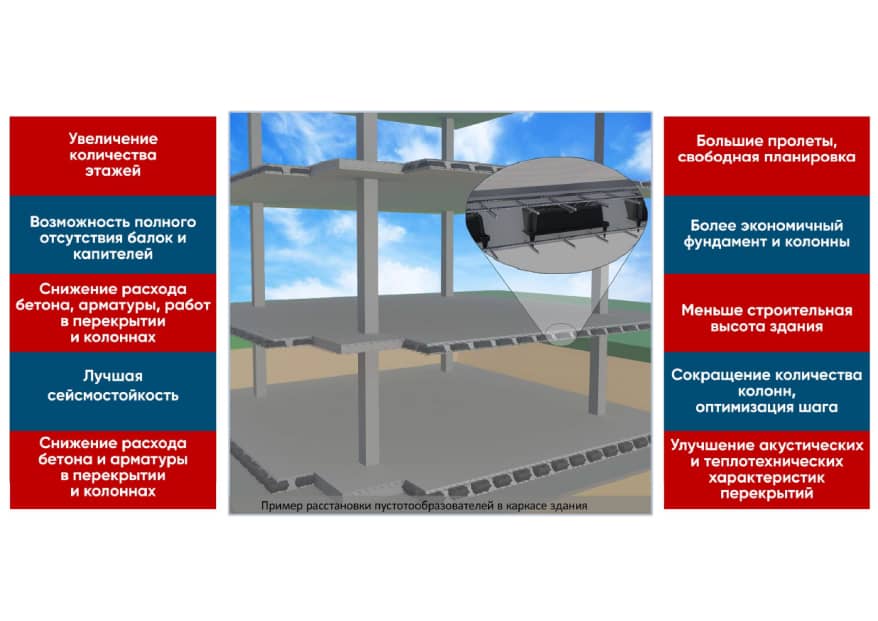
SP 430.1325800.2018 (n 5.2.12) Monolithic structural systems (formerly SP 52-103-2007 "Reinforced concrete monolithic structures of buildings" (p.7.8) recommends the use of hollow inserts in monolithic floors of buildings.
The main function of the permanent formwork is to lighten the slab. The concrete of the median zone and the supporting frames for the upper reinforcement, which do not participate in its work, are removed from the overlap, thereby reducing the consumption of monolithic reinforced concrete (concrete, reinforcement) as well as time and labor costs. This has a positive impact on all building structures and engineering systems by making them easier and cheaper.
Hollow formers can be used in all types of buildings and structures with a monolithic frame to significantly reduce the dead weight of slabs and save building materials.
The main advantages of Sibform technology are:
- Reducing the weight of slabs and, as a result, the consumption of concrete, working and structural fittings, including in columns and foundations.
- The ability to increase the span of slabs without the use of beams, capitals, etc., optimize the pitch and number of vertical load—bearing structures - columns, pylons, walls. This simplifies the design and construction of buildings and structures.
In general, the introduction of this method leads to a reduction in the estimated cost of construction. On average, with the proper use of technology, savings on a monolithic building frame amount to 10%. In slabs, the reduction in the consumption of concrete and reinforcement reaches 30% (the average value is about 20-25%), in columns and foundations — up to 10%.
Reducing the dead weight of the building floor slabs is one of the main factors affecting the overall earthquake resistance and consumption of reinforced concrete on the main load-bearing structures. With our technology, it is possible to build reliable buildings in earthquake-prone areas while reducing the cost of the supporting frame.
The positive impact of Sibform technology on the speed of construction is due to the following factors:
- Reducing the volume of recycled building materials. Up to 30% less concrete and metal must be taken, moved upstairs, processed and laid.
- Supporting frames in reinforcement are excluded. They are, in fact, replaced by void formers.
The use of Sibform technology also has a positive impact on the environment. We use recycled thermoplastics as raw materials, which is a positive property of this technology from an environmental perspective, since the reuse of plastic significantly reduces environmental pollution.
Among the iconic facilities where Sibform products are used, it is worth mentioning the G3 high-rise tower in Yekaterinburg City, a unique residential complex on the territory of the Badaevsky brewery in Yekaterinburg. Moscow, civil office of Rosatom Corporation in Moscow Moscow, office and business building in Savings City, Moscow, residential area "Lesnaya Polyana" in the suburbs of Astana, Kazakhstan.
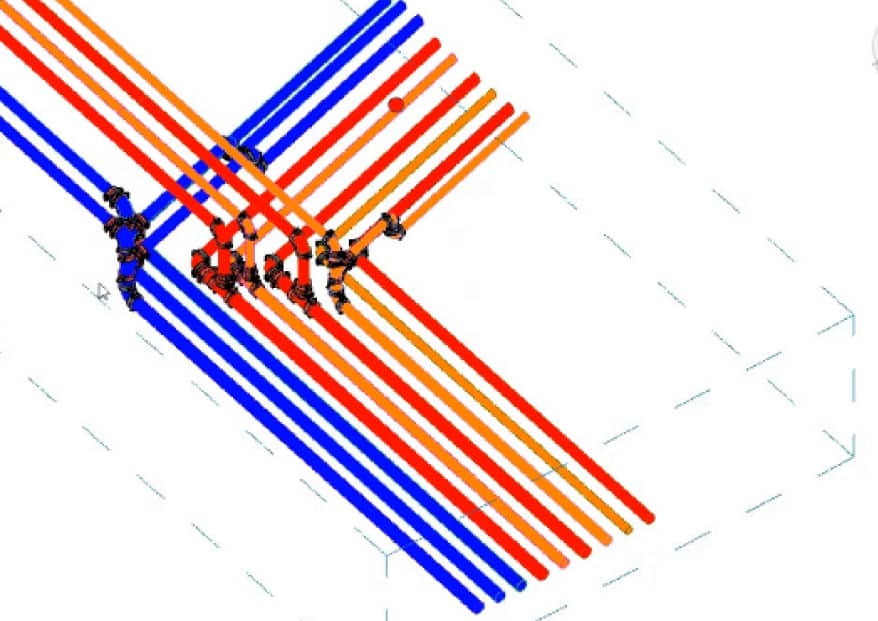
OlimpSystemsTrack is a tool for modeling engineering ducts, pipes and trays with automatic avoidance of obstacles encountered and according to certain rules. In the case of modeling in a certain order, it is possible to completely eliminate the intersection of systems both with each other and with structures and rooms in which their location is prohibited. In addition, the functionality of batch modeling of systems is implemented, when a whole set of pipelines is modeled in parallel along one trajectory.
The main functions of the tool:
- Modeling of various pipelines
- Duct modeling
- Modeling of sewer lines (taking into account the slope)
- Modeling of cable trays
- Connection to mains 6. Modeling of pipe bundles
When modeling, many factors are taken into account, such as the distance to the floor (to ensure passageways and corridors), the presence of insulation, the absence of collisions with all loaded connections (it is not necessary to display connections in the current view, connections are taken into account in the background, and for flexibility there is a functionality to ignore connections at the user's choice), the intersection of certain rooms, the intersection of load-bearing walls according to certain rules.
OlimpSystemsTrack works in the case of complex building geometry, auxiliary options are applied/disabled, the tool can be applied in an existing model in the presence of collisions.
This tool is designed for use in the Revit environment. However, the main thing is the idea and the algorithms used. When a decent software product appears on the market for the full-fledged organization of work in the BIM environment for large project teams, as well as having a full-fledged API, this tool will be adapted and can be used in design.
This tool is effective both at the stage of PD, when it is necessary to massively simulate all horizontal routes in the underground part of the building, and at the stages of the engineering concept, when it is necessary to quickly determine the possible trajectories of the location of various engineering systems of the building.
7.3 The best innovative development is an IT solution
The "digital core" for analysis and control is the Pragmacore platform:
- Construction schedule
- Graph of construction project resources
- Budget schedules and construction dates
- Monitoring the fulfillment of all contractual obligations
- Identification and analysis of risks
- Forecasting possible deviations from the plan
The Pragmacore platform is a dashboard for customers, general contractors, technical customers, contractors, project beneficiaries, designers, banks, manufacturers of equipment and materials, insurance companies and supervisory authorities.
Saving with Pragmacore:
- reduced downtime from 10% to 5%
- reduction of illiquid assets from 5% to 1-2%
- reduction in the number of staff
- reducing the time for demobilization
- increasing the liquidity of the project by reducing the WIP
- predictive analytics
Total savings of 8% or an average of 200 million rubles.
Advantages of Pragmacore:
- The implementation takes only 7 days.
- "windshield", not "rearview mirror"
- unified information space
- predictive analytics
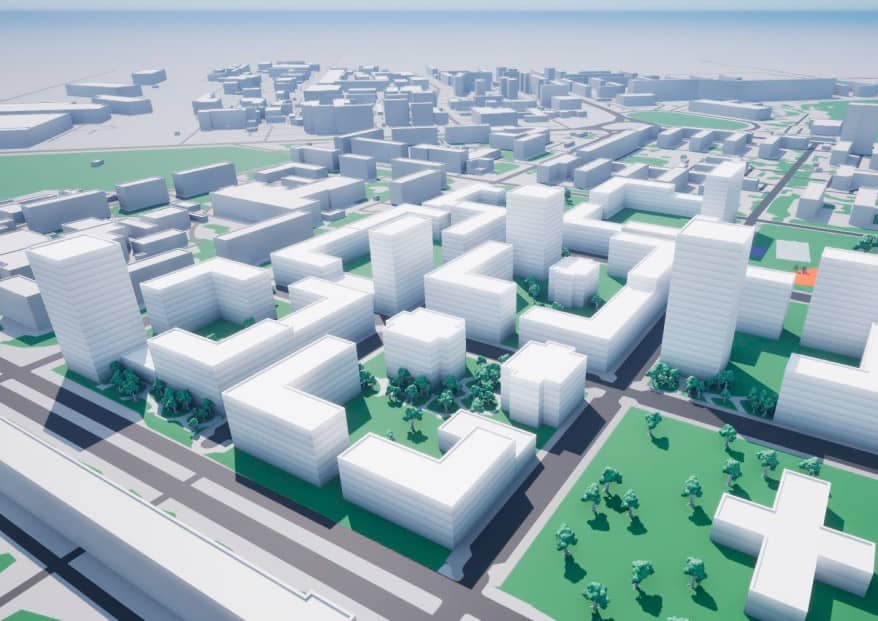
The problem of the "classical" master planning of integrated territorial development projects is the low speed and high complexity of the process, the lack of variability, the risk of errors and the need to take into account a huge amount of information in conditions of uncertainty, insufficient source data and increasing market demands, as well as the disadvantages of existing digital solutions in the field of urban development and territorial development.
The solution is to reduce the time required to prepare master plans for CT projects and assess the economic capacity of the territory, build a site development plan, and increase the efficiency of specialists.
rTIM is a generative artificial intelligence platform that analyzes big data and creates concepts for building a territory in a short time. The innovative solution allows you to quickly assess the investment and socio-economic potential, and immediately proceed to detailed construction planning.
Using the platform reduces the conceptual design time by at least 3 times, increasing the efficiency of the stage by more than 35%. Thanks to the capabilities of generative artificial intelligence, the concept development time is reduced to 1 day, and the number of employees involved in the task is reduced to 1 person.
In 1 day, the platform can provide more than 40 scenarios for the development of a territory, allowing the designer to compare them visually, as well as by technical and economic indicators, and choose the most effective one.
To create a concept, the platform takes into account more than 140 parameters.
The uniqueness of technology
Efficiency — The use of generative design technologies makes it possible to get quick results.
Accuracy — The generated (parametric) models provide high accuracy of the territory development plan and exclude the human factor.
Convenience and simplicity — All work is performed by 1 specialist with any degree of professional training, by clicking the mouse.
Innovativeness is a proprietary code that implements the "strong" function. AI" in terms of automatic, variable design of territories and objects by reproducing the creative professional functions of specialists — new entities.
There are only 4 steps to creating a territory development concept:
- Upload or enter the source data
- Outline the boundaries of the site or set the coordinates
- Run the simulation. The first option will be ready within 2-10 minutes (depending on the area of the territory)
- Get the result. The concept can be uploaded in an editable format and the detailed revision of the project can be continued in the usual software.
What is the concept that rTIM creates:
- the concept of residential and public-business development
- spatial and spatial parameters of the territory
- technical and economic indicators of the project
- indicators of transport and pendulum migration
- insolation and quartergraphy
- tracing engineering networks with calculated loads
- parametric 3D model of the territory with textured visualization
Scaling potential
Now the platform provides the initial stage of the life cycle — conceptual design. The further course of development of the platform involves forecasting and modeling the entire life cycle of the product: from the idea to renovation and disposal.
In addition, the technology allows for rapid scaling.:
- In the field of civil engineering in territories with different functional purposes, morphology of building and rationing (jurisdiction)
- When designing territories (facilities) in other industries and sectors of the economy: industry, energy, agriculture, defense industry, transport, logistics, infrastructure, linear and special facilities
- Seamless use of various (source) machine-readable data and formats for uploading the resulting digital models for any user's tasks
- On any territory of Russia and in any country of the world
The platform is a completely Russian development. It was developed by Rocket Group and entered into the Unified Register of Russian Computer Programs and Databases of the Ministry of Digital Economy of the Russian Federation (Registry entry No. 18131 dated 06/29/2023). Currently, this is the only solution based on artificial intelligence that is included in the register of the Ministry of Finance of the Russian Federation.
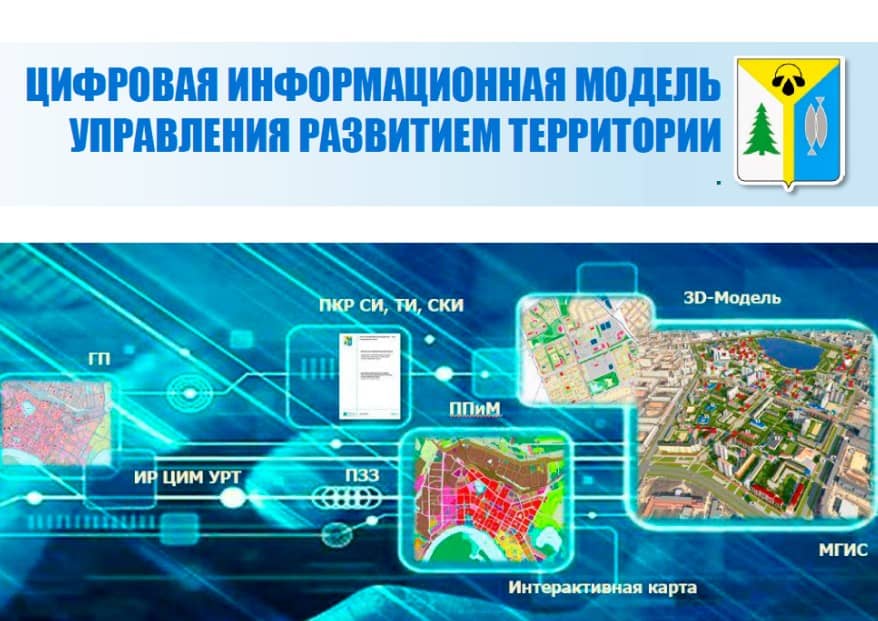
When creating the CIM URT, a large array of source data was analyzed.
A unified data bank on the current state of the city's territory has been formed (a digital platform for creating a CIM URT), which includes: — data on housing, — generalized data on people living in the city, — on social, transport, and communal infrastructure facilities, — data from the Unified State Register of Real Estate, etc.
There are 200,000+ spatial objects with attribute content in total.
A digital twin of the territory of Nizhnevartovsk has been prepared — a BIM 3D model of the current state of the city's territory at the LOD 200 level of detail, and orthophotoplanes have been prepared based on aerial photographs of the territory.
Conceptual strategic solutions for the development of the city's territory have been developed: concepts for the spatial development of the Nizhnevartovsk agglomeration and the city of Nizhnevartovsk, and a master plan for public spaces. Regulatory legal documents regulating urban planning activities (local standards of urban planning design) have been prepared and approved.
Based on the information provided by the database on the current state of the territory, changes have been prepared to all types of urban planning documentation to ensure continuity of decisions: the general plan of the city, planning and surveying projects, a project for surveying public areas (street and road network), rules of land use and development. Taking into account the identified needs, the list and deadline for the implementation of all planned infrastructure facilities necessary for the development of the city (programs for the integrated development of social, transport and communal infrastructures) have been determined. The parameters establishing the requirements for building and the quality of the urban environment (rules for the improvement of the city territory, the general scheme of landscaping of the city) have been approved.
An analysis of the business processes of the Nizhnevartovsk City Administration was performed and proposals for their automation were prepared in the form of a methodology for creating a CIM URT.
Automation solutions have been developed and implemented based on approved scenarios, including training for specialists from the Nizhnevartovsk Administration.
CIM URT includes the following systems:
- Municipal geographic information system.
- Information panels "Workplace of the supervisor" on the platform.
- Interactive map.
- The CIM URT portal is available on the Internet.
- 3D portal of Nizhnevartovsk available on the Internet.
CIM URT makes it possible to effectively make management decisions taking into account the opinions of residents, the balance of needs and provision of necessary facilities based on a mathematically sound approach and the principle of rational location, as well as reduce the time required to provide services by automating processes and actively interacting with the population, administration, business and resource supply organizations.
- The foundation has been created for the digital transformation of the city and the transition to the concept of a "data-driven city."
- Increasing the attractiveness and competitiveness of the city for investors, developers, entrepreneurs, and residents.
- Obtaining reliable information about the city's territory and decisions made on its development by all interested parties on the 3D portal of the city using the digital twin of the city's territory — a realistic 3D model of the existing state of the city's territory, ensuring the publicity and accessibility of urban planning solutions.
- Participation of city residents in surveys and votes on proposed design solutions.
- The possibility of publishing 3D models of buildings and landscaping facilities, embedding objects in a 3D model of the city for public discussion and approval of project proposals.
- Ensuring the search for a site for investors, developers, entrepreneurs, and residents of the city, taking into account approved urban planning decisions, and increasing the transparency and attractiveness of the city's territory for investment and development using the CIM portal.
- Implementation of interactive information analytical panels "Supervisor's workplace" to obtain and visualize reliable, up-to-date information about the current state and planned development of the city's territories.
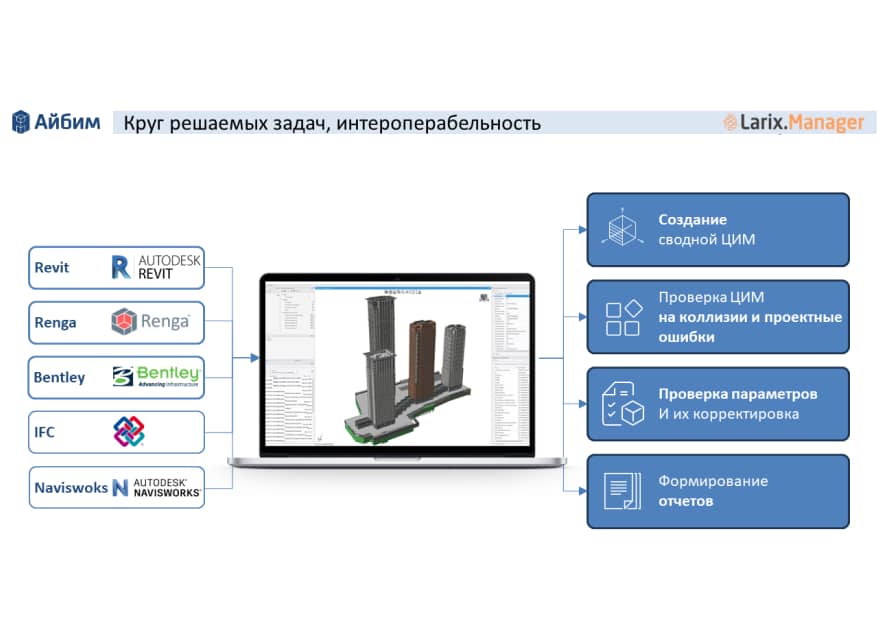
1. AN INTEGRATED APPROACH TO AUTOMATION
Larix.Manager is a new product of the Larix platform (the product line complements each other and completes tasks at various stages of the project lifecycle: starting from CIM quality control, automating cost estimates and generating a list of work volumes and costs, ending with conducting tender procedures, selecting contractors and further interacting with them during the contract execution phase).
2. THE RANGE OF TASKS TO BE SOLVED
The solution allows you to collect summary CIM from various CAD systems and closes the entire list of checks of information models. In Larix.Manager, you can perform visual and automatic checks for: design errors, collisions, and compliance with model requirements, as well as generate reports. The CIM verification functionality for design errors allows you to control the quality of design decisions made, while creating points of view, and the mechanism for checking for collisions and analyzing them allows you to search for and prevent the intersection of elements from different sections on the construction site.
3. INNOVATION
Larix.Manager completely replaces its foreign counterparts.
4. INTEROPERABILITY
Larix.Manager allows you to load IFC models directly. Larix.Manager users are already working with models from IndorCAD, Robur Topomatic, Credo, Revit, Renga and others.
5. SOFTWARE AND HARDWARE REQUIREMENTS
Larix.Manager provides offline operation without Internet access, secure data storage by hosting The user, not on external servers, and independence from foreign products and components.
6. CREATION OF A CONSOLIDATED (FEDERATED) BIM PROJECT MODEL
Creating a composite model is one of the most important tasks in the BIM design process, the purpose of which is to coordinate both individual models of one section and various sections of the project.
There is also a consolidated model, which is combined and coordinated BIM data, including those obtained from various sources, which is used for various customer processes. BIM models from Autodesk Revit, Autodesk Navisworks, Renga, Bentley are uploaded to Larix Manager using free plug-ins (links) via the intermediate IMC format. BIM models of the universal IFC format can be uploaded to Larix Manager directly without additional actions.
It also supports importing data from Microsoft Excel in the form of non-modeled elements, which are often necessary for customers to generate work volume statements.
7. CHECKING BIM MODELS FOR COLLISIONS AND DESIGN ERRORS
Larix Manager implements a unique functionality for automatic verification of a BIM model for collisions, which has no analogues in the Russian market, as well as surpasses popular foreign analogues.
8. COLLISION ANALYSIS
Larix also provides the user with unique tools for collision analysis. For example, for geometric intersections, collision volumes and collision dimensions are calculated on three sides, which can be used to sort collisions and identify the most critical ones. There are several ways to visualize the validation results, allowing you to view a single collision, all the collisions in the validation, one of the sets and collisions, or the entire model and collisions.
The program implements several types of collision check reports: summary reports for managers, detailed reports for designers, as well as for analytics in Power-BI.
9. CHECKING THE PARAMETERS IN THE BIM MODEL
Attribute information in the elements is one of the most important components of a BIM model. The automatic parameter verification module allows you to check the model for the presence of the required parameters, as well as for compliance with the required values or ranges. Parameter checking can be performed both for the entire model and for a separate group of elements, which is often required in practice.
10. VISUAL INSPECTION
Despite the extensive tools for automatic verification of the BIM model, comprehensive verification of the model requires, among other things, a visual inspection to identify errors that cannot be detected automatically.
11. STATUS MODEL
A function for completely different tasks, up to maintaining a BIM construction model.
12. POPULARIZATION OF INFORMATION TECHNOLOGIES AMONG SPECIALISTS
Included with the program, Aibim provides a template for universal collision checks, which are based on the experience of many Aibim projects and are applicable to various facilities. At the same time, the user can, if necessary, adapt the template to the specifics and objectives of his project.
13. USERS
The Aibim development company uses its own developments for CIM checks on maintenance projects. The product is also distributed in the foreign market. Larix.Manager users work in various construction industries: from the construction of residential buildings to infrastructure projects and project expertise. The key users are: Sber, Neometria, Mavis, Kola MMC, GC Osnova, ANO RSI, Green, Rostproekt and others.
14. CALCULATION OF ECONOMIC EFFICIENCY
Larix.Manager provides the following:
- Reduction of the verification time for design solutions/models (from 2 days to 2 hours);
- Reduction of collision analysis time (from 3 days to 4 hours);
- Getting the correct data for subsequent TIM scenarios;
- Improving the quality of the project and the accepted design decisions.
Based on the salary survey, by reducing the time for analyzing and verifying the model, the following results can be obtained based on 100 models:
- 2 hours instead of 2 days saves 1.05 million rubles.
- 4 hours instead of 3 days saves 1.5 million rubles.
Instead of the traditional scheme, when the terms of reference are formed from text blocks, an object-oriented approach is applied to create Technical specifications of construction sites. All sections of the terms of reference are formed from structured "objects" and an exhaustive set of "parameters" that this object may possess. Such structuring makes it possible to make transparent both the set of information contained in the document and to make the process of task formation itself manageable.
Data — management of objects and their parameters at the directory level
Processes — managing TK administration, document versioning, merging versions and branches.
Separately, you need to pay attention to three local innovations:
- Working with branches, merging different versions of TK. The prototype here was the Git solution, when various code branches and versions merge into the repository. Similarly, in the CTP, different versions and different sections are merged into one document, and all this is done in a mode controlled by the project manager.
- Fixing the links between sections — there may be a technical or product error in the design, when one section has introduced an important point, and the other has not been notified about it. To avoid such collisions, communication between partitions and notification can be set up in case of changes in important parameters affecting the neighboring partition.
- The division into templates/projects is more of a management technique, it makes it possible to centrally accumulate the positive experience of the entire company in templates, and then copy it into specific projects.
The technical task management process, which was not previously covered by digitalization, is being closed. This process is very important both from the point of view of cost, because it directly affects the design process (direct costs of 1.5-3% of the construction cost) and indirectly affects the process of managing materials and equipment (indirect impact of up to 20-40% of the difference in the cost of different options for one position), additionally the process of preparation and approval of technical specifications It affects the calendar schedule of the project and the formation of the qualitative characteristics of the CTP product allows for the transfer of non-formalized knowledge, which is contained "in the minds" of the most valuable specialists, into a digital format. To preserve this knowledge and reuse it on subsequent projects, which is especially valuable when there is a shortage of personnel in the market. An example of the complexity of such systems is the fact that only the trial operation of the system lasted almost a year, during which (based on feedback) improvements and product improvements were made.
All projects begin with a technical specification, and project requirements are a lever that has a multiplicative effect on all subsequent stages. Oddly enough, the industry starts digitizing this stage quite late (this is a consequence of patchwork digitalization). CTZ, as the first full-fledged An IT solution for managing requirements in design closes an important process and brings best practices from management to IT, to development. We do not multiply the pool of existing solutions from more commercially attractive segments with a high receipt, the solution is made for a complex target audience: engineers, designers, technical customers, consumers, who have very high requirements.
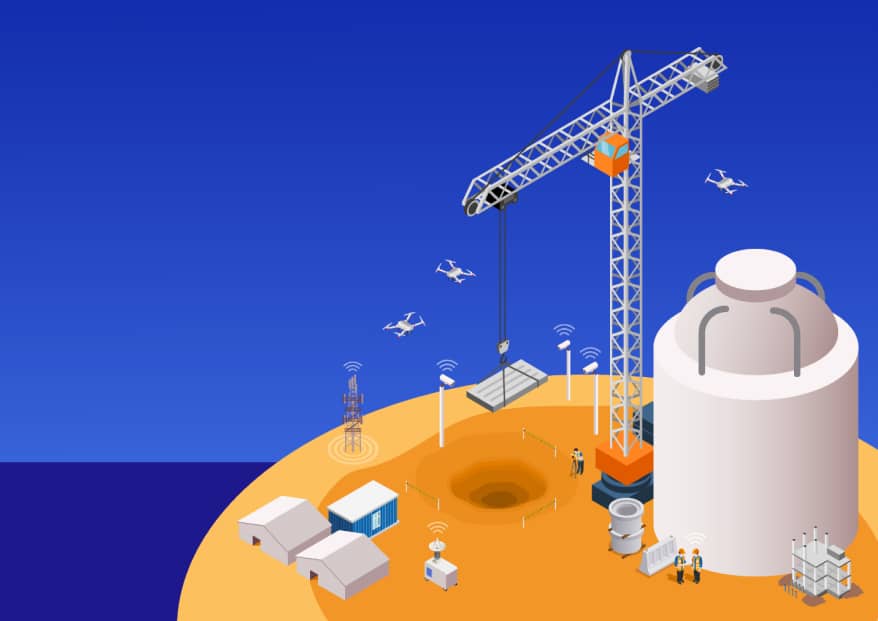
The use of MULTI-D products to create and use an up-to-date information model of the facility by accumulating and modifying data and knowledge throughout the life cycle of the facility construction project from contracting to delivery to the customer, as well as managing the information model to create an "AS BUILT" configuration, which is transferred to the operational stage.
Integrated technology and digital MULTI-D products for managing the life cycle of complex engineering facilities make it possible to ensure their implementation at a given cost and time with the necessary quality.
The technology, digital platform and MULTI-D products are a unique development that has proven itself well in fulfilling EPC contracts for the construction of high-capacity nuclear power plants in In Russia and abroad.
8.1 Best Interior Design - Public space
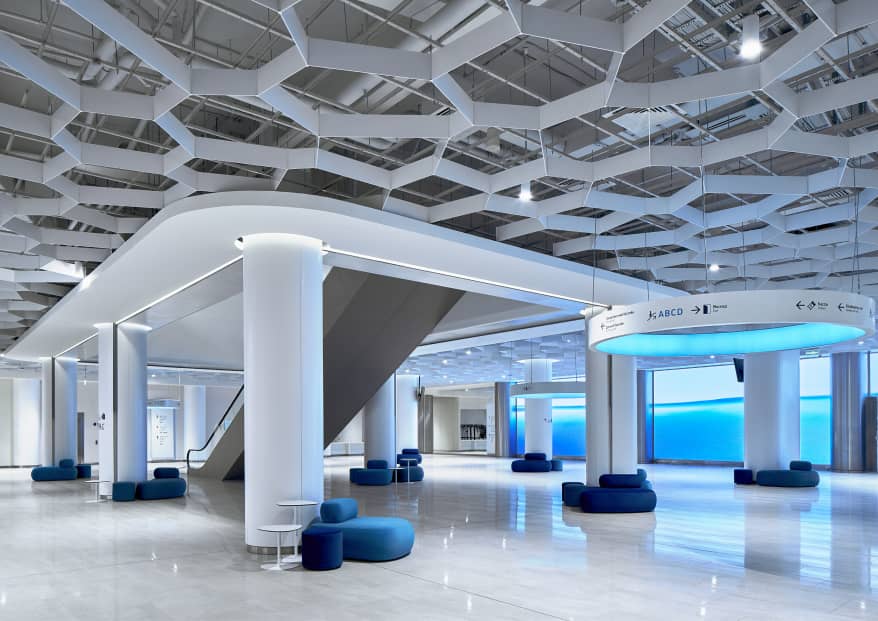
The interiors and navigation system of the Aquatics Palace (DVVS) were developed by the Brandiziac team in preparation for the World Summer Universiade, which was planned to be held in Yekaterinburg in 2023.
The development included the concept of the interior space, design and working documentation. The DVVS in Yekaterinburg is designed for training sessions, sports competitions at Russian and international levels, and the development of mass sports.
When designing interiors for the DVVS, various "clean water conditions" were chosen as the main (and unified) motive for design decisions.
The main space is divided into two main themes. The spaces of the public areas on the ground floor reflect the feeling of being "underwater". While on the second and third floors, the interior uses images "above the water". The concept is interpreted in different ways in different rooms and zones, through different materials and technologies, developing a common water theme and forming a single image of the object.
The idea is reflected in the soft plastic shapes of the framing of the vertical communications area of the atrium space, the color scheme, and the dynamic structure of ceiling solutions in combination with lighting fixtures that define various scenarios and accentuate functional areas.
Each plastic form and each material used are endowed with their own characteristics, their condition dictated by the optical properties that occur when water comes into contact with the environment. Reflections, surface treatment features of the material and textures help to reveal the overall image.
The entire ground floor space is an image "inside the water". It is here that all the pools and the athletes' area are located, and it is at this level that history takes place.
VIP lodges convey the beauty and uniqueness of deep waters. After all, only a select few manage to see it firsthand.
The interior decoration reflects the metaphor of water ripples. It appears on the surface of the water with any movement, whether it is a breeze or the movement of fingers on the surface.
Drops falling on the surface of the water inspired the creation of interior design in the cafe, as well as navigation elements.
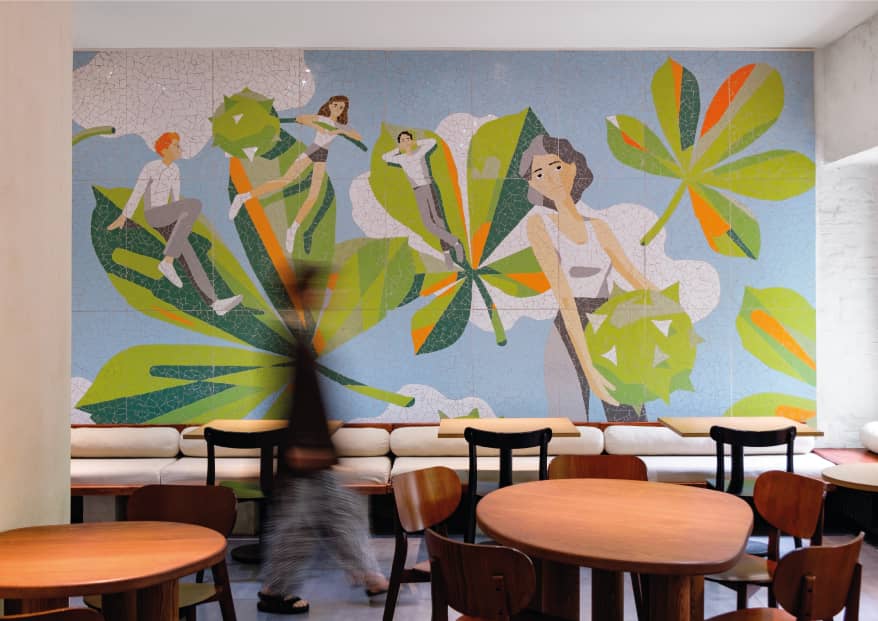
The Vera Fedorovna Bistro is named after its location on the street of the same name, Komissarzhevskaya St. Vera Fedorovna Komissarzhevskaya was a famous Russian actress, theater worker and teacher from St. Petersburg. The famous actress stayed in the city during her long tours, which influenced the cultural development of the entire region. References to the personality of the actress and the theater are present not only in the name, but also in branding, interior design and cuisine.
For example: there must be a colon after the name of the institution, as if it were the name of the play. And then the explanation is that this is a drama in three acts — food, coffee, wine. Several references to the atmosphere of that time appeared in the interior design — a dark shade of wood, vintage elements in furniture and bright mosaics in free technique. The bistro menu also supports the general concept and is aimed at meeting understandable and familiar dishes of Russian cuisine from seasonal products that are grown exclusively in Voronezh region. Beetroot has become the symbol of the institution, as an example of a simple folk root vegetable. Her image appears both on the facade of the institution and in the overall identity of the project.
The interior of a modern bistro in the center of Voronezh stands out for its individuality. The first thing that attracts attention upon arrival is the author's mosaic, which becomes the main focus in the room. This technique adds theatricality and character to the cafe. Pale blue and green shades interspersed with orange create a particularly warm and summery atmosphere of the establishment. The image of chestnut leaves appeared for a reason, Komissarzhevskaya St. is famous for the abundance of greenery and shade due to these trees. The artistic element in the form of a mosaic is the only bright accent that fits perfectly with the rest of the interior.
Another notable feature is the transformer table in the center of the establishment. A unique object created by architects and woodworkers can be assembled into a single shape, which gives functionality and flexibility when using it. Guests can comfortably enjoy a meal or socializing, depending on their needs.
The bar is a calm beige shade with soft lines that welcomes visitors. The shade of the walls and textiles are also made in neutral tones, which helps to create comfort and a sense of calm and tranquility, as well as allows other interior elements to stand out against their background. Some of the walls are decorated with textured plaster, the rest with painted brickwork, this technique creates a contrast and makes a small room more interesting and multifaceted.
Special attention can be paid to the sanitary unit, which has become a necessity in the main hall. It was decided to make it the center of the room and beat it, creating an interesting and dominant volume. The figure was designed specifically for a small height and with an unusual wall shape in order to convey, on the one hand, its decorativeness and lack of space, and, on the other, the creativity of solving a problem with a limited area.
The lighting in the establishment is diverse and can vary with respect to the time of day and the desired effect, which ensures the creation of different lighting scenarios and atmosphere depending on the mood of the guests. This is an additional pleasant bonus to the overall impression of the establishment.
The modern bistro in the center of Voronezh is a light and cozy space with various details and a unique atmosphere of comfort and family, which supports the idea that the street and the cafe are one. The abundance of light and unique details attracts and pleases the guests, making the visit pleasant and memorable.
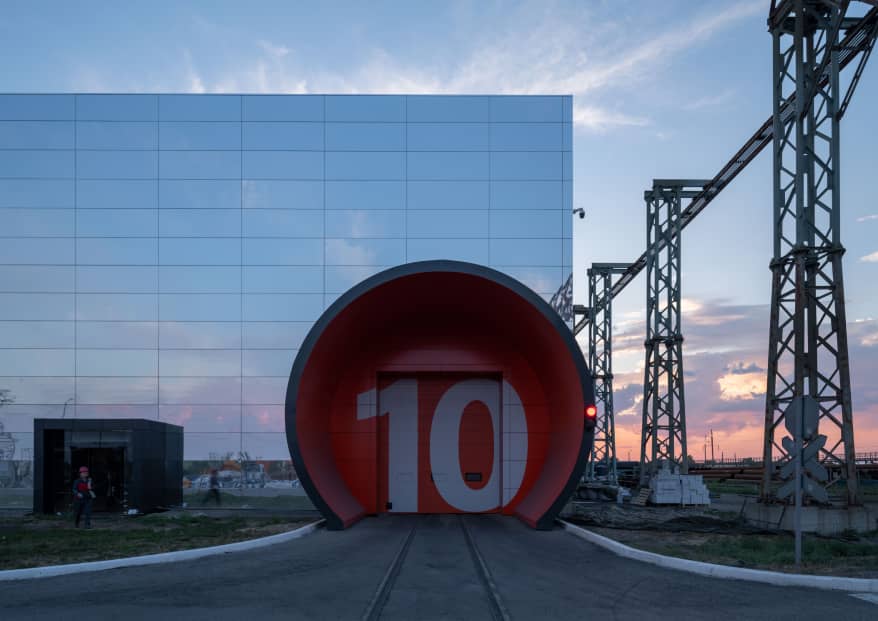
Mirror steel, color spectrum and supergraphy: renovation of the appearance of the workshop of the Volga Pipe Plant
VTZ is part of the Pipe Metallurgical Company (TMK) and is located in the city of Volzhsky, Volgograd region. It is one of the largest pipe plants in southern Russia. Pipe rolling shop No. 2 (TPTS No. 2) Volzhsky Pipe Plant produces seamless pipes by hot pressing, which are used in the energy, chemical, petrochemical, pharmaceutical and medical industries.
During the modernization of the workshop at the end of 2022, the management of the VTZ decided to create a fresh, spectacular image of a technological industrial site that will have a positive impact on the production culture.
In searching for ideas for the image of an industrial space, the architects proceeded from the philosophy of what happens inside the workshop — the technologically complex production of pipes made of carbon and stainless steels and hard-to-form alloys. The product, which is simple in geometry, contains all the power of the metallurgical industry and achievements in the field of metal processing and chemistry. This is a technological, expensive and elegant industrial product, which must be read in the production space.
The external environment
In order to highlight the identity of the place and create a comfortable environment commensurate with the person and the surrounding context, the architects deconstructed the monolithic image of the production area and the workshop building into elements united by a common idea. And while this approach may be inappropriate in dense urban areas, it allows you to create a diverse environment on the territory of a large enterprise and set a new context in an initially typical industrial space. Each of the segments was endowed with its own idea and design, as an independent art object that meets the set functional goals.
The mirror-like sheen of the aluminum polished panels used in the decoration of the main facade is a metaphor for the technologies used inside the workshop. At the same time, the massive volume of the facade literally dissolves into the surroundings: it reflects the Volga grasslands, the southern sky, colored pipes, powerful structures of industrial cranes and a water tower. The entrances to the workshop are made in the form of huge pipes protruding from the workshop's array. Their dimensions correspond to the size of the production building and its purpose: their diameter is from 7 to 8 meters and the multi-ton truck in them seems like an ordinary city car.
The side facades of the workshop, on the one hand, are part of the intra—factory route, on the other, they are viewed from the adjacent city highway. To emphasize the scale of the building, but to avoid monotony and monotony, it was decided to use contrasting supergraphy. The facade, oriented to the interior, has graphic lines following the rare facade elements — windows, gates, stairs, outbuildings. The opposite facade faces outside the factory, and to viewers who see it from the windows of cars, it appears in dynamics. Circles have appeared on each section of the facade, which in motion add up to a "pulsating" animation.
The indoor dining block adjacent to the building, made of white silicate bricks, will also change its appearance. From the outside, the volume with multi-level protrusions will be covered by a permeable expanded metal mesh, which will simplify and facilitate the geometry of the block. At the same time, the brick facade of the dining room will be painted with a gradient of the color spectrum — it is visible through the grid and will establish a connection with the interior solutions of the workshop.
Internal spaces
The modernization project affects one of the spans inside the production building, a 750—meter span consisting of 58 pillars. There is a new section for finishing pipes made of stainless steel grades. And if the exterior forms a minimalistic and almost intangible image, the interior spaces are designed with contrasting brightness.
The interior image is based on the complexity of the composition and production of steel, a multicomponent, ductile and malleable material. 102 colors were used in the interior decoration of the workshop, the sum of which resembles the characteristic iridescences that appear during the melting and further processing of metal. This color scheme is a reinterpretation of the spectrum and a metaphor for the periodic table, many elements of which are part of the VTZ products.
The space itself is filled with production equipment and many technical elements with strict design regulations. For example, pipes with air should be painted blue, ammonia — purple, moving and enclosing elements — a red signal color. As a result, the image of production spaces is based on a combination of the idea of an iridescent spectrum and the coloring of elements with colors according to GOST.
There are also 7 modular units with panoramic glazing in the workshop, highlighted with contrasting black composite. They house meeting rooms and offices that are open for inspection by workshop workers.
Importance for the production culture
The renovated space is more reminiscent of a technological art space created on the basis of an industrial zone, and less reminiscent of the associations associated with the familiar concept of a "metallurgical plant". This makes it possible to create a comfortable environment for the plant's employees, improve the production culture and increase the importance and internal status of specialists working in such a space. A clean and modern space promotes a careful attitude of the participants in the production process to their workplace, and for applicants it becomes an additional argument in favor of the profession of metallurgist and high-tech.
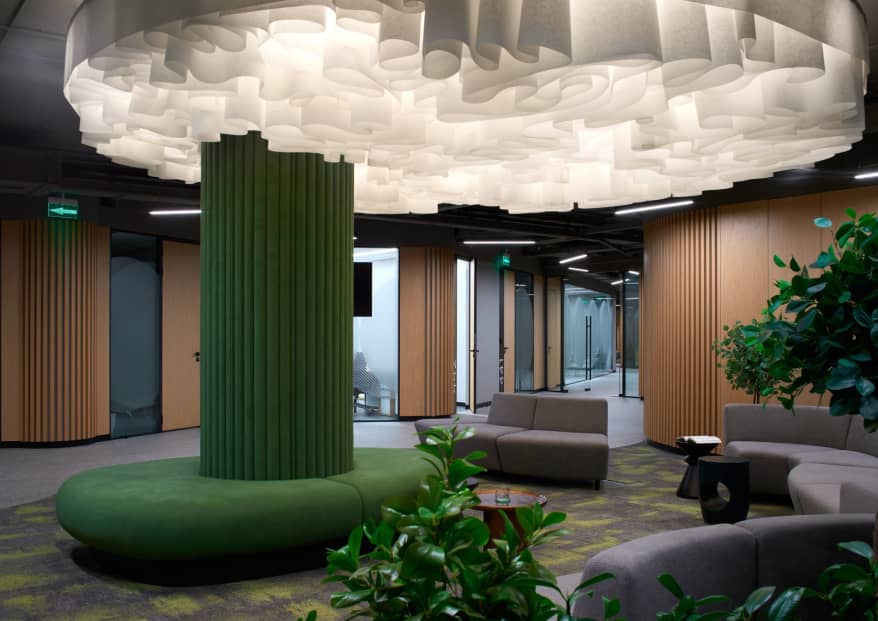
In December 2022, a project was completed to decorate the interior of the office, the main lobby and the sales department in the new building of the SCM business center. Delovoy is located at the intersection of Dekabristov and Chapaev streets, in the historical district of Yekaterinburg.
Architectural and planning solution (functional planning and spatial planning solutions)
When planning zoning on an area of 2000 square meters, departments such as legal, financial, accounting, IT, construction and others have become the main reference point. Each department is organized taking into account the optimal conditions for the fulfillment of tasks and cooperation within the team.
The ground floor space is divided into two parts: the main entrance with access to the elevators and reception desk, as well as the sales department. The sales department has created tables for employees based on individual drawings, resembling a four-leaf clover.
When designing the 4th floor, the designers focused on creating a functional and ergonomic office space that reflects a productive working atmosphere. Abandoning the Open-Space space is a conscious decision, taking into account the scale and specifics of the company's activities.
An important component of the concept was the emphasis on the hierarchy of the team. In each department, a special place was allocated for the head, separated by a glass partition to create a sense of privacy and respect for the position.
For maximum comfort and relaxation, the office includes two relaxation areas. The first one is located under a "cloud lamp", and the second one is equipped with comfortable chairs and a library where employees can read or exchange ideas. This lounge area is located next to the kitchen and provides an opportunity for a lunch break and informal socializing.
Compositional and stylistic unity
The main goal of an interior designer is to create a style that will be relevant for a long time. The solutions should correspond to the general style of the object, made in a modern style, and should not cause disharmony with the architectural solutions of the facades.
The SCM Business Center combines modern solutions and respect for the architecture of the quarter. The building is located in the historical center of the city and delicately fits into the design code of the environment. The SCM Business Center inspired designers to maintain the image of the building in the interior.
The main design concept is the Chusovaya River in photographs by S. M. Prokudin-Gorsky. The image of nature is embodied through a planning solution (mountains and rivers), natural colors and materials.
The quality of the design. The common areas are dominated by neutral colors and materials that reflect calmness and restraint. Loins of bright colors set accents. The combination of wood and glass creates a visual rhythm and openness of the space, while maintaining the privacy of individual work areas.
Each department stands out in its own color — from blue to green, which emphasizes the individuality and specifics of the work. The range of complex colors from green to blue was chosen specifically, as these colors favorably affect work efficiency and help focus.
All the furniture for the staff was designed and executed by Statio with Orgspace partners. The paintings were selected and purchased specifically for the SCM office from the artist Ulyana Purgina. The reception desk, a natural stone wall panel for the directors' reception area, a concrete and copper reception desk for the administrator, and sales desks were also custom-made. In the lounge area there is an author's soft column with a pebble pouf and a cloud lamp "Paper Design" made of special non-flammable paper.
The quality of engineering. Optimal working conditions for employees are realized, among other things, due to careful calculation of illumination. Lighting includes two types: general architectural and accent lighting.
To provide additional sound insulation, Rockfon acoustic ceilings and acoustic flooring are installed, reducing noise levels and creating silence in the workspace. Acoustic partitions are also provided for the double tables.
During the development of the project, each employee could participate and choose their workplace. For this purpose, various table options were presented, including angular and straight tables in accordance with different needs and preferences.
The Face ID system measures the body temperature of an employee or visitor. Access to the business center is blocked for people with fever.
The innovation of the design solution of the implemented project — the architecture of the interior space and the color scheme will remain relevant for many years to come.
Sovcombank is a universal, systemically important bank on a federal scale. Sovcombank's strategy is based on a combination of organic and inorganic growth, achieving leading positions in niches with high margins and low competition.
The project team was tasked with creating a universal flagship-level back-platform for various divisions of the Bank, accommodating up to a thousand jobs, as well as a training center and corporate fitness.
The key parameters underlying the project were acoustic comfort, quality and flexibility of lighting, rich landscaping, the environmental component of the interior and the athletic development of employees.
Sovcombank is a modern and actively developing bank with many branches within. The developed concept of the interiors of the new office reflects not only the dynamism of the changes that are taking place in the company, but also emphasizes that it is an environment for young and bright professionals. Following this ideology, MAD Architects have introduced bright color accents and progressive solutions typical of IT companies into office spaces. At the same time, the interior was kept cozy and comfortable for work.
There are 3 anchor meeting areas on each floor, which duplicate the triangular shape of the building. The interior of the meeting rooms is made in various formats ("Business", "Lounge", "Fun", "Comfort"), which makes it possible to choose the most suitable location for the planned meeting format.
Well—organized lighting is an important factor for well-being in the office. To solve this problem, the project has implemented a control system via the DALI-2 smart protocol. The flexible control system allows you to program accurate battery life scenarios that take into account the day of the week, time of day, the presence of people in the room, and the functional purpose of the zone. As in other aspects of decoration, when developing the lighting control concept, several tasks were simultaneously solved: reducing energy costs, the environmental factor, and comfort for employees.
The office is located on 7 floors of the Zemelny business center on an area of 9,500 square meters, including office spaces, a training center, fitness and gyms for employees. One of the company's core values is its team. Following this fundamental principle, the most valuable office spaces are allocated for the placement of the team — viewpoints around the perimeter of the light contour. The executive offices are located in the central part of the office.
The office has multifunctional areas that allow employees to choose the most effective format for working, pausing or unloading during or after the working day: coffee points, lounge areas, telephone and meeting rooms, rest rooms. Recreation rooms and play areas have all the necessary equipment — massage chairs, board games, video game consoles, a cinema, a book-crossing area, table football, horizontal bars and uneven bars, table tennis, air hockey, mini golf. As part of the project, a gym and fitness rooms have also been created in which any employee of Sovcombank Group can train outside of work hours with a team of experienced trainers.
As a result of the eco-audit according to the Russian EcoSmartOffice standard, the site received the first Platinum environmental certificate in Russia. This is the highest assessment of office performance, resource consumption, and employee comfort and safety. According to experts, the technologies used in equipping and decorating the premises have reduced energy consumption by 32%, heat by 35%, water by 43%, and greenhouse gas emissions by 40%. A separate waste collection system has been introduced in the office, in addition, electric grinders, batteries, and plastic caps are being collected. Containers for these purposes have been specially designed and manufactured to meet the required parameters, while maintaining aesthetics. Service areas are provided for every 30-40 workplaces, including these containers, as well as electronic water dispensers.
Location
The Japanese Garden in Galitsky Park is the world's largest ornamental garden of the hilly type outside Japan. The favorable climate and well-developed infrastructure of the Krasnodar Territory made it possible to implement a large-scale project that rethought the aesthetics of traditional Japanese landscape art and architecture, to place many plants typical of classical gardens in Japan, and to create a unique place on the map of our country.
The compositional structure of the garden is based on the techniques of abstract art, combining traditional laws of harmony and the influence of Western civilization, symbolizing the perfect world of earthly nature. The characteristic elements of his composition are artificial mountains and hills, islands, lakes and bridges, paths and areas of sand or gravel decorated with stones of unusual shapes. The landscape of the garden is formed with the help of trees, shrubs, bamboo, cereals, beautifully flowering herbaceous plants, as well as moss. A place for relaxation and contemplation, walks and events, where two significant objects are located — the pavilion of a Japanese-style restaurant and a minimalistic light coffee shop.
Architecture
Japanese architecture is traditionally characterized by wooden structures rising slightly above the ground, with tiled or thatched roofs. In traditional Japanese culture, visitors sit on pillows or otherwise on the floor, because historically chairs and high tables were not widely used until the end of the 19th century. However, since the 20th century, Japan has incorporated much of Western, modern, and postmodern architecture into construction and design, and today stands as a leader in advanced architectural designs and technologies.
The initial architectural solution of the restaurant complex was characterized by traditional wooden structures, low ceilings and a corridor-type planning solution that did not take into account the demands of the Western world and the specifics of Russian construction. The "Russification" of the project was carried out: the architecture of the main hall of the restaurant was completely changed, concrete, natural stone and metal were chosen as finishing materials. Nevertheless, at the request of the customers, the historical motifs were preserved — the VIP and VVIP pavilions were decorated in a traditional style. The use of building modules maintains proportions between the different parts of the building while maintaining overall harmony.
The restaurant is located next to the largest body of water in the park, Lake Oike, which is connected on both sides by a Japanese—style bridge. The reservoir is inhabited by decorative koi carp species, which have become a symbol of the project. So, most of the engravings in the project are made in a natural theme, depicting carp, by Ohara Koson and Kono Bayreya.
Interior image
The mission of RYMAR.STUDIO was to avoid the cliches associated with Japanese cuisine establishments and develop something relevant and unique for Galitsky Park. The customer's wish was a modern interior in a muted dark color scheme, which would look premium and at the same time welcoming, with a relaxed atmosphere.
The planning solution of the restaurant consists of three zones: the main hall with a large number of seats, a multi—tiered suspended installation and a spectacular bar, as well as the VIP and VVIP pavilions, designed in a dark aesthetic. As you know, an important element of the Japanese garden is changing the scale of perception. In a Japanese garden, composite units are placed in accordance with the terrain in such a way that they form a single whole. This effect was brought into the design project - a complete picture was created, which is revealed as we move deeper. Stylized acari lamps are responsible for the lighting in the project.
The interpretation of the Japanese style is expressed in a laconic combination of materials and high quality of execution: the key finishing materials are oak veneer of radial cut and natural crushed stone. The flooring is made of stone slabs with wide seams and Kashiwa oak parquet made in Japan. The large—scale bar island is decorated with a unique round white marble panel with a bas-relief depicting carp. The walls are decorated with light and dark oak paneling, and the bar area is decorated with glossy sangria-colored tiles. Natural finishing materials with a natural texture create tactile and visual comfort. Silence, regularity, spirituality — the restaurant's space resembles a kind of oasis of tranquility.
The main decoration of the entire project is a complex ceiling, both in design and execution. The caissons are made of wood and perforated metal in bronze with a traditional Japanese pattern. On the ceiling in the entrance area, visitors are greeted by the traditional seigaiha pattern — a sea wave, a symbol of tranquility. In Japan, sea waves are considered lucky omens, symbolizing resilience, strength, and tactical might. The symbolism of the seigaiha in this project is an expression of humanity's desire for a peaceful life and the hope that there will be waves of good luck on its way — as relevant as it is today.
A characteristic feature of Japanese interiors is functionality, the rejection of unnecessary decorativeness, and the purity of lines. In this project, the simplicity and aesthetics of minimalism are evident in the design of furniture pieces. All furniture products, from high bar stools to sofas and marble panels, were created specifically for the restaurant project and manufactured in Krasnodar. At first glance, it seems that the stone products have undergone minor processing. The premium of the design lies in the excellent quality of the materials: the high craftsmanship ensures the similarity of the rough material with the untouched natural textures.
8.2 The best interior design is an apartment of up to 50 m2
Long-lasting space for mom and son (79 sq. m)
The apartment in the Nagorny residential complex has become for the client of the Graphite design studio not just a temporary place to live, but an investment in the future of her ten-year-old son. The interior is beyond trends and time — this was the task set for the designers.
The foundation of this neoclassical space is made up of only expensive high-quality finishing materials: large-format porcelain stoneware on the wall in the dining area, engineering board on the floor throughout the living area of the apartment. Decorative Orac decor panels in the kitchen-living room and children's room added even more texture.
The interior of the bedroom belonging to the customer became the most airy in its mood. Veneer wall panels and soft fabric panels at the head of the bed make the room cozy and welcoming.
The overall brutality of the dark color scheme meets the warmth of wood, milky shades of kitchen facades, textiles and furniture upholstery. "We created an interior based on a game of contrasts to match our customers: with a strong character, but with a lot of tenderness. Reliable, durable and never out of fashion!" — the authors of the project share.
35m2 apartment for a young girl (53rd floor)
The customer is a young modern girl, she turned to the designers again. This interior is designed as a reflection of her lifestyle — stylish, modern, minimalist and thoughtful.
The layout from the developer was divided into rooms — an entrance hall, a bathroom, a bedroom and a small kitchen. But after the apartment was rented, there were no walls, only the boundaries of the rooms were marked. This made it easier to start work and avoided dismantling. The apartment also has two large floor-to-ceiling windows.
The designers decided to combine the entire living space of the apartment into a single one, so that the apartment would look visually larger by separating the bathroom. The bathroom was expanded due to the corridor to make it more comfortable to be in it.
The layout turned out to be free and linear:
- The kitchen has a direct configuration of the kitchen and a kitchen island. We managed to accommodate everything for a comfortable stay — two built-in refrigerators, a convenient sink, a dishwasher, an oven with a microwave, a stove and storage systems. The kitchen island is a part of the kitchen. It has a built-in tile and a microwave oven. There is also a seating area on the other side of the island.
- In the living area there is a comfortable sofa, a roomy shelf with a storage system and a place for a projector, a backlight and a side table. As an additional seating area, you can use the podium along the windows, which has built-in indoor floor convectors.
- The sleeping area is sunk into a niche and is separated from the corridor by a textile partition. To further delimit the space, we have highlighted this area in black.
- There was room in the hallway for a closet, a shoe rack, and a shelf for keys. To visually expand the space, we chose a mirrored finish for the wall and the door leading to the bathroom.
- The bathroom has a bathtub, a hanging toilet, a deep sink, a washing machine, and several storage systems — some of them cover communications and a boiler, and some are used for storage.
Successful solutions
Wall and ceiling decoration — painting. Initially, decorative plaster was planned, but in the process of implementation it had to be abandoned.
A mirrored wall and door were made in the hallway to visually enlarge the space. The mirror effect is also used in the kitchen to bridge the gap between the kitchen and the wall. The floors in the apartment are concrete. When filling the floor, light concrete was used, which was then sanded and varnished. The same material is used in the bathroom on the floor, visually continuing the overall floor covering.
The bathroom walls are finished with black large—format porcelain stoneware from the Spanish brand 41zero42, SOLO Black. Textured texture with the effect of a crushed stone. Bathroom ceilings in matte black with perimeter lighting. All these materials create a pleasant chamber atmosphere in the bathroom.
The most unusual solution in this project is to use a polished and varnished concrete screed as a finishing coat. To implement such a solution, highly qualified workers are needed, which we were lucky to achieve on this project.
The color palette
The interior is monochrome and contrasting, based on black and white colors. The decoration includes materials such as light concrete, dark wood and stone. The overall color scheme of black and white combined all these materials into a harmonious interior.
Apartment 78 sq. m, 45th floor
The customer purchased the property for investment, so we designed the interior for a couple without children who are potentially renting an apartment. The main task was to create a cozy space and a sense of home in such an urban location as Moscow City. The incredible rhythm of this place not only gives energy to movement, but also takes away strength. Therefore, the house in this location is a kind of oasis where you can recharge the batteries.
One of the advantages was a beautiful bird's-eye view of Moscow and high ceilings. Of the disadvantages, there is little storage and the full potential of the apartments has not been used in terms of functionality.
Redevelopment decisions
- Instead of one bathroom, we made two. Compact, but functional, appeared at the entrance. They also enlarged the master bathroom towards the bedroom (this is possible in apartments), the wall that separates them was dismantled and replaced with transparent glass. Thus, the bathroom became a panoramic one with a stunning panorama of the city and daylight
- The kitchen was reduced. But they didn't lose it, they only gained it. The kitchen remained as functional, but by increasing the area in the hallway, we were able to integrate a spacious walk-in closet.
- We also dismantled the partition between the bedroom and the living room. By moving it just 20 centimeters, we managed to place a roomy linen chest in front of the bed.
Successful solutions
It was important to take into account the vandal qualities of the materials used and the ease of cleaning and maintenance when designing rental housing. The designers applied decorative plaster on all the surfaces of the walls. It is easy to clean and restore, pleasant to the touch and visually creates a soft enveloping atmosphere.
On the floor we have a parquet board, a French Christmas tree, natural oak, with small knots, warm to the touch and visually.
The finish of the wall panels and cabinet furniture repeats the shade of the floorboard. We have specially tinted the products in production so that the material looks like a single coating.
For emphasis, an imitation marble was added-6mm porcelain stoneware, large-format. They are lined with a countertop and an island and a console in the water, as well as a pedestal in the bathroom.
Mirrors and glass add lightness and play of light in the interior.
We used the ability to control the light from a smartphone from the centerlight And all the curtains are controlled from a remote control, for convenience.
Instead of a TV in the living room, we left a wall for a short-focus projector, which is stored in a closet, very easy to use, but creates an absolutely magical atmosphere at home when watching your favorite movies.
The color palette
All shades and textures are natural. There is absolutely no color (colored elements) in the interior, but it does not look faded or boring. Due to the materials and repetitive shades, one space flows into another and looks as a whole, calm and serene.
The project "modern and technological apartment", 59 sq. m.
Request from the Customer: an apartment for a family with a child of 14 years old. The owner of the apartment dreamed of getting a comfortable, cozy space, uncluttered, and most importantly, functional, easy to manage, and equipped with engineering solutions.
Redevelopment was not carried out: we got a very successful planning solution from the Developer, which was suitable for the request and met all the tasks of the future project. The apartment had a spacious kitchen — living room with two bedrooms and two bathrooms. In general, the only drawback was the lack of dressing rooms. The designers' task was to use 59 square meters competently and work out the storage areas, as well as integrate smart home and engineering solutions without visually reducing the area.
The style throughout the apartment is practical minimalism. According to the color scheme, we used different shades of gray and wood, velvety, tactilely pleasant textures that complement each other well and create a single cozy space. We have made the veneered facades of furniture in the kitchen and living room a single color, creating a common area.
Successful solutions
A built-in wardrobe for storing shoes and outerwear with wooden panels and doors was placed in the hallway, as well as a huge mirror to provide more light in the hallway. Thanks to the uniform shade on the wood, the furniture looks integrated with the floor. This is a favorite Makedesign technique, when using everything in one similar shade, the interior becomes the background and the space immediately expands.
They also separated the entrance area from the living room with a transparent glass partition so that the front door would not be visible in the living room and at the same time it would not be dark in the hallway.
The Smart Home system has been integrated. For example, the front door is connected to a Smart Lock system that opens using a family member's fingerprint or by entering a personal code. Lighting was also connected to this system, as well as electric drives to the cornices, lights, water leakage sensors, heating, underfloor heating
We also thought over the furniture in the kitchen, the storage and filling system. They tried to make the furniture up to the ceiling and the upper mezzanine airy and not overhanging, due to glass facades that reflect light and visually hover overhead. Large-format porcelain stoneware was used on the walls in the kitchen, which is also used on the walls in the bathroom. In addition to its external attractiveness, this is a fairly practical solution, it is very easy and pleasant to take care of.
The main feature in the kitchen is the table. The customers requested that there be a different scenario for using the table — it was convenient for guests to dine and gather at it, as well as to sit with a laptop. Therefore, we have integrated a mechanism here that changes the height of the table — it can rise to the bar and fall to a standard height of 72 cm.
One bedroom was turned into a children's room for a teenager. In which we have placed storage, a work area and a bed. A second bedroom for the spouses. This is a real cinema room, the projector shines on the white wall opposite the bed, and the mattress itself turns into a comfortable area that follows the curves of our customers' bodies (the elevation of the head and legs is adjustable from the remote control)
There is a parquet board on the floor throughout the apartment, decorative plaster on the walls in the corridors and rooms. In addition to the plaster on the wall in the children's room, they used an additional material — cork, which is very pleasant to the touch. The height of the doors was increased throughout the apartment. In the bathroom, we have porcelain tiles on the floor and on the walls.
A typical five-storey Khrushchev brick building with an area of approximately 45 sq.m. Initially, it comes with a small kitchen, a walk-through living room and a long narrow bedroom. The previous owners combined the kitchen with the living room and made the entrance to the combined bathroom diagonally. The designers tore down all the interior walls and rebuilt them. This made it possible to move the washing machine into a separate niche with storage in the hallway, the refrigerator from the kitchen side into the same niche, and also make the bedroom the right shape.
Compositional and stylistic unity:
Compositionally, the designers of the bureau thought out all the necessary areas in the apartment, and decorated them in a single style. The walls in the rooms and bathrooms are painted in the same color scheme with a stretch of color, but there are also accent points that immediately attract the eye (a bright sofa, a bed).
Design Quality:
The walls in the rooms and bathrooms are painted in the same color scheme with color stretching, the chipboard of the kitchen and custom cabinets are also matched in a single color scheme. The materials used are tactilely pleasant: laminate with wood texture, porcelain stoneware with stone texture, solid wood table, etc. The walls are painted, the ceiling is plastered in the bedroom, and there is a stretch ceiling in other rooms.
Engineering quality:
The bathroom has underfloor heating, and the switch is hidden in a niche with a washing machine. A bed was placed in the bedroom with its head to the wall and an entrance to its own dressing room was made, which made it possible to abandon bulky closets in the apartment. The kitchen was made linear, and an additional work surface was placed instead of a window sill. When replacing the windows, we chose a door to the balcony made entirely of glass without a lintel, which allows even more natural light to enter the apartment.
The innovation of the design solution of the implemented project:
The innovation lies in the fact that it is possible to realize a modern apartment in the old foundation, as from a magazine, even if it is more difficult to do than in a new building. The designers also made the most of the available space, got rid of the narrow "trailer bedroom", and took the washing machine out into the hallway, which is sometimes difficult to do even in new buildings. And also due to the enveloping color and tactile materials, we managed to create an apartment that you just don't want to leave.
Initially, the developer had a studio apartment of about 33 sq.m. with a small bedroom, kitchen and hallway. The owner demolished the wall, turning the apartment into a studio, and got one rather large space in common. It was decided to make the kitchen linear so that there was enough space for a table; the bed was placed relative to the available sockets from the developer in essentially the same place where it was originally planned, and such a huge bed in such a small apartment does not look bulky; in the corner of the room they made a spacious glass dressing room to order.
Compositional and stylistic unity: The apartment is designed in neutral pastel / natural tones (the color of the walls, kitchen, bathroom), but it is the dark and deep shades of textiles and beds, and black accents that create the closeness of the room and, as it were, "envelop" a person, contribute to his relaxation.
Design quality: Despite its small size, the apartment was immediately positioned for rent by people with high incomes; after delivery to the customer, the apartment was rented in a short time for a record 90 thousand rubles / month — for a studio not in the center, this is a decent indicator. The apartment has many lighting scenarios, a curtained dressing room with the lights on creates the effect of another room with a window behind it. In real life and in the photo, the ceiling looks floating — this shadow skirting effect was achieved by using a black decorative plug for the stretch ceiling instead of a white one.
Quality of engineering: Despite the size of the apartment, we were able to provide many storage spaces (a dressing room with a compartment for storing oversized items, storage under the bed, upper kitchen cabinets in the color of the walls, a cabinet above the installation). We also managed to create many zones for different scenarios of life, including by zoning with light; in summer, a balcony is also added to these zones as a separate room with panoramic views.
The innovation of the design solution of the implemented project: An atypical project, but one that will be remembered for a long time: you can live as comfortably and with style as possible in a studio of 33 sq. m.
8.3 The best interior design is an apartment with an area of 80 m2 or more
The apartment is 120 sq. m. m in Yekaterinburg for connoisseurs of bright solutions and transforming interiors.
The apartment is located in the residential complex "Nagorny" and belongs to an energetic couple with children. It was important for customers to get a mobile, individual space. The Graphite team has created an interior that can change depending on the wishes of customers.
The warm atmosphere of the kitchen-living room is created thanks to the fireplace, carefully thought-out lighting scenarios and mustard shades in textiles and furniture upholstery. The stylistic continuation of the kitchen-living room is the balcony, which plays the role of a lounge area.
In the office, thanks to the clear zoning and restrained shades, the designers have created functional areas that differ in atmosphere: the work area and the guest area.
The most colorful room of the project is the master bedroom. The bright bed is balanced by a strict geometry. TV zones. Adjacent to the master bedroom is a bathroom with a freestanding bathtub, offering relaxation and a SPA.
A children's room completes the interior of the apartment. Study, recreation, games — the space takes into account all the interests of the younger family member and is easily transformed with age.
The Graphite design studio has a timeless interior that customers themselves will be able to radically change by replacing only textile elements.
Apartments 94 sq. m. m on the 35th floor in the Iset Tower
The idea of the interior: When designing the interior, the designers were guided by the customers' preferences for color design and the desire to visit Switzerland. They began to develop their wishes further and drew the following analogies:
- Switzerland is a country that is associated with a high quality of life and service. The Iset Tower positions itself as an elite complex with appropriate services.
- Picturesque landscapes have become the hallmark of Switzerland: small picturesque towns, pristine lakes and high snowy mountains. The apartments in the Tower are located on the 35th floor, from where the entire center of Yekaterinburg is visible, as if we have climbed one of the peaks and are looking at the alpine town located at the foot of this mountain. We also borrowed the color scheme from here, which creates the feeling of a winter day in the mountains. Shades of white, gray, and blue convey the diversity of wildlife, in the form of stone, fluffy snow—covered Christmas trees, and in contrast, the warm shades of wooden houses illuminated by soft light from the windows.
The game of contrasts continues on the combination of textures of the materials used: rough and soft, glossy and matte, due to this, the interior looks lively and harmonious.
Planning solution: In fact, all functional areas remained in their places. But in order to accommodate the necessary equipment and maximize the use of space, the designers had to build a different geometry.
- We combined the hallway and the kitchen-living room. The entrance to the master bedroom was moved to the guest part. This allowed us to place a large enough cabinet at the entrance and make the room more spacious.
- In the master bedroom, the dressing room was made a walk-through, due to this we got rid of the non-functional corridor, increased the bathroom area and brought the geometry of the rooms to a more correct appearance.
Engineering solutions:
The apartments have centralized supply and exhaust ventilation with ducted air conditioning. The original one from the developer was adapted to the planning solution, plus noise insulation was performed and one fan coil was replaced to reduce the noise level during ventilation. Also, due to changes in the planning solution, the sprinkler fire extinguishing system was redesigned, adjusting the location of the splinkers to the new layout, the new location of ventilation hatches, lamps, etc. All changes were carried out on the basis of the developed engineering projects after their coordination with the Management Committee of the Iset Tower and with a phased acceptance to the chief engineer of Iset.
Budget: 160,000.00 per square meter
The apartment has an area of 102 sq. m.
The project was commissioned by a family with a seven-year-old child. They needed to design an apartment in which every square meter is organized conveniently, functionally and beautifully. They wanted to get an interior with a relaxing atmosphere where you can reboot after a day at work. It was also necessary to provide a place for a family library and accommodate a large number of storage systems.
Planning solution. The layout with four rooms and two bathrooms remained from the developer, so it was decided not to change the dimensions of the rooms. The size of the apartment made it possible to place a dressing room and a laundry room in the corridor in the non-insulated part of the apartment, and a separate dressing room is also allocated in the master bedroom.
Entrance area and common rooms. All the originally designed zones remained in their places, but with a slight transformation. So, the dressing room in the corridor was divided into two rooms and the entrance was moved. Now there is a compact laundry room and a separate room for outerwear, which made it possible to do without a closet and get a visually clean space without unnecessary things. The decoration of this part of the apartment was complemented with veneered panels on the end walls. The interior has rounded corners, and natural materials predominate in the decoration.
A long—established solution is to combine the kitchen and the living room, which is convenient in practice and helps to fully reveal the visual of the room. The kitchen set was chosen linear, in light shades, it was completely custom-made. There are two cabinets to the right of it: one has a built—in refrigerator, the other has an oven and a microwave oven. On the left, a stained glass cabinet has been added along the wall to store beautiful dishes and wine made of natural dark wood, which goes well with the walnut shade of the dining table and the textured material of the chairs from Deep house. There is also an island with a sink and a dishwasher in the kitchen area, and its granite countertop echoes the finish of the apron in the work area.
Personal philosophy. The designers retained the three bedrooms provided by the developer. Each of them was designed according to the wishes of the owners and their ideas of private harmony. In the parents' bedroom, they managed to aesthetically separate the dressing room from the workplace for online conferences. The contents of the closet can be carefully covered with a curtain, creating the perfect backdrop for hangouts. Delicate powdery colors are added to the textiles, translucent tulle conveys lightness, and the high headboard conveys softness. The guest bedroom turned out to be more neutral in palette and minimalistic in execution.
The children's room belongs to a first-grader, so this factor was taken into account when arranging. The workplace and the sleeping area were emphasized by the arched arches of the built-in wardrobe and at the same time logically delimited them. With the help of decor and cute little details, the bedroom was made comfortable for the child.
Storage systems. Practical storage in the apartment is provided in every room. All the built-in furniture for the project was made to order. For example, in the living room, the solution was implemented in the form of a decorative rack with lighting and a hanging cabinet under TV, a closet for storing a home library was designed in the hallway. A spacious walk-in closet with a large mirror behind the headboard was separated in the master bedroom, and a closet in the color of the walls was added to the guest room. The children's bedroom is equipped with two wardrobes, a large number of shelves and shelves for storing toys and books.
Items that make a place special. One of the authors' favorite pieces of furniture in this design project is a Mononova sofa with a small rounded couch. Of course, the solid wood dining table deserves special attention. It was custom-made by a private craftsman from the Vladimir region. The small table between the armchairs in the living room made of Italian marble also became special. He was brought to the set and, together with the film crew, could not leave him, as a result, he stayed in the apartment. The project is complemented by works by contemporary authors: paintings by Olga Shagina and graphics by Sergey Andriyaki.
The apartment is 100 sq.m. in Rostov-on-Don.
The apartment for a young man is designed in the style of ascetic and utilitarian minimalism. The customer immediately set the tone for the project: nothing superfluous, everything should be functional and convenient. The rough and modern character of the interior expresses the lifestyle of the owner: new technologies, appliances, comfort.
The possibility of a free-plan layout made it possible to create a large-volume space and reveal the advantages of this style: a lot of air and light, emphasizing textures and linearity, architectural interior. Working with large volumes has also solved the problem of ceiling drop differences up to 300 mm, which is significant for a standard height of 2900 mm.
The zoning of the apartment reflects the lifestyle of the owner: on 100 sq.m. there is a kitchen-living room, bathroom, bedroom, study and a large dressing room with access from the hall and from the bedroom. The spacious loggia with panoramic windows was combined with the living room and zoned with a glass partition, creating a place to relax.
Materials and color set an austere modern tone to the interior. Laminam large-format porcelain stoneware for metal, natural wood, frosted glass of a complex deep gray—green color with a satin texture, charcoal, zircon, French gray, soft felt upholstery - these materials in combination with simple shapes create a sense of natural space.
Interior doors are marked graphically and nuanced in the interior, storage spaces, kitchen equipment and built-in appliances are hidden in boxes and dissolved in the wall. The Doimo Cucine factory created a kitchen for the project precisely in our dimensions. The Molteni table, with its delicate architecture, perfectly softens the clarity of lines and the rigor of space. The soft framing of the interior in the form of chairs from the Bontempi factory and the Doimo Salotti voluminous sofa is complemented by the flawless arc of the Luceplan floor lamp, the thin stem of which dissolves into the living room space. In the recreation area, the accent is the rhythm of the Flos factory's pendant lights, and the sconces of the same factory create a soft glow in the bedroom. The painting by Lydia Zheleznyak with the author's interpretation of a fragment of the Sistine Chapel painting by Michelangelo Buonarroti fits into a minimalist bedroom.
The apartment has an area of 81 sq. m.
The architectural approach is to work with space: An architectural interior is an integral three—dimensional composition, where each line is subordinated to a composition, and each composition is a function. The designers worked with the shape of the original space. The ceiling height of 4 meters allowed to create a two-level space. The small area of the kitchen-living room led to the decision to make a staircase integrated into the wall, saving space. The principle of observing the axes helped to create harmony in the three-dimensional composition.
The ideas of functionalism: The form appears from the function of the object, the use of concrete material, white color, large clean planes. These ideas are complemented by the requirements of comfort and the concept of preserving historical values.
Mood in the interior: We decided not to create a permanent mood through the color of the walls or textures. Instead, we use light, which creates different moods depending on the season, weather, and time of day. The light falling on the large white planes sets a mood that changes over time.
The idea of combining old and new: The principles of functionalism are complemented by the requirements of comfort. Vintage items fit into a new space, revealing the concept of forming a new based on the old.
Decor: Some were donated by loved ones: Kaslin casting, Zenith cameras, books, a Salyut table lamp, crystal tableware and brass candlesticks. Other items were created by us: tiles in the kitchen with images of favorite projects, a countertop with mosaics, a grid in the office for photos and postcards.
Details with stories:
The Sickle and Hammer mosaic table is a valuable interior piece that preserves the history of one of the oldest factories in Central Russia, Sickle and Hammer (1883-2022). Mosaic staircases were saved. The mosaic segments were brought to Yekaterinburg. None of the segments formed a complete pattern. In the process of thinking about preserving the historical value of the mosaic, it was decided to create a new object — a table. Based on one of the segments, a new plot was created using neural networks, embodying the concept of day and night.
Sollux lamp from the Sverdlovsk plant
The Salyut lamp: A mass-produced USSR design item found in his parents' garage.
The penthouse is 150 sq. m. m on the 36th floor with access to outdoor terraces
Initial data: panoramic glazing, high ceilings of 3.25 m, an area of 150 sq.m. together with terraces, a living area of 136 sq.m. Project customers: a family and 3 people, it was necessary to design a common kitchen-living area, a master bedroom, a teenage room and a shower combined with a utility room. the zone.
The owner of the apartment is a fashion stylist, a perfectionist, took part in the selection of textures,
color schemes and visual concepts. The goal is to create a modern space
at the same time, it's cozy. Selected color shades: basic light, graphite, wormwood, marsh.
It was important to create an aesthetically thought-out interior, there was a special requirement for the quality of work performed by builders and contractors. It was important to perform all the stages perfectly so that the eye would not cling to irregularities and inaccuracies.
Conceptual solution: due to the fact that the apartment is located above the technical floor, the designers were able to redevelop the apartment. We moved the kitchen to the living area, and we were able to place the bathroom without a podium, since we were allowed to directly crash into that floor.
The living room has a complex radius window sill. We use it as a recreation area, we implemented it with a deep isc window sill. the stone. The radiators are covered from below with bent metal perforated grilles. Thus, this area looks aesthetically attractive, while meeting all the requirements for heating this room. The radius-shaped sofa supports the architecture of the house.
The bedroom has a chamber, a glass partition separates the sleeping area and the dressing room. The bathroom is multifunctional, with a shower area and a freestanding bathroom. They also placed a high metal shelving and a bedside table with a spacious storage area. The teenage room has a large storage closet, a desk by the window and a bed. A wet area and a laundry closet were placed in the shower room.
There is no skirting board in the whole apartment, we use a cork expansion joint. Thanks to this solution, there are no unnecessary details. The same shade of paint is used throughout the apartment: light and graphite. The exception is the bedroom, which has a softer interior.
The apartment is on the 36th floor, and there are incredible shadows in the rooms in the evening. Blinds play a special role in achieving this effect. Panoramic windows give the space plenty of natural light.
8.4 The best interior design is an individual residential building
The house has 2 floors, the city of Rostov-on-Don. Square footage: 270 sq m Minimalist style.
The initial data: Outdated repairs, a layout that no longer suited the lifestyle of customers, because the children had grown up and moved away a long time ago, and the family already had other needs in the house.
Customer's wishes: The interior was created for an adult married couple. The children have grown up and live independently, sometimes their daughter lives with them, and the eldest son with his children and wife comes to stay. Customers spend a lot of time at home, like to receive guests and relatives, travel a lot, love comfort and privacy. The customer often works from home. Because the functional layout also became irrelevant, we needed to review the interior not only stylistically, but also structurally. The main issue was the stairs. It was quite bulky, with massive monolithic railings, and the customers wanted a lightweight floating structure that would be an interior decoration.
Color palette: added graphic lines due to the black fixtures on the wall, slats, and integrated the accent blue color, which goes so well with the texture of cement and wood. There is a second light in the house, we did not overload the space with details, on the contrary, we decided to use larger planes to create a background and scale of a person in the interior.
Redevelopment: the ground floor was redesigned, the bathroom was made smaller, and the boiler room was enlarged and given part of the laundry room so that you could only relax and not think about anything in the bathroom. We moved the entrance from the bedroom under the stairs, previously the entrance was in the hallway. And we turned the staircase 90 degrees, now the entrance to it is more convenient. They also separated the living room and kitchen area with mobile partitions, if desired, you can open the space completely. The second floor was not particularly changed, only a large unequipped hall was divided with a partition, and 2 necessary zones were designed there: a work area and a soft recreation area.
Successful solutions: On the ground floor, the main and most difficult task was to change the stairs. Initially, it was a monolithic, heavy-looking staircase with the same monolithic handrails. The customer wanted to completely change its configuration, make it light and floating. In fact, this is where the idea came from to build the entire interior around the staircase structure. It was also the customer's wish to abandon the railings and leave only the glass railings in the upper part. The metal structure that holds the entire staircase is sewn into the wall, so we managed to make it without a single visible support. We even hid the TV in a box so as not to block the view of the stairs, if necessary, it goes up.
The interior is clean and minimalistic. We used our favorite materials, large-format porcelain stoneware on the floor and walls for concrete, paint, glass, micro-cement on the walls and stairs. A warm tree also complemented the background of our house.
The house is 100 sq.m., developer Element Development, location Iset Village. The layout is entirely from the developer, except for the revision of the purpose of the bedrooms: as a result, they made a master bedroom, a guest bedroom and an office. In the kitchen-living room, they preferred the table, abandoning the island, which creates a sense of spaciousness and does not clutter up the space.
Compositional and stylistic unity: The house is codenamed "cartoon". The colors of the walls and furniture are mostly pastel shades of the same saturation, the colors in all rooms are connected and complement each other, there is no feeling that each room is "on its own".
Design quality: When entering a house, an accent library immediately catches the eye-a shelving up to the ceiling. There are a lot of textures of light wood and rattan (not everything is included in the photo), soft velour on furniture, textiles — everything is tactilely pleasant and you want to feel and examine. Not brutal, but rather a calm and peaceful interior that fits into the surrounding space and harmonizes with the birch trees outside the window. A lot of vertical lines (suspension over the table, library, vertical wooden element in the living room, etc.) emphasize the height of the ceilings and let in a lot of air.
Quality of engineering: Several furniture placement options have been provided in the kitchen-living room, depending on the needs of the owner: the dining area and the living area can be moved. There is a pull-out sofa in the study, which allows you to make this room a guest room or even a children's room.
The innovation of the design solution of the realized project: This house is an example of well—chosen design elements that complement the surrounding exterior, rather than argue with it. The name Divo is very suitable for this house — it really turned out to be wonderful.
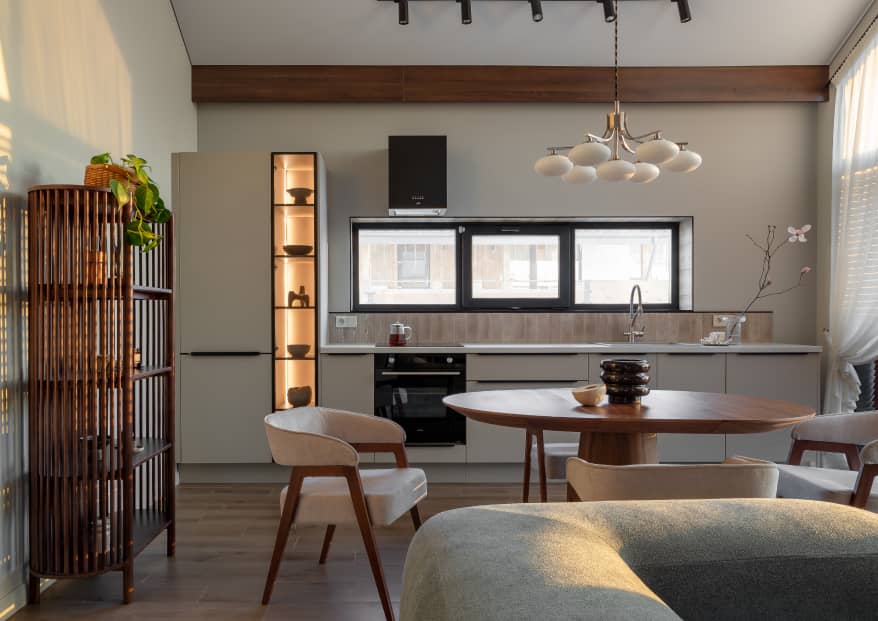
The house is 80 sq.m., developer Element Development, location Seudelniki Park. The layout is completely from the developer: a kitchen-living room, a master bedroom with its own bathroom and a bathtub, a small office, a guest bathroom with a shower, a dressing room, a terrace.
Compositional and stylistic unity: There are many warm shades in the interior, as well as natural wood. Massive and "heavy" interior items (showcase, table, sofa) due to the light background and in combination with other elements of the living room do not look bulky, but rather create an accent in each area.
Design quality: This house was positioned as a holiday home or a "weekend home", but it is also quite suitable for permanent residence of future owners. The color accents are mainly dark wood of a noble shade. The designers took into account the location of the house relative to the sun and provided appropriate textiles — this resulted in diffused light in the bedroom, wooden blinds in the living room for the bright setting sun, and only light tulle in the northeast-facing study.
Quality of engineering: A modular sofa was installed in the living room, the modules of which can be moved among themselves, adapting to the required use case; the table unfolds. There is also a pull-out sofa in the study so that the room can be transformed into a guest room. The master bedroom has an unusual zoning - the bathroom is separated from the bedroom by a glass partition, which allows you to create privacy if necessary, and at other times unites the space and creates beautiful light.
The innovation of the design solution of the implemented project: In this project, for the first time, the bureau implemented an unusual division of the bedroom and bathroom with a glass partition, as well as wooden blinds in the living room. The house turned out to be soulful, warm, and memorable.
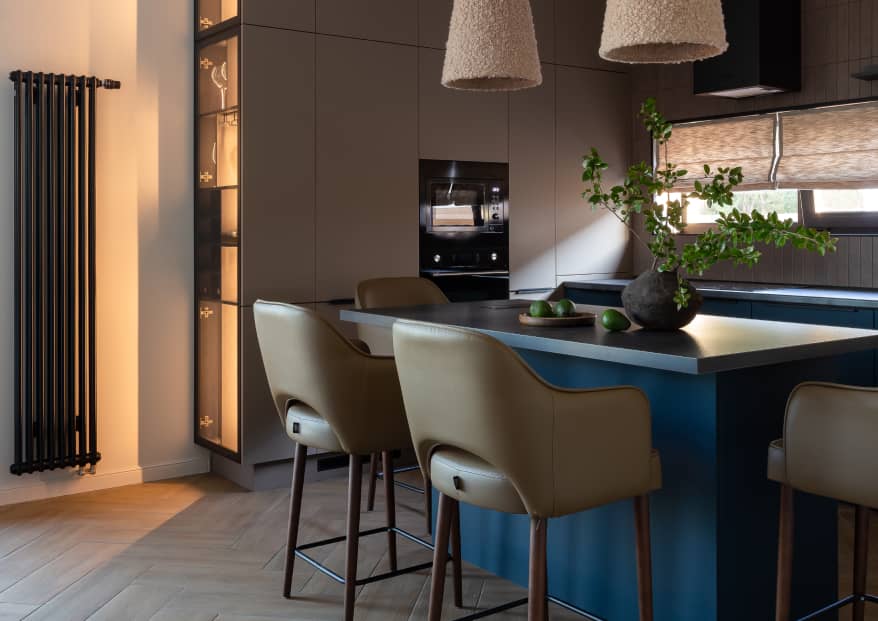
House of 100 sq.m + terrace, developer Element Development, location Iset Village. The layout is completely from the developer: kitchen-living room, master bedroom, study, guest bedroom, guest bathroom, dressing room, terrace.
Compositional and stylistic unity: The interior is decorated in warm pastel colors with blue accents. The abundance of textiles and lighting scenarios makes the interior cozy and enveloping, but there is also some boldness and brutality in it.
Design quality: This house was positioned as a holiday home or a "weekend home", but it is also quite suitable for permanent residence of future owners. The whole house is made in the same color palette, which creates a complete picture. Tactile and pleasant materials are used in the decoration, either smooth and matte, or on the contrary rough and textured - in any case, you want to touch and examine them.
Quality of engineering: The house mainly uses materials that do not require much maintenance, which is especially important for a weekend home. The common areas have porcelain stoneware with underfloor heating, the bathrooms also have porcelain stoneware, while the bedrooms have laminate flooring with a wood texture.
The innovation of the design solution of the implemented project:
In this house, the designers managed to choose the right design elements so that they complement not only each other, but also the site where the house is located, rather than arguing with it.